Foundation guide
Foundation Inspections: What to Expect and How to Prepare
Prepare for foundation inspections in San Antonio, TX. Learn what to bring, what to ask, and what findings to request before foundation repair.
A foundation inspection should help homeowners understand what is happening beneath their homes and what to do next. The result should be more than a repair price: you need an explanation of the findings, the limits of the evaluation, and the reasons behind any recommendation.
For homeowners in San Antonio, TX, preparation starts with understanding the appointment being offered. A contractor’s evaluation, an independent engineering assessment, and an inspection of completed repairs serve different purposes.
This guide explains how to prepare, what to discuss during the visit, and which information to request before making a decision.
Foundation inspections do not all include the same services
When booking, explain why you need the appointment. You might be investigating a new concern, reviewing previous work, or gathering information before purchasing a home.
Then confirm who will visit and what you will receive.
| Type of appointment | What to clarify |
|---|---|
| Contractor evaluation | Whether observations, measurements, a repair proposal, and a written estimate are included |
| Independent engineering assessment | Investigation scope, report, fee, and any additional testing |
| Inspection of repair work | Who checks the work and supplies the required completion documents |
A free foundation inspection offered by a contractor should not automatically be treated as an independent engineering report. Likewise, an engineer’s report does not necessarily include a contractor’s price for completing the work.
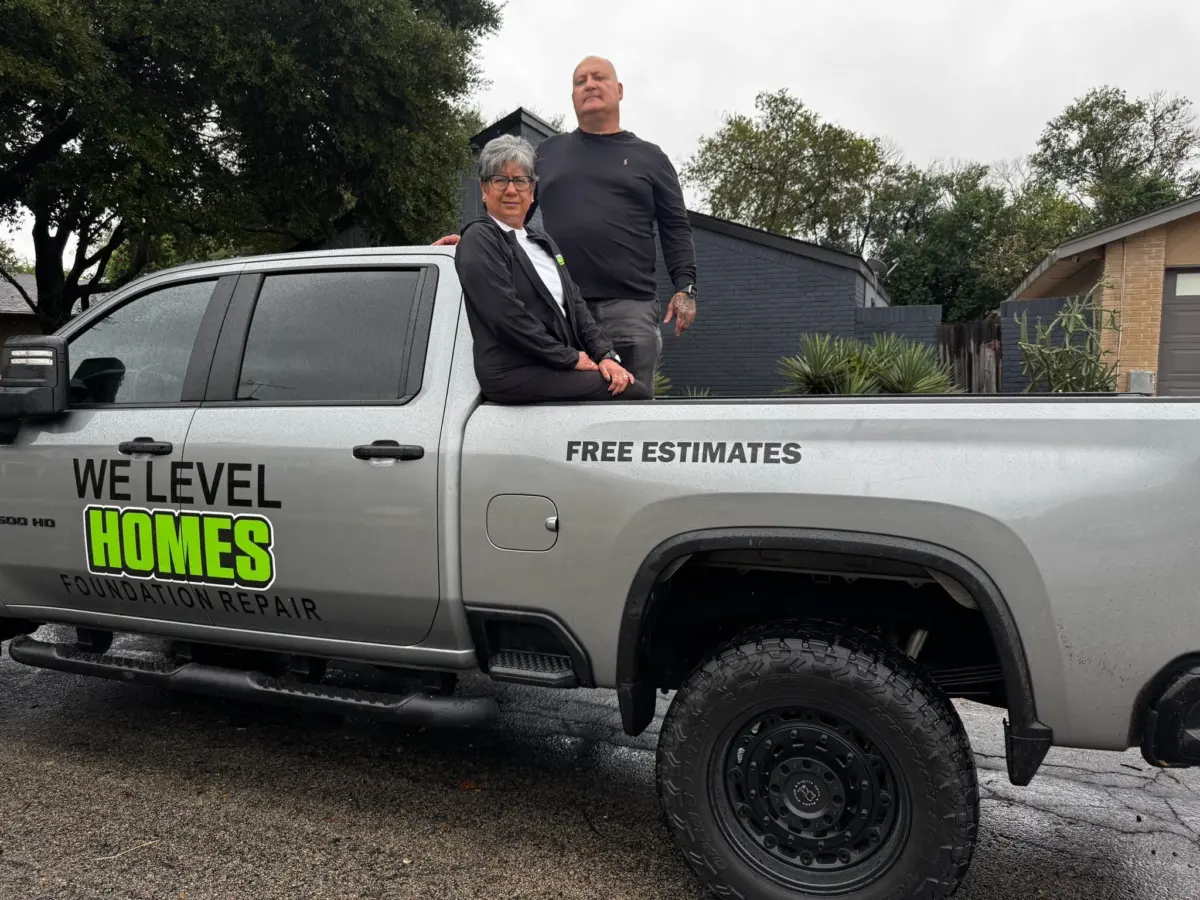
We Level Homes offers free residential foundation inspections and in-home estimates. Its third-party engineering involvement in repairs is separate from the initial contractor appointment.
Prepare a short history of your home
Start by explaining what prompted your call. Identify the affected rooms or exterior areas and when you first noticed the concern.
Keep the description factual. For example: “The back bedroom door began rubbing last month, and a crack appeared above it.” You do not need to decide what caused the change.
Gather available records before the visit:
- Dated photographs of the areas you want examined.
- Previous foundation repair plans and completion documents.
- Earlier inspection reports or measurement drawings.
- Warranty paperwork.
- Plumbing testing and repair records.
- Information about additions or substantial remodeling.
Foundation inspections are easier to discuss when the evaluator can distinguish recent changes from older conditions. If records are missing, say so rather than filling the gaps with assumptions.
Make the relevant areas accessible
Ask what access is needed before the appointment. Clear ordinary walking routes and make affected doors, windows, and walls reasonably accessible.
Outside, unlock the appropriate gate, secure pets, and identify any restricted areas. Mention whether the property includes an addition or manufactured home so the appointment can be planned appropriately.
For a pier-and-beam home, identify the crawl-space entrance if you know where it is. Do not enter a confined area, remove structural components, or disturb supports yourself.
Confirm whether foundation inspections cover the entire residence or only the concern described when booking. A limited evaluation should not be mistaken for an assessment of every part of the property.
What happens during the visit?
The activities depend on the agreed scope. Foundation inspections may involve discussing the home’s history, examining accessible areas, recording observations, and taking measurements.
The ASCE Texas Section’s residential foundation guidelines distinguish levels of engineering investigation. These range from history review and visual observations to evaluations incorporating relative floor elevations or additional testing. The guidelines describe engineering services; they do not establish what every contractor’s appointment includes.
During the visit, point out your concerns and explain relevant past work. Ask the evaluator to identify which observations matter to the recommendation.
Understanding measurements
If measurements are taken, ask what they represent and how they are being interpreted. A drawing with numbers is more useful when accompanied by an explanation of the findings.
Ask how floor coverings, previous work, and the available property history were considered. Do not treat an unexplained measurement as an automatic instruction to lift the house.
Ask questions before discussing the price
Useful foundation inspections should leave you better informed about the condition being evaluated. Before moving to a repair proposal, ask:
- What did you observe? Have the evaluator identify the relevant locations.
- What supports your conclusion? Ask how the findings connect to the recommendation.
- What could not be evaluated? Clarify inaccessible areas and other limitations.
- Is further investigation needed? Establish whether additional information could affect the decision.
- What should happen next? Request a clear explanation of the proposed next step.
If monitoring is recommended, ask what to record and when to follow up. If foundation repair is proposed, ask which identified problem the work is intended to address.
You should be able to explain the recommendation afterward in your own words.
Confirm what you will receive in writing
Foundation inspections do not automatically include identical paperwork. Agree on the deliverables before the visit whenever possible.
Depending on the appointment, request written clarification of:
| Information | Why it helps |
|---|---|
| Areas evaluated | Defines the scope of the findings |
| Observations and measurements | Records the basis for the explanation |
| Limitations | Identifies what remains unknown |
| Recommended next steps | Makes the advice usable |
| Proposed work locations | Shows where repairs would occur |
| Inclusions and exclusions | Separates the proposal from additional services |
Keep these records together with your photographs and previous reports. When reviewing a proposal later, you should be able to connect the proposed work to the findings that prompted it.
What if two evaluations disagree?
When foundation inspections produce different recommendations, clarify the differences before choosing a price.
Check whether both providers evaluated the same areas and reviewed the same information. Ask whether their appointments included comparable measurements or testing.
Then request an explanation of the disagreement. One proposal may address a different scope or rely on information the other provider did not have.
A higher price does not prove that a recommendation is more appropriate, and a lower price does not establish that it is sufficient. If the underlying conclusions remain substantially different, an independent engineering assessment may help clarify the next step.
For reviewing the proposed work and its cost, continue to How to Compare Foundation Repair Estimates Beyond the Price.
How permits and engineering fit in San Antonio
Initial foundation inspections are separate from the documentation required when repairs proceed.
Within the City of San Antonio’s jurisdiction, Information Bulletin 172 requires foundation repairs to be designed by or performed under the guidance of a Texas-licensed professional engineer. It specifies an Engineer of Record letter for the permit process and an engineering inspection letter to clear the foundation repair inspection. An application number alone does not authorize work to begin.
Before scheduling repairs in San Antonio, TX, establish who handles the applicable approvals and which completion records you will receive. Requirements should be checked separately for properties under another municipality’s jurisdiction.
Frequently asked questions
Can foundation inspections take place while a home is furnished?
An initial visit can often take place in a furnished home, but furniture can limit access and visibility. Ask beforehand which areas need clearing. Avoid moving heavy items yourself. Have inaccessible locations noted so the findings are not interpreted as covering areas the evaluator could not examine.
Will the inspection detect hidden plumbing leaks?
Do not assume leak detection is included. An evaluator may identify reasons for further investigation, but confirming a concealed leak can require separate plumbing testing. Ask who would perform that testing, whether it is included in the appointment, and whether it requires additional authorization or payment.
Can I use an older report when buying or selling a home?
An older report provides historical information, but it describes an earlier condition and a specific scope. Share it with the professional evaluating the property and whoever is requesting documentation. Confirm whether a current assessment is needed rather than assuming the earlier report meets today’s requirements.
Can someone evaluate the foundation using only photos or a video call?
Photos and video can explain the concern and help prepare for a visit, but they cannot show every relevant condition. Treat remote comments as preliminary unless their limited scope is clearly explained. They should not be confused with a complete on-site assessment or a finalized repair design.
Arrange an informed evaluation
We Level Homes Foundation Repair offers free residential foundation inspections and in-home estimates in its San Antonio, TX service area. Bring your records and questions, and confirm the appointment’s scope so you can review the next steps with clear expectations.