Foundation guide
Concrete Piers vs. Steel Piers: An Honest Comparison for San Antonio Homes
Both go all the way down to bedrock, and both are pressed to 10,000 psi. The real differences are the material, how the sections join, the warranty, and the price. Here is how to choose between them.
If a foundation company has told you your house needs piers, the next question is usually which kind. In San Antonio, most homes that need foundation repair get either concrete piers or steel piers. Both are good repairs when they are done right. Neither one is a gimmick, and neither one is always the answer.
This guide walks through what each pier is, how it goes in, what the warranty covers, and which one tends to fit which house. It is the same explanation Matt gives at the kitchen table during a free inspection.
Want to know what is going on under your house?
Matt will measure it for free and show you what he finds. No pressure, no phone guesses.
What Concrete and Steel Piers Have in Common
Before the differences, it helps to know how much is the same. On a We Level Homes job, both kinds of pier:
- Go under the parts of the house that settled, not just anywhere along the slab.
- Are pressed down with a hydraulic jack until they stop on bedrock, not in the clay that moves with the weather.
- Are pressed to 10,000 psi, so you know each one is carrying real load before the house is lifted.
- Are part of a repair certified by a licensed structural engineer, with permits pulled when the city requires them.
- Are followed by lifting the house back toward level, then patching the holes and slab openings.
So the choice is not between a strong pier and a weak one. It is between two materials that do the same job in slightly different ways, with different warranties and different prices.
Why San Antonio Homes Need Piers at All
Much of San Antonio sits on expansive clay. It shrinks during long, hot, dry summers and swells again when the rain comes back. A slab sitting on that clay rides up and down with it, and over the years one part of the house ends up lower than the rest. Plumbing leaks and big trees close to the house make it worse in one spot.
A pier fixes that by skipping the clay. It carries the weight of the house down to solid ground that does not move with the seasons. North of Loop 1604 the rock is often close to the surface, so piers can be short. On the east and south sides of town the clay can run much deeper. Either way, the pier is pressed until it stops on bedrock.
How Concrete Piers Work
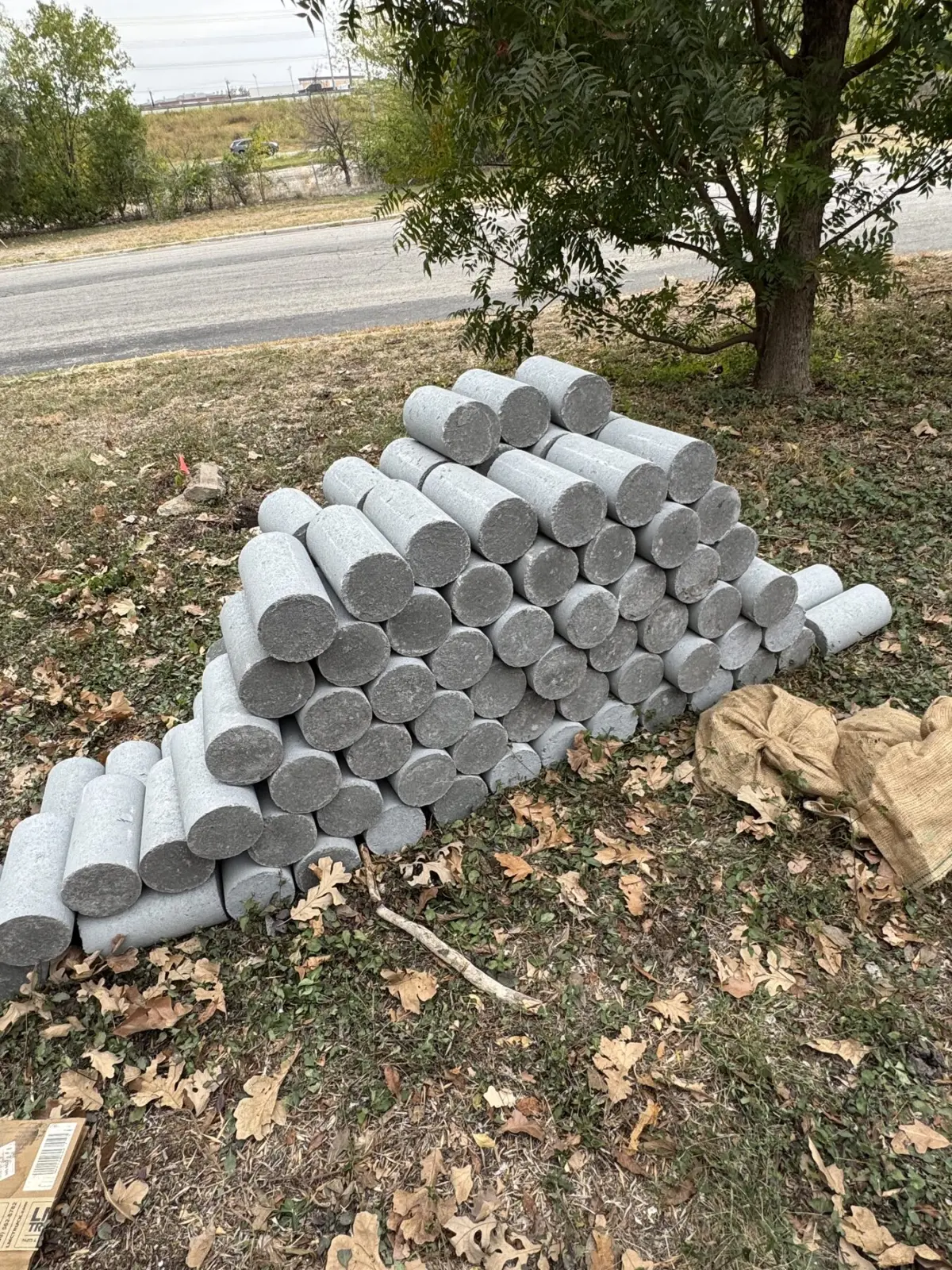
A concrete pier is a stack of solid, reinforced concrete cylinders. The crew digs a hole beside or under the foundation, sets the first cylinder, and presses it into the ground with a hydraulic jack. Then the next cylinder goes on top, and the next, until the stack stops on bedrock at 10,000 psi.
Once the stack reaches bedrock, a concrete cap block goes on top, and the house is lifted and shimmed on that cap. The result is a solid column of concrete between your foundation and the rock.
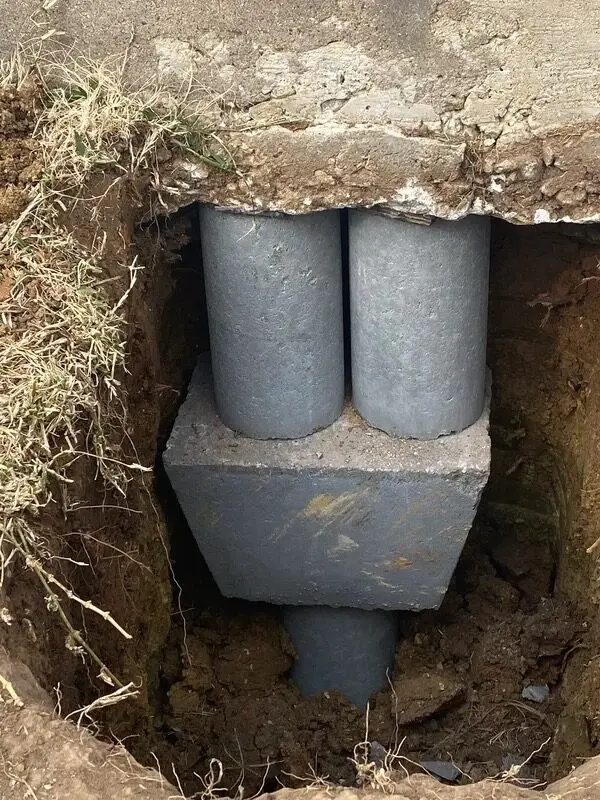
Concrete pier warranty
Concrete piers come with a 25-year warranty from We Level Homes. You get it in writing when the job is done, along with a drawing that shows where each pier went.
How Steel Piers Work
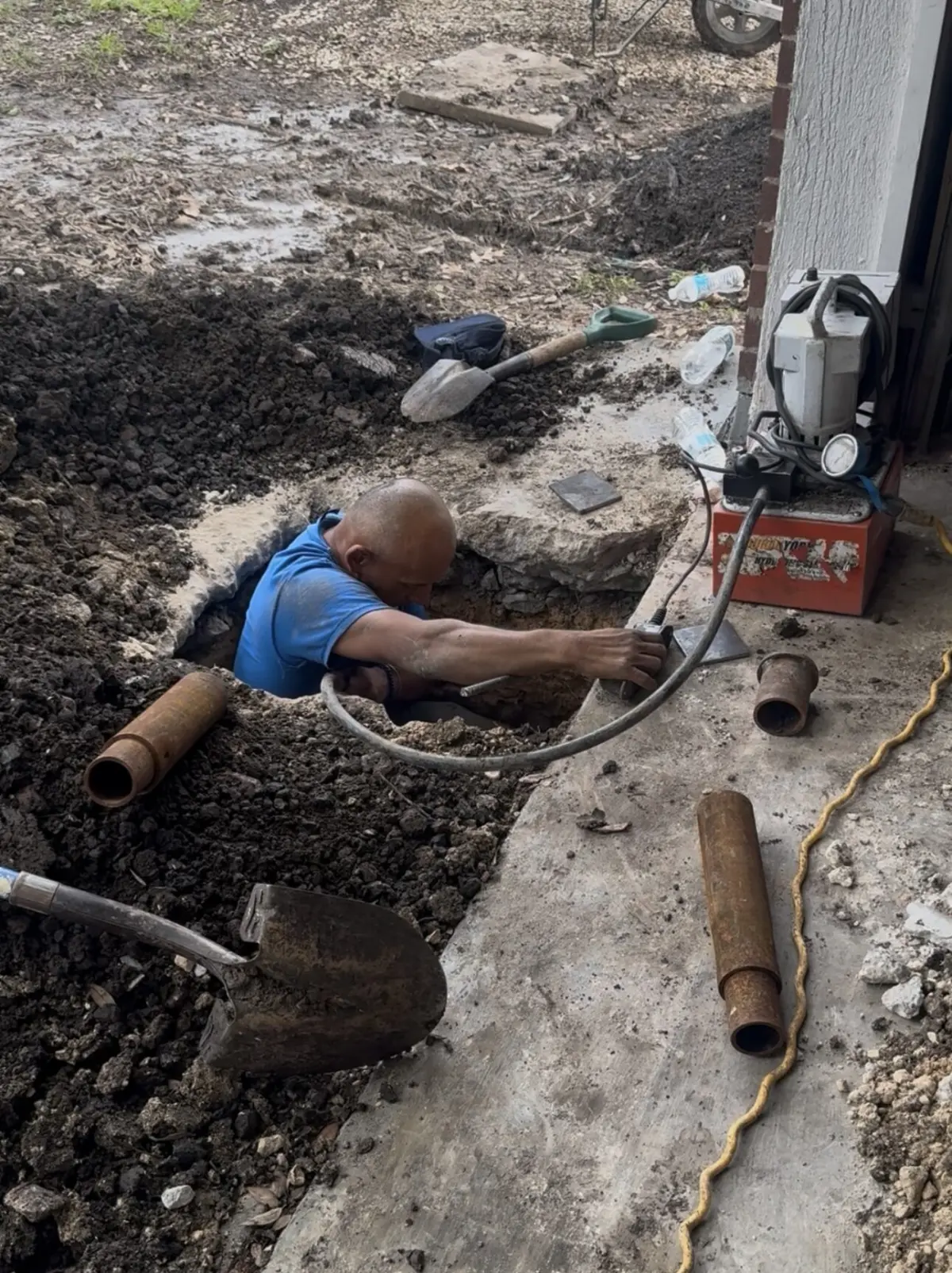
A steel pier is made of steel sections that interlock as they go into the ground. The crew digs beside the foundation and presses the first section down with the hydraulic jack. Each new section locks onto the one below it, so by the time the pier stops on bedrock at 10,000 psi it is one solid steel pier, not a loose stack.
Like a concrete pier, the steel pier is capped, the house is lifted on it, and the hole is filled once the house is where it should be.
Steel pier warranty
Steel piers come with a lifetime warranty from We Level Homes, in writing, with the same pier drawing.
Concrete Piers vs. Steel Piers, Side by Side
| Concrete piers | Steel piers | |
|---|---|---|
| What it is | Solid reinforced concrete cylinders stacked in sections | Steel sections that interlock into one solid steel pier |
| How deep | All the way to bedrock | All the way to bedrock |
| How it goes in | Pressed hydraulically to 10,000 psi | Pressed hydraulically to 10,000 psi |
| Warranty | 25 years | Lifetime |
| Price | The more affordable of the two | Usually costs more per pier |
| Good fit for | A solid, affordable fix for most homes | Homeowners who want the longest-lasting option |
| Engineer | Certified by a licensed structural engineer | Certified by a licensed structural engineer |
Both are full repairs. The difference is the material, how the sections join, the warranty, and the price.
Which One Is Right for Your House?
Matt will tell you what he would do on your house and why, but these are the questions that usually decide it.
How long do you want the warranty to run?
If you plan to stay in the house for a long time, or you want the longest warranty you can get, steel piers and their lifetime warranty are the usual pick. If 25 years of coverage fits your plans, concrete piers do the job for less.
What does your budget look like?
Steel piers usually cost more per pier than concrete. On a house that needs a lot of piers, that difference adds up. Concrete piers are a solid, affordable fix for most homes, and they still go all the way to bedrock.
What kind of house is it?
Steel and concrete pressed piers are slab repairs. A pier and beam house is different: there, rotten or sunken wood posts come out and new poured concrete piers go in under the beams. Manufactured homes get new piers under the frame and are brought back to level. Matt will tell you which of these your house actually needs.
Can you mix them?
Ask during the estimate. What matters is that the plan puts the right pier under each part of the house that moved, and that you know exactly which warranty covers which pier.
Things That Don’t Change Between Them
Whichever pier you choose, the rest of the job looks the same:
- A free inspection with level measurements across the house.
- A written plan showing where the piers go, with an exact written price.
- Engineer certification, and permits when the city requires them.
- Repair day: piers pressed to bedrock, then the house lifted back toward level.
- Holes filled and slab openings patched before we leave.
- Your written warranty and a drawing of every pier.
You can see each step on our process page, and how the coverage works on our warranty page.
Common Myths About Piers
“More piers is always better.”
Not on its own. A plan with more piers is not better unless each pier is under a part of the house that needs support. Ask why each pier is where it is.
“Steel is the only real repair.”
Steel piers carry a lifetime warranty, which is a real advantage. But concrete piers pressed to bedrock at 10,000 psi are a full repair too, and for many homes they are the better value.
“The pier type is the whole bid.”
The material is one line. Where the piers go, how deep they go, who certifies the work, and what the warranty actually says matter just as much. Our guide to comparing foundation repair estimates walks through what to look for.
Questions to Ask About Any Pier Plan
- Where will each pier go, and why there?
- How deep will the piers go, and what do they stop on?
- How hard is each pier pressed before the house is lifted?
- Is the repair certified by a licensed structural engineer?
- Who pulls the permit if the city requires one?
- What does the written warranty cover, and for how long?
- Will I get a drawing of where every pier went?
How We Decide on Your House
It starts with a free foundation inspection. Matt measures floor levels across the house, looks at the cracks and doors you have noticed, and shows you what moved. If the house needs piers, he walks you through both options with an exact written price for each, so you can choose with real numbers in front of you instead of a phone guess.
If the house does not need piers, he will tell you that too.
Related questions
Do steel piers go deeper than concrete piers?
Not on our jobs. Both are pressed until they stop on bedrock at 10,000 psi, so they reach the same solid ground. How deep that is depends on your lot.
Which warranty is longer?
Steel piers carry a lifetime warranty. Concrete piers carry a 25-year warranty. Both come in writing with a drawing of where each pier went.
Is one faster to install?
Repair day looks much the same for both: piers pressed to bedrock, the house lifted, then the holes filled and the slab patched. Matt gives you the plan before work starts.
Can you give me a price for each over the phone?
No. The price depends on how many piers your house needs, how deep the bedrock is, and how easy it is to reach the spots that moved. The free in-home estimate gives you an exact written price for each option.
Written by Matthew Zeman, co-owner of We Level Homes, with almost 20 years in foundation repair. Last updated November 18, 2026.