Foundation guide
Sticking Doors and Windows: What They Say About Your Foundation
A door that suddenly rubs or won’t latch is one of the first things people notice when a house moves. It is also easy to misread. Here is how to tell a foundation door from a humidity door.
Doors and windows sit in rectangular frames. When the house is level, the rectangle is square and the door swings freely inside it. When one part of the house drops, the walls lean a little and the frame pushes out of square. The door is still the same shape, but the opening isn’t, so the door rubs, binds, or stops latching.
That makes doors a useful early warning. They often show movement before cracks get wide. But plenty of doors stick for reasons that have nothing to do with the foundation. This guide shows you how to tell the difference and what to do about it.
Want to know what is going on under your house?
Matt will measure it for free and show you what he finds. No pressure, no phone guesses.
Why Foundation Movement Makes Doors Stick
Picture a door frame as a box. If the floor under one side drops, that side of the box sinks and the top of the box tilts. The gap around the door gets wider on one side and pinches shut on the other. The door now hits the frame at the top corner or along one edge.
In San Antonio clay, this often follows the seasons. After a long, dry summer, the clay shrinks, part of the house settles, and doors start sticking. When the rain comes back, the clay swells and some of those doors loosen up again. A door that sticks every August and works every April is telling you the house is moving.
Which Doors Tell You the Most
Some doors are better messengers than others. If you are trying to work out whether the house moved, these are the ones to watch:
- Interior doors. They aren’t exposed to rain and outside humidity the way front and back doors are, so when an interior door starts rubbing, weather swelling is a less likely cause.
- Double doors and French doors. Where two doors meet in the middle, even a small shift shows up. One door sitting higher than the other, or the two no longer lining up at the top, is a common sign.
- Doors near an outside corner. The corners of a slab dry out and move more than the middle, so doors in corner rooms often go first.
- Doors in a hallway. Several doors in a row give you a quick comparison. If the ones at one end stick and the ones at the other end don’t, the floor may be lower at the sticking end.
Pocket doors and closet bifolds can show it too, by jumping their tracks or dragging on one side.
Foundation Signs vs. Other Causes
| What you see | Points toward the foundation | Points toward something else |
|---|---|---|
| The gap around the door | Tapered: wide at one top corner, tight at the other | Even all the way around |
| Where it rubs | At the top corner on the latch side, or the head of the frame | Along the whole edge, or only at a hinge |
| Which doors | Several doors in the same part of the house | One door by itself, or exterior doors only |
| Other signs nearby | Diagonal cracks at door corners, sloping floor | None |
| Timing | Gets worse in dry spells, eases after rain | Gets worse in humid weather |
| Hinge screws | Tight | Loose or stripped |
One check alone doesn’t prove anything. When several of these line up, the foundation is the likely cause.
Common Causes That Aren’t the Foundation
- Humidity. Wood doors swell when the air is damp. This tends to affect exterior doors and bathroom doors, and the gap around them stays even.
- Loose hinges. Screws back out of the frame over time and the door sags on the latch side. Tighten the screws and see if the problem goes away.
- Paint buildup. Layers of paint on the edge of a door or window sash can make it rub.
- Worn hardware. A strike plate that has shifted can stop a door from latching even when the frame is square.
Rule these out first. If tightening the hinges fixes the door and nothing else is going on, you probably don’t have a foundation problem.
What Sticking Windows Mean
Windows work the same way as doors. A window that has gotten hard to open or close, especially one that binds on one side, can mean the frame has racked out of square. Look at the corners: a diagonal crack running from a window corner, or brick separating near the window outside, makes the foundation more likely.
Windows also stick from paint, dirt in the tracks, and worn balances. As with doors, the pattern matters more than any single window. A window that sticks on the same wall as a door that rubs and a crack in the brick outside is telling you more than any of the three alone.
Doors That Swing on Their Own
A door that drifts open or closed by itself is a sign the frame is no longer plumb. That can come from the floor sloping under it, which is common in older pier and beam homes where a post has sunk or rotted. It can also come from a slab that has dropped at one end. Put a marble or a level on the floor beside the door. If it rolls or reads off, the floor has moved.
Our answer on pier and beam repair and sticking doors covers raised homes in more detail, and sticking doors in a mobile home covers manufactured homes.
Should You Plane or Trim the Door?
You can, and sometimes it is the right call for a door you use every day. Just know that it treats the door, not the house. If the house is still moving, the frame keeps going out of square, and you may end up trimming again next summer. If the house is later lifted back toward level, a door that was cut down may then have a bigger gap than you want.
If you think the foundation is involved, have it measured before you start trimming doors.
What Fixes a Foundation Door
When the door is sticking because part of the house dropped, the fix is to support that part and bring it back toward level. On a slab home, that means steel or concrete piers pressed to bedrock under the low area, then house leveling. On a pier and beam home, it means replacing sunken or rotten posts with poured concrete piers and shimming the beams.
As the house comes up, frames often move back toward square and many doors start working better. Not every door goes back to perfect, because door frames, trim, and hardware may have shifted on their own. Our answer on doors after house leveling explains what to expect.
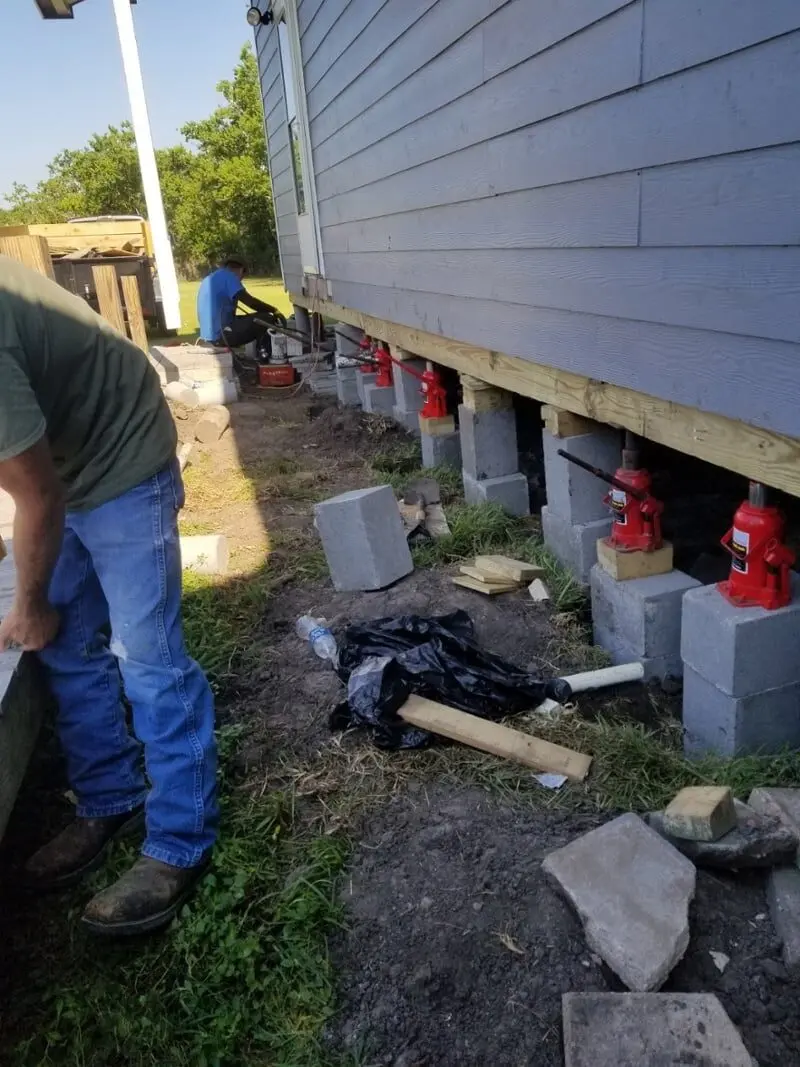
The lift is done gradually, with the crew watching how the house responds. Lifting a house that has sat out of level for years can change how doors fit in the other direction too, so it is normal for a few doors to need a small adjustment afterward. Matt talks through which doors he expects to improve before any work starts, so you know what the repair will and won’t change.
Why fixing the house beats fixing every door
It is tempting to treat each sticking door as its own small project. The trouble is that doors are a symptom. If part of the house is still dropping, every door you adjust this year can go out of square again after the next dry summer, and the cracks and gaps around them keep growing too.
Supporting the part of the house that moved deals with the cause. Once that part sits on piers pressed to bedrock, it stops riding up and down with the clay in those spots, and the doors have a steady frame to work in. That is why we look at the whole house, not just the door you called about.
What to Note Before an Inspection
- Which doors and windows stick, and where they rub.
- When it started, and whether it changes with the weather.
- Any cracks near those doors and windows, inside and out.
- Whether you have already tightened hinges or trimmed a door.
Matt checks those doors during the free inspection and compares them with level readings across the house. If the readings show the house hasn’t moved, he’ll tell you the door is a door problem.
Related questions
Is one sticking door a sign of foundation trouble?
Not usually by itself. One door alone is more often hinges, humidity, or paint. Several doors in the same part of the house, with cracks nearby, is a stronger sign.
Why do my doors stick in summer but not in spring?
In San Antonio clay, dry summers shrink the soil and part of the house can settle. When rain returns, the clay swells and doors can loosen. That seasonal pattern points toward the foundation.
Will a handyman fix it?
A handyman can adjust or trim the door. If the house is moving, the door will likely start sticking again, because the frame keeps going out of square.
Do you adjust doors after the repair?
Ask Matt during the estimate. Many doors work better once the house is back toward level, and he will talk through which ones may still need attention.
Written by Matthew Zeman, co-owner of We Level Homes, with almost 20 years in foundation repair. Last updated November 18, 2026.