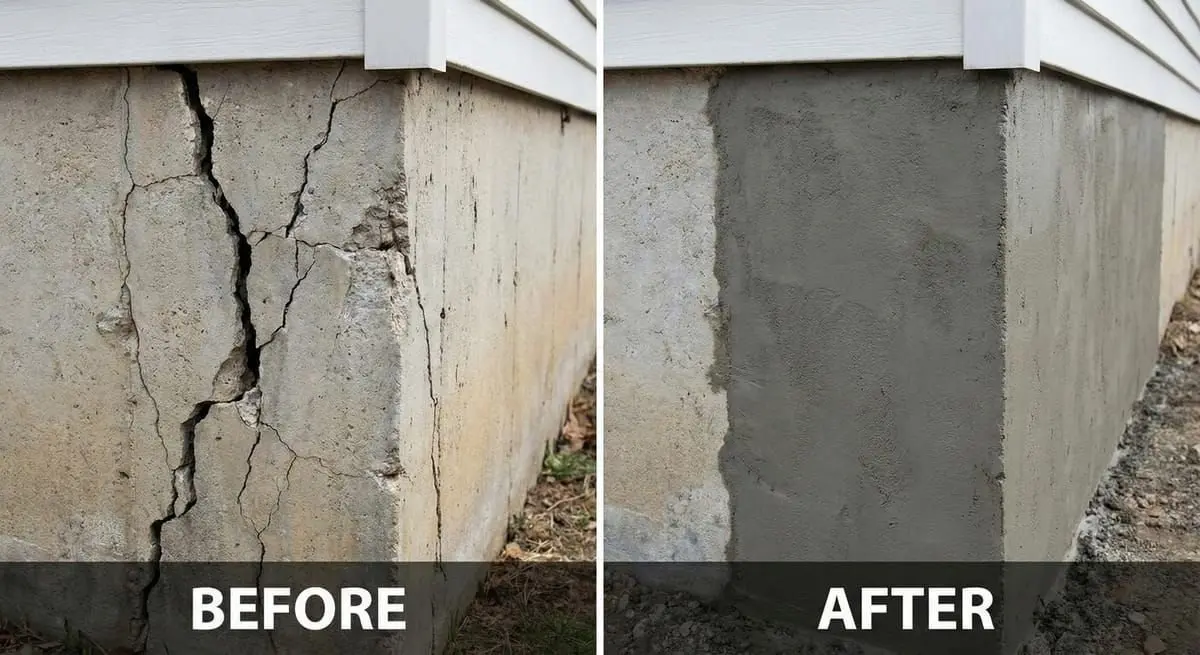
Foundation guide
Foundation Crack Types: Which Cracks Matter and Which Don’t
Not every crack is a foundation problem. Where a crack is, which way it runs, how wide it is, and whether it keeps growing tell you far more than the crack itself.
Concrete cracks. Sheetrock cracks. Brick cracks. Some of that is normal in any house, and almost every house in San Antonio has a few thin cracks somewhere. The ones worth paying attention to have a pattern: they follow the shape of the house moving, they get wider over time, or they come with other signs like sticking doors.
This guide sorts cracks by type and location, explains what each usually means, and tells you which ones are worth having measured. It won’t diagnose your house from a screen, but it will help you know what you are looking at.
Want to know what is going on under your house?
Matt will measure it for free and show you what he finds. No pressure, no phone guesses.
Four Questions to Ask About Any Crack
- How wide is it? A thin hairline is common. A crack you can fit a coin in deserves a closer look.
- Is one side higher than the other? A crack where one edge sits above the other means something moved, not just shrank.
- Which way does it run? Diagonal cracks from the corners of doors and windows, and stair-step cracks in brick, follow the way a house bends when one part drops.
- Is it growing? A crack that is the same size a year later is a different story from one that gets wider every summer.
A simple habit helps with the last one: put a small pencil mark at each end of the crack, write the date next to it, and take a photo with a coin or tape measure beside it. Check again in a few months.
Cracks That Are Usually Not a Problem
Hairline cracks in the slab
Concrete shrinks as it cures, and thin hairline cracks in a slab are very common, including in newer homes. If the crack is thin, flat on both sides, and not growing, it is usually just shrinkage. Our answer on hairline cracks in a slab covers this in more detail.
Small cracks along sheetrock seams
Sheetrock tape can crack along a straight seam from normal temperature and humidity changes, or from framing lumber drying out. A single straight crack along a seam, with doors working fine, is often cosmetic.
Cracks That Are Worth a Look
Diagonal cracks at door and window corners
Door and window openings are the weak points in a wall. When one part of the house drops, the wall bends, and the stress shows up as a diagonal crack running up and away from the corner of the opening. If the crack comes back after it is patched, the house is likely still moving.
Stair-step cracks in brick
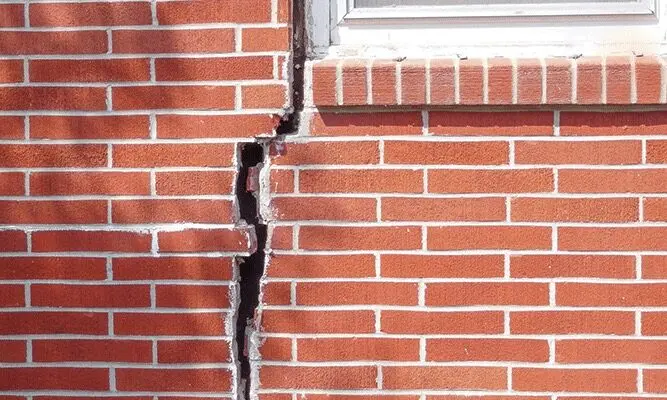
Brick can’t bend. When the foundation under a brick wall moves, the brick cracks along the mortar joints in a stair-step pattern, often near a corner or above a window. The wider the steps get, the more the wall has moved.
Cracks with one side higher
Run your hand across a slab crack or a crack in tile. If one edge is higher than the other, the slab has moved up or down on one side. This is called an offset, and it is one of the clearer signs of foundation movement.
Tile cracking in a line across a room
Tile is stiff and bonded to the slab, so it often shows a slab crack that would otherwise be hidden. A crack that runs through several tiles in a line usually follows a crack in the concrete below. Our answer on why tile cracks goes through the other possible causes.
Cracks where walls meet ceilings
A crack along the top of a wall, or a ceiling crack that runs across the room, can mean the walls below are moving differently from each other. On its own it is not conclusive. Together with sticking doors nearby, it points toward the foundation.
Vertical cracks at brick corners and over doorways
A vertical crack at the corner of a brick wall, wider at the top or the bottom, can mean that corner is dropping or pulling away from the rest of the house. Cracks that run up through the brick above a door or garage opening are common too, because the brick over an opening is carried by a steel lintel and is a weak spot when the wall below moves.
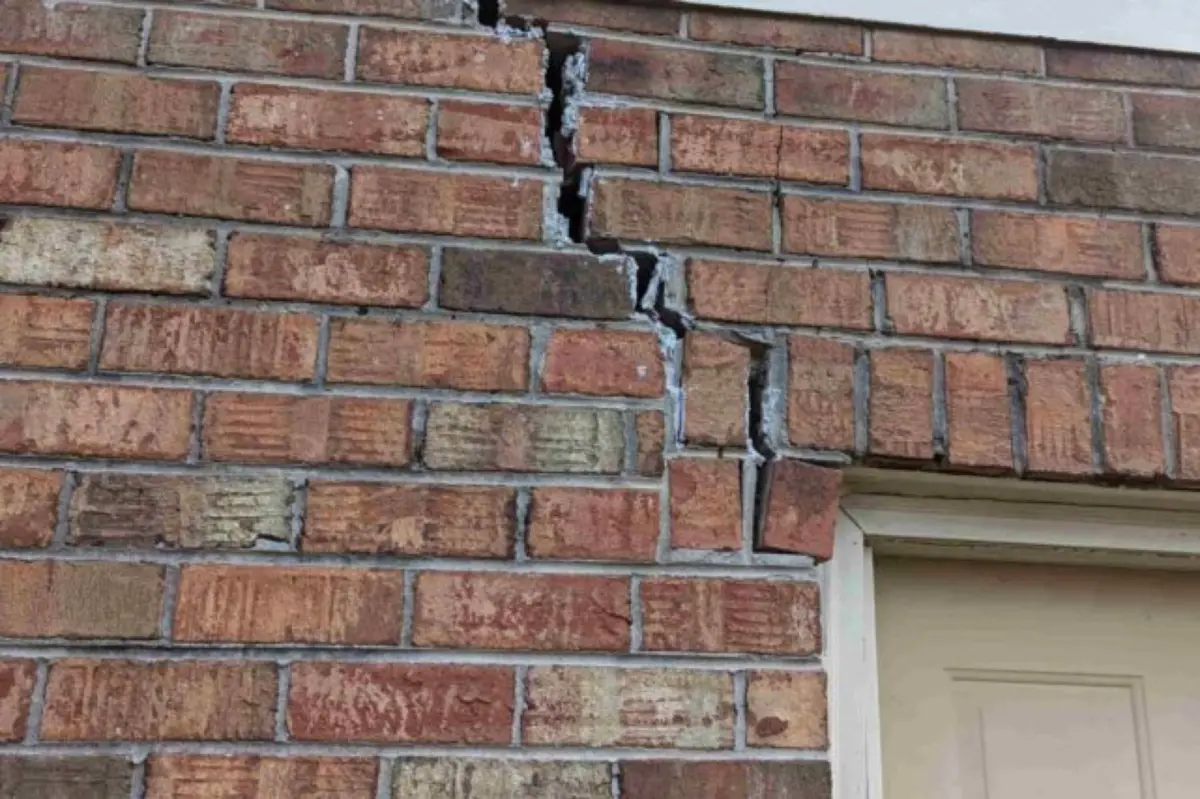
Lintels can also rust and push brick out on their own, so a crack over an opening with no other signs nearby may not be the foundation. Look for a pattern: cracks over openings and at corners on the same side of the house, with sticking doors inside, tell a much clearer story.
Crack Types at a Glance
| Crack | What it usually means | Worth a look? |
|---|---|---|
| Thin hairline in slab | Normal concrete shrinkage | Usually not, unless it grows or offsets |
| Straight crack on a sheetrock seam | Tape or framing movement, often cosmetic | Usually not on its own |
| Diagonal from a door or window corner | The wall bending as part of the house drops | Yes, especially if it comes back after patching |
| Stair-step in brick | Brick following movement in the foundation below | Yes |
| Slab crack with one side higher | The slab has moved up or down on one side | Yes |
| Tile cracking in a line | Usually a slab crack underneath | Yes |
| Vertical crack in brick at a corner | A corner of the house separating or dropping | Yes |
Cracks in Pier and Beam and Manufactured Homes
Not every house sits on a slab. In an older pier and beam home, there is no slab to crack. The signs show up in plaster and sheetrock instead: diagonal cracks at door corners, cracks across ceilings, and gaps where walls meet floors. Those usually follow a sunken or rotten post under the house, and the floor above it will often slope or feel soft.
Manufactured homes tend to show movement through doors, windows, and wall panel seams rather than long cracks. Seams that open up, ceiling panels that separate, and skirting pulling away are the clues to watch. In both cases the same rule applies: a pattern in one part of the house matters more than one crack anywhere.
What Cracks Can’t Tell You
A crack shows you where the stress came out, not always where the problem is. A crack over a bedroom door might come from a corner of the house that dropped several feet away. That is why we never plan a repair around the crack itself.
Matt takes level readings across the whole house, room by room. The readings show which parts are low and by how much. The cracks then confirm what the numbers say. If you see a crack but the readings are fine, you may not need foundation repair at all, and he will tell you so.
Should You Fill a Crack Yourself?
You can caulk or patch a crack to keep out water and bugs, and there is no harm in that. Just know that a patch doesn’t fix the movement behind it. If the house is still moving, the crack will open back up.
Before you patch, take a photo and measure it. That record helps show whether the crack is growing. Our answer on when to repair foundation cracks covers timing.
How We Handle Cracks in a Repair
Cracks get filled after the house is level and stable, not before. If the house needs piers, those go in first, pressed to bedrock, and the house is lifted back toward level. Then the cracks in the slab are filled to keep water and pests out. See our foundation crack repair page for how that step works.
Some cracks close up partly when the house is lifted. Others don’t. Our answer on whether cracks close after leveling explains why.
Related questions
Are vertical cracks better than horizontal ones?
Not as a rule. Direction is one clue, but width, offset, and whether the crack is growing matter more. A thin vertical crack in a slab is often shrinkage; a wide one at a brick corner is worth measuring.
How wide is too wide?
As a simple guide, a crack you can fit a coin in is worth having measured. So is any crack, even a thin one, where one side sits higher than the other.
Do cracks always mean I need piers?
No. Plenty of houses have cracks and don’t need piers. Level readings across the house decide that, not the crack alone.
Can you look at a photo of my crack?
A photo helps us understand what you are seeing, and you can text one to (210) 934-6066. To know whether the house moved, it still has to be measured in person.
Written by Matthew Zeman, co-owner of We Level Homes, with almost 20 years in foundation repair. Last updated November 18, 2026.