Foundation guide
Partial Leveling vs. Whole-House Leveling
Not every house needs piers all the way around. Some only need one corner or one side. Here is how to tell which kind of repair fits your house, and what each one does and doesn’t cover.
When people hear “house leveling,” many picture piers under every wall. That is one kind of job. But on a lot of San Antonio homes, only part of the house moved: a back corner, one side, a spot in the middle. In those cases the repair can focus on that part.
Whether a partial repair is the right call depends on what moved, why, and what the rest of the house is doing. This guide explains the difference between partial and whole-house leveling, when each one makes sense, and the questions to ask before you choose.
Want to know what is going on under your house?
Matt will measure it for free and show you what he finds. No pressure, no phone guesses.
What Partial Leveling Means
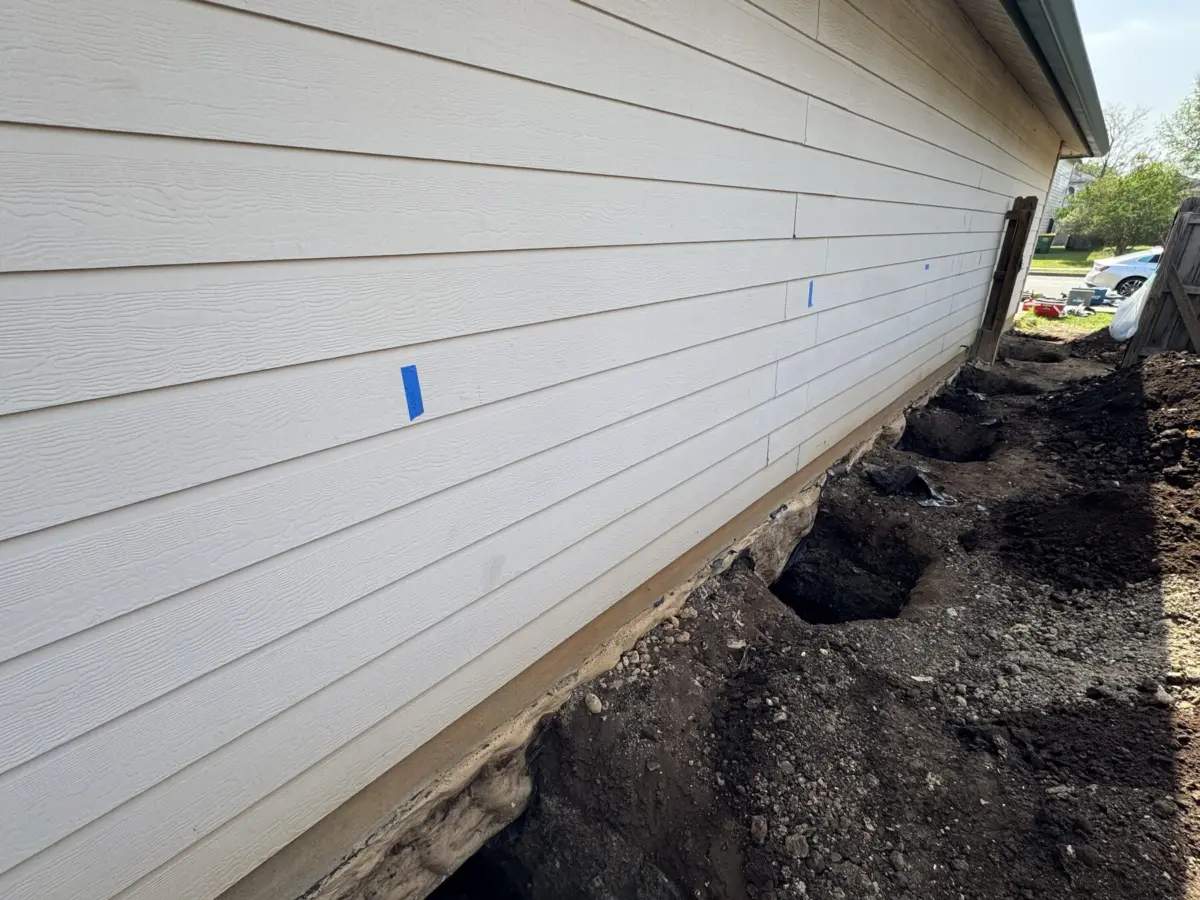
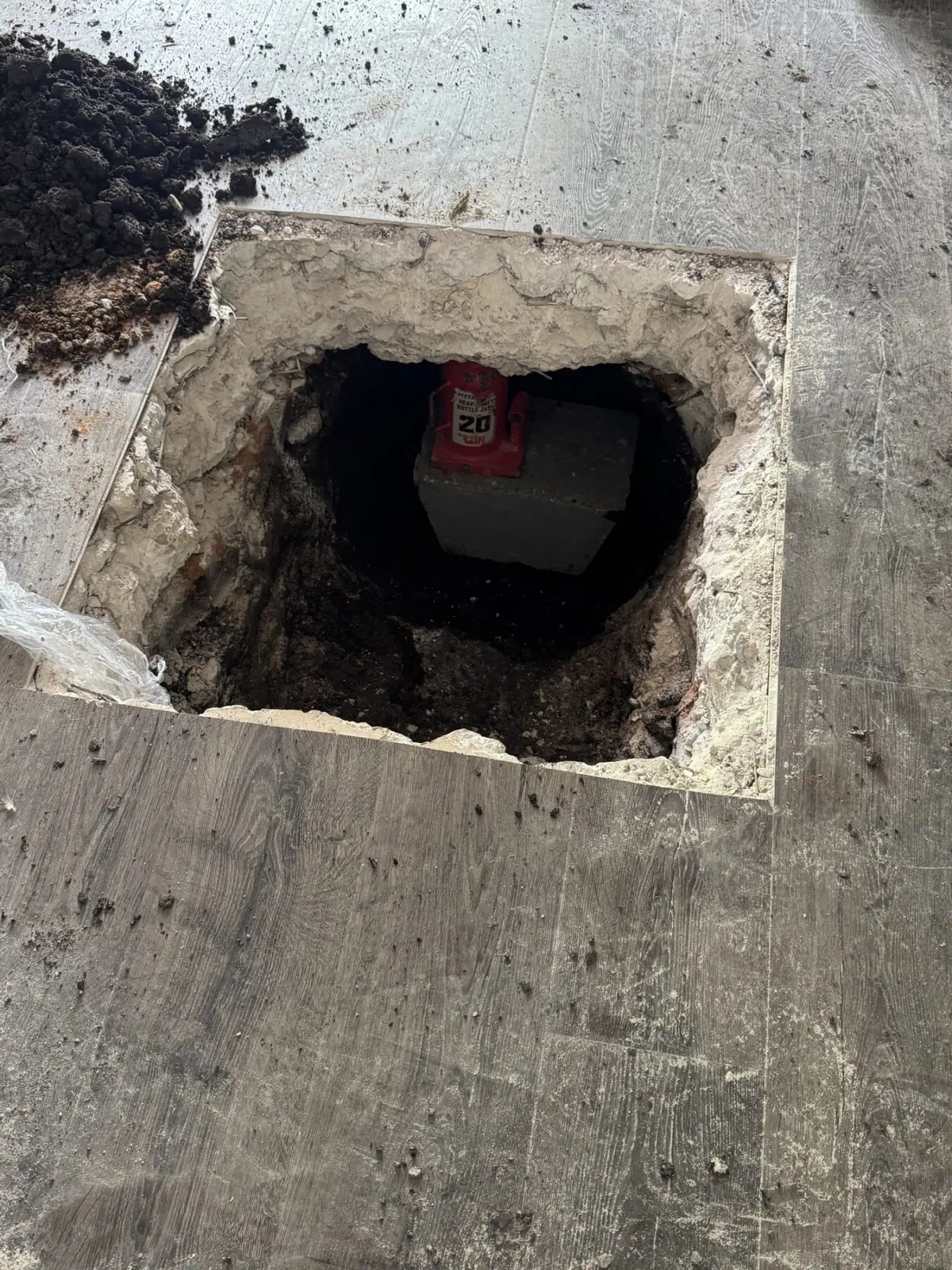
A partial repair puts piers only under the part of the house that settled, then lifts that part back toward the rest. The rest of the house stays on its original foundation. On a slab, that might be a row of piers along one side or around one corner. On a pier and beam house, it might mean replacing the posts under one section and shimming those beams.
A whole-house repair puts support under the full footprint: around the perimeter, and often in the interior too. It is a bigger job, but it supports the house everywhere instead of in one area.
Can You Level Just One Room?
Sometimes. If the floor in one room is low because the foundation under that room dropped, and the rest of the house is sound, a repair can focus on that area. On a slab, that may mean piers along the outside wall of that room, through the floor inside it, or both. On a raised house, it may mean new piers and shims under that part of the floor.
What a one-room repair can’t do is fix a problem that is bigger than the room. If the low room is the end of a slope that runs across half the house, leveling just that room leaves the rest of the slope in place and can create a new step where the repaired area meets the rest. That is why the whole house gets measured first, even when you only noticed the problem in one place. See how a floor elevation survey works.
When a Partial Repair Usually Makes Sense
- The movement is local. Floor readings show one corner or side low, and the rest of the house reads close to where it should.
- The cause is local. A plumbing leak, a big tree, or poor drainage on one side explains why that part dropped.
- The signs line up. Cracks, sticking doors, and brick separation are all on the same side as the low readings.
- The rest of the house isn’t moving. No new cracks or door problems in other areas over time.
When Whole-House Leveling Usually Makes Sense
- Movement in several areas. More than one side or corner reads low, or the readings show a pattern across the house.
- Signs everywhere. Doors sticking and cracks showing in rooms all over the house.
- A house that has been repaired in pieces before. Past partial repairs that keep being followed by movement somewhere else.
- A raised house with failing posts throughout. On older pier and beam homes, if the posts are rotten in many places, replacing them all is often more sensible than replacing a few at a time.
Telling the two apart: an example
Say the back of a slab home has a sticking door, a crack over it, and a stair-step crack in the brick outside. If the readings show the back corner low and the front of the house close to where it should be, and there is a big tree or a downspout dumping water at that corner, a partial repair along that side often fits.
Now say the same house also has doors sticking at the front, cracks in the hallway, and readings low on two sides. Piers along one side would help one area and leave the rest moving. That house usually needs a bigger plan.
Partial vs. Whole-House, Side by Side
| Partial leveling | Whole-house leveling | |
|---|---|---|
| Where the piers go | Under the part that settled | Around the house, and often inside too |
| Usual fit | One area moved, for a clear local reason | Movement in several areas, or across the house |
| Price | Lower, because fewer piers | Higher, because more piers |
| What it supports | The repaired area only | The full footprint |
| Warranty | On the piers installed | On the piers installed |
| Engineer | Certified by a licensed structural engineer | Certified by a licensed structural engineer |
What to Know About Partial Repairs
A partial repair is a real repair, and for many houses it is the right one. It helps to go in with clear expectations:
- The warranty follows the piers. Our lifetime warranty on steel piers and 25-year warranty on concrete piers cover the piers that were installed. Parts of the house without piers are still sitting on the soil.
- Other areas can move later. The clay that moved one side can, over time, move another. That isn’t a failure of the repair; it is a part of the house that wasn’t piered.
- There is a transition. Where the repaired area meets the rest of the house, the plan should account for how the two will sit together.
- It can be added to. If another area moves years later, piers can be added there. Keep your pier drawing so the next repair starts with a clear record.
Partial Repairs on Raised and Manufactured Homes
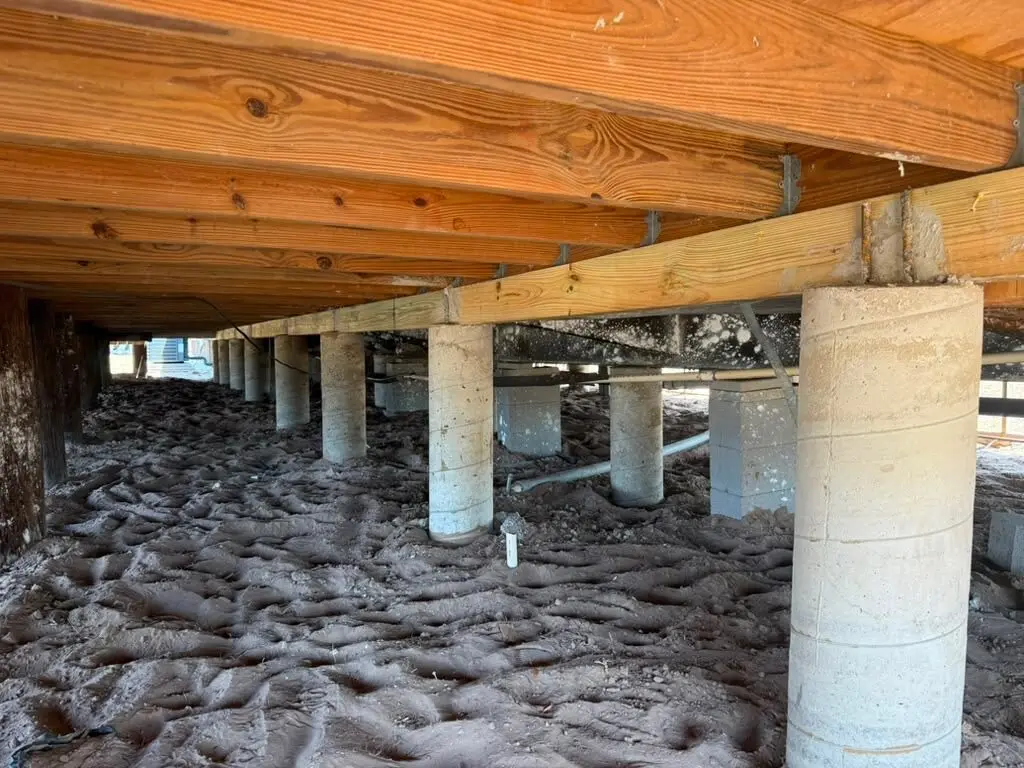
On a pier and beam house, partial work is common. If the posts under one part of the house have rotted or sunk and the rest are sound, those posts can come out, poured concrete piers can go in, and the beams over them can be shimmed back to level. The question is whether the other posts are really sound, or just not as far along. In an older house where the posts are all the same age, Matt will look at more than the ones under the sagging floor.
On a manufactured home, the frame runs the length of the home, so a low end or a low side affects the whole floor. New piers go under the frame where they are needed, and the home is brought back to level as a whole. See double-wide vs. single-wide leveling for how size changes the job.
What About Doing It in Phases?
Some homeowners ask whether a whole-house plan can be split into stages to spread out the cost. Sometimes that can work, but phasing should follow what the house needs, not just the budget. Ask what each phase accomplishes, what is left unsupported in between, and what to watch for while you wait. Our blog on house leveling vs. foundation repair covers phasing questions too.
How the Plan Gets Decided
It starts with measuring. At a free foundation inspection, Matt measures floor levels across the whole house, not just the room you are worried about, and looks at the cracks, doors, and outside walls. The readings show whether the problem is one area or more. If a partial repair fits, he will tell you. If it won’t solve the problem, he will tell you that too, and why.
Either way, you get a written plan showing where each pier goes and an exact written price, and every repair is certified by a licensed structural engineer. If you are weighing more than one bid, the number of piers is only part of it. Our guide on comparing foundation repair estimates explains what to line up.
Related questions
Is a partial repair cheaper?
Usually, because it needs fewer piers. The exact price depends on how many piers, which type, how deep bedrock is, and access. The free estimate gives you a written number.
Will a partial repair make the rest of my house move?
The piers support only the part they are under. The rest of the house keeps doing what it was doing. That is why the whole house is measured before choosing.
Can I add piers later if another side moves?
Yes. Piers can be added where they are needed later. Keep your pier drawing so the next repair has a clear record.
Does the warranty cover the whole house after a partial repair?
No. The warranty covers the piers that were installed: lifetime on steel, 25 years on concrete.
Written by Matthew Zeman, co-owner of We Level Homes, with almost 20 years in foundation repair. Last updated November 18, 2026.