Quick answer
Why Is One Side of My House Sinking?
A house rarely sinks evenly. When one side drops, something under that side is different from the rest. Here are the usual reasons in San Antonio.
Short answer
Usually because the soil under that side changed. In San Antonio, that most often means clay drying and shrinking, a plumbing leak softening the ground, a large tree pulling water out, or water pooling against that wall. On raised homes, rotten or sunken posts are common. Piers to bedrock under that side are the usual fix.
Common Reasons One Side Drops
A house sits on the ground, and the ground under it is rarely the same everywhere. When one side changes more than the rest, that side moves.
- Clay drying out. Much of San Antonio sits on expansive clay that shrinks in long, hot, dry summers. The sunny side of a house, or a side with less shade or water, can dry out more and settle.
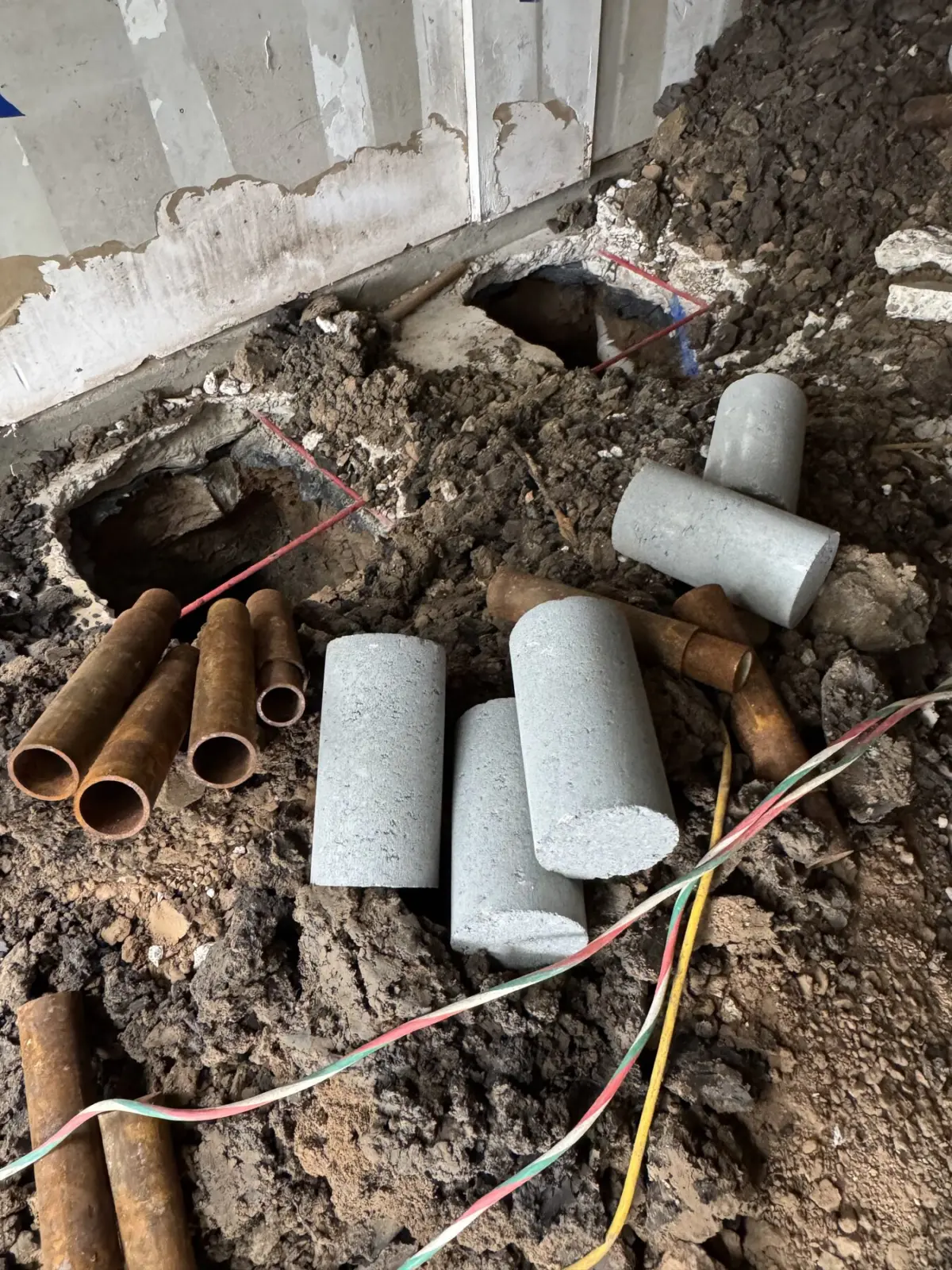
- A plumbing leak. A leak under or beside the house softens the soil in one area. Many pre-1980s homes have cast iron drain lines that can crack with age. See under-slab plumbing leaks.
- A large tree. A big tree near one side pulls water out of the clay along that wall. See trees, roots, and your foundation.
- Water pooling. Downspouts dumping next to the house, or a yard that slopes toward one wall, can soak the soil on that side after heavy rain.
- Rotten or sunken posts. On pier and beam homes, common inside Loop 410, the wood posts on one side can rot or sink.
- An addition. A room added later may sit on a different foundation and settle separately.
Sometimes the opposite side is the one that moved: clay that swells can push part of a house up, which makes the rest look low. Measuring the house tells you which it is. See slab settlement vs. heave.
Signs It Is One Side
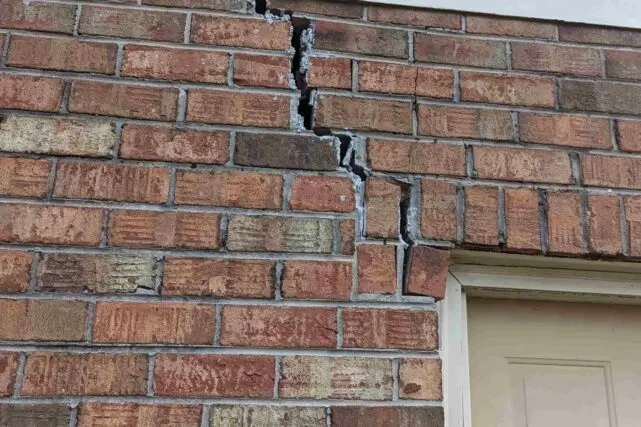
- Floors that slope toward one wall.
- Doors sticking in rooms on that side.
- Stair-step cracks in brick, or brick pulling away at a corner.
- Gaps opening between trim, windows, or fascia on that side.
- Diagonal sheetrock cracks from door and window corners in those rooms.
For more on reading those signs, see foundation warning signs.
How One Sinking Side Gets Fixed
On a slab home, steel or concrete piers go under the side that dropped. They are pressed down hydraulically to 10,000 psi until they stop on bedrock, then that side is lifted back toward level onto them. On a pier and beam home, the rotten or sunken posts come out, poured concrete piers go in, and the beams are shimmed back to level. On a manufactured home, new piers go under the frame and the home is brought back to level.
If water is part of the cause, fixing the leak matters, and drainage work can be added to the foundation repair. Every repair is certified by a licensed structural engineer, and the piers carry a written warranty: lifetime on steel, 25 years on concrete.
Fix the Cause, Not Just the Side
Piers hold up the side that dropped, but it still matters why it dropped. A leak that keeps running under the house, or downspouts that keep soaking one wall, can affect the parts of the house that weren’t piered. Part of the inspection is walking the outside and asking about plumbing, so the plan deals with the cause as well as the symptom.
Will the Other Side Need Piers Too?
Not necessarily. If the readings show one side low and the rest of the house where it should be, a repair on that side may be all it needs. But the whole house should be measured first, because one side can be the most visible part of a bigger pattern. See partial vs. whole-house leveling.
At a free inspection, Matt measures floor levels across the house, walks the outside to look for the cause, and shows you what moved. If it needs piers, you get an exact written price. If it doesn’t, he will tell you.
Related questions
Is one side sinking an emergency?
Usually not, but it is worth having it measured so you know how far it has moved and whether it is still moving.
Can I stop it by watering that side?
Water can play a part, but watering alone won’t lift a side that already dropped. Have the house measured first.
Why is it always the back of my house?
It is often where downspouts drain, trees grow, or plumbing runs. Matt will look at what is different about that side.
Does a sinking side lower my home’s value?
It can affect how buyers see the house. Ask a real estate agent about your situation.
Written by Matthew Zeman, co-owner of We Level Homes, with almost 20 years in foundation repair. Last updated November 18, 2026.