Quick answer
How Much Does Foundation Repair Cost in San Antonio?
There is no single price for foundation repair, because no two houses move the same way. Here is what actually builds the total, and how to get it in writing before you decide anything.
Short answer
It depends on your house. The total comes from how many piers it needs, which type, how deep bedrock is, how hard the spots are to reach, and whether work goes inside. Matt measures your house for free and gives you an exact written price, so you see the real number before any work starts.
What Builds the Total
A foundation repair price is not a flat fee for “fixing the foundation.” It is the sum of a handful of real things, and each one changes from house to house. These are the ones that move the number most:
- The number of piers. This is usually the biggest single driver. It depends on how much of the house settled and where, not on the square footage. A corner that dropped needs far fewer piers than a whole side.
- The type of pier. Concrete piers cost less and carry a 25-year warranty. Steel piers usually cost more per pier and carry a lifetime warranty.
- How deep bedrock is. Every pier is pressed until it stops on bedrock. North of Loop 1604 the rock is often shallow. On the east and south sides of town the clay can run much deeper, so each pier takes more material.
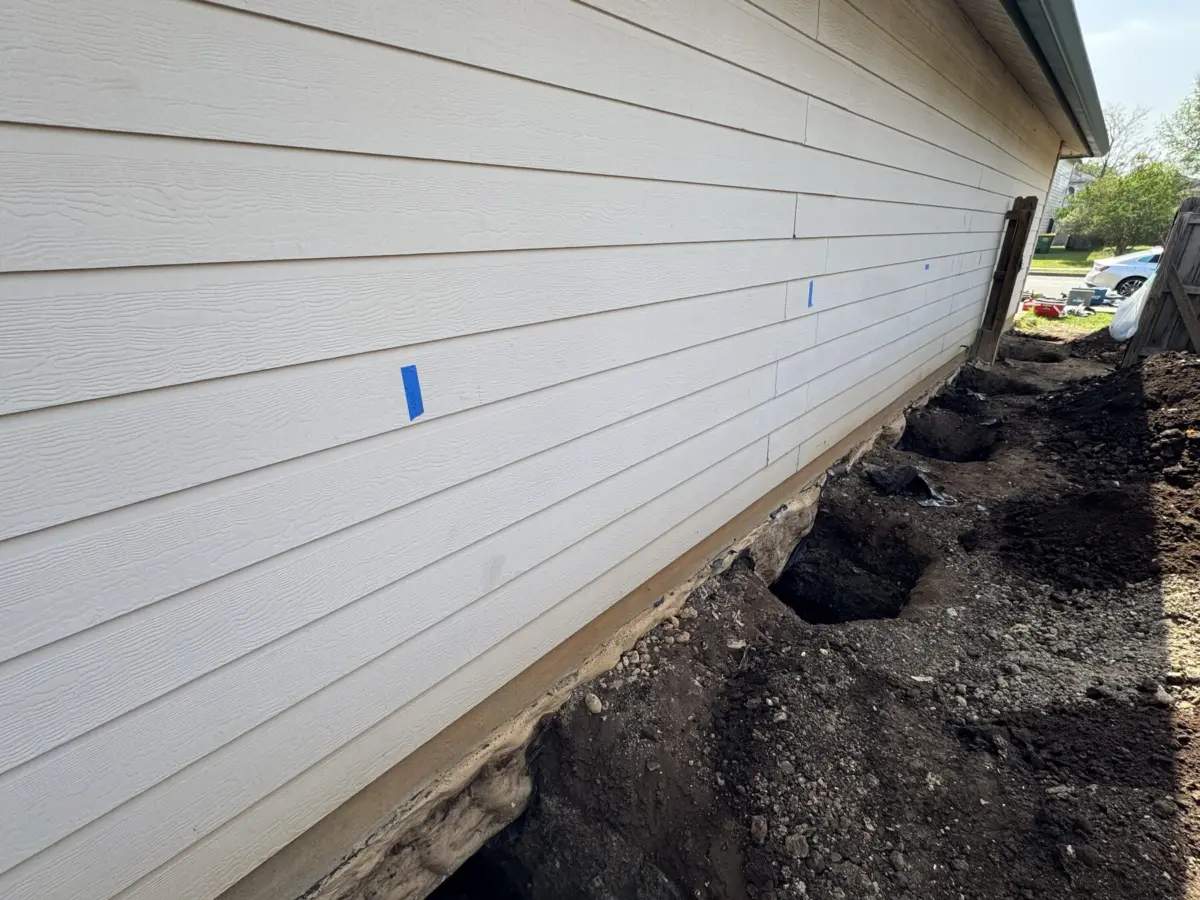
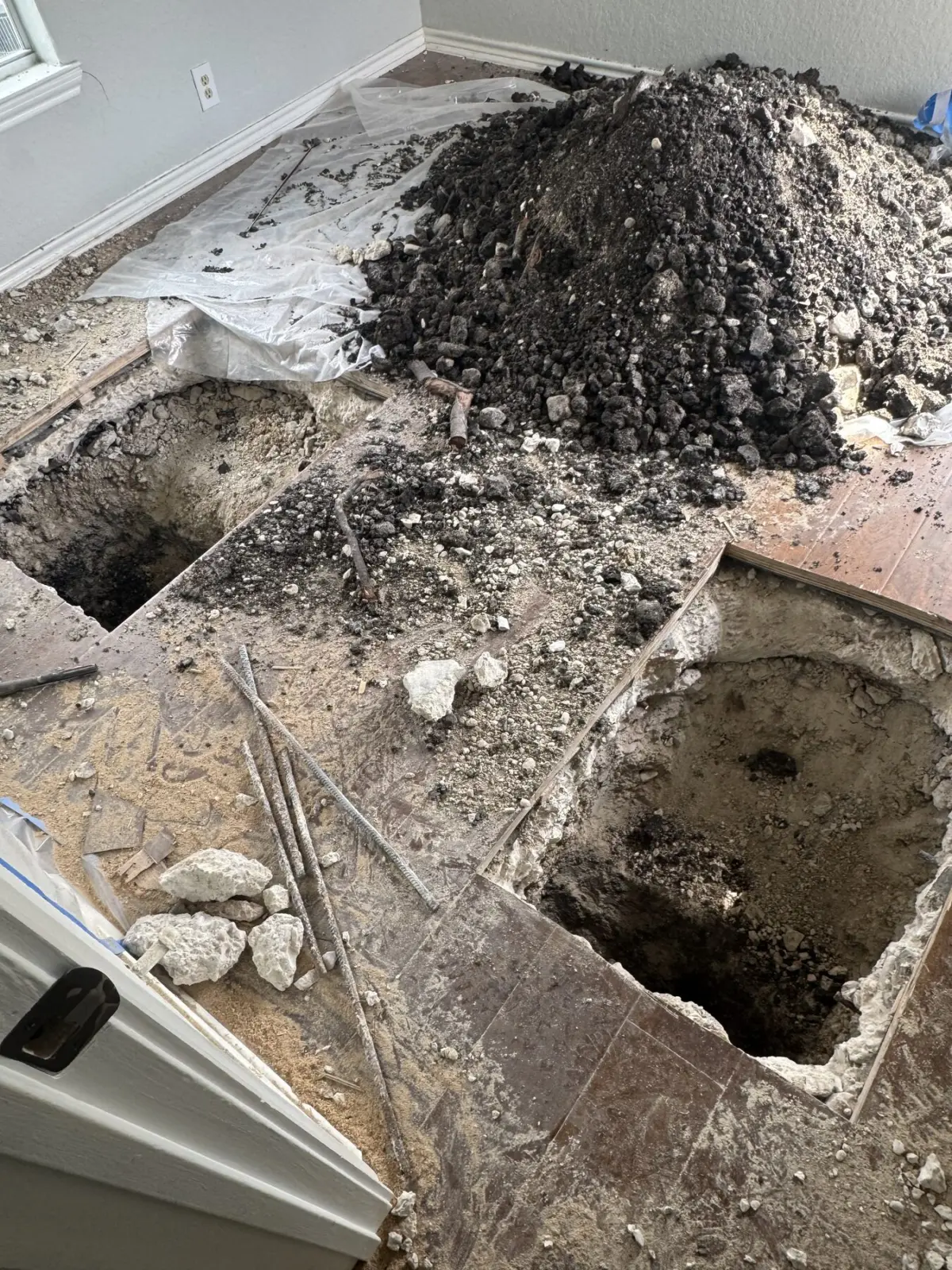
- Inside or outside. Piers along an open flower bed are the simplest. Piers under the middle of a slab mean breaking out the floor indoors and patching it after, which adds work.
- Access. Patios, driveways, walkways, and tight side yards can all sit right where a pier needs to go.
- The type of house. Slab, pier and beam, and manufactured homes are repaired in different ways, with different materials.
Things That Can Add to the Job
Some costs are not about the piers at all. They are worth asking about up front so nothing shows up later as a surprise.
- Engineer certification. Every repair we do is certified by a licensed structural engineer. That is part of the job, not an optional extra.
- Permits. We pull permits when the city requires them. Requirements differ from city to city.
- Plumbing. If a leak under the slab is feeding the movement, it needs to be dealt with first. That is plumbing work, separate from the foundation repair.
- Crack filling. Cracks are filled after the house is level and stable, as part of a larger repair.
- Drainage. French drains and yard drainage can be added to a larger foundation repair when water is part of the problem. We don’t do drainage on its own.
Why One House Costs More Than Another
Picture two houses on the same street. One has a back corner that dropped because of a leaking line and a big tree close to the wall. The other has a middle section that sank, so piers have to go through the floor inside. The second job may need more piers, interior breakouts, and patching, even if the two houses are the same size.
That is why a price you hear for a neighbor’s house, or one you read online, rarely matches yours. It is also why we don’t quote over the phone. Our page on getting a price over the phone explains that part.
How to Get the Total in Writing
The only way to know your number is to have the house measured. At the free inspection, Matt takes floor level measurements across the house, looks at what you have noticed, and shows you what moved. If the house needs repair, you get an exact written price. A good written estimate should spell out:
- How many piers, and where each one goes on a plan.
- Which type of pier, and the warranty that comes with it.
- Whether any piers go through the floor inside.
- Engineer certification, and who pulls the permit if one is required.
- Filling the pier holes and patching slab openings when the work is done.
- Anything not included, so you know what is and isn’t part of the price.
If you are comparing bids, line those items up side by side. A lower number that leaves out piers, depth, or the engineer is not the same job. Our guide to comparing foundation repair estimates walks through it.
Ways to Keep the Cost Sensible
- Ask why each pier is where it is. Piers should go under the parts of the house that moved.
- Ask for the price with concrete piers and with steel piers, so you can weigh the warranty against the cost.
- Get leaks checked and fixed. A leak left running can keep the soil moving.
- Don’t pay for a repair you don’t need. If the house only has a little normal movement, Matt will tell you.
Related questions
Does a bigger house always cost more to repair?
Not necessarily. The price follows how much of the house moved and how many piers it needs, not the square footage on its own.
Is the engineer included in the price?
Every repair we do is certified by a licensed structural engineer, and that is part of the job. Your written estimate shows what is included.
Will the price change once work starts?
Your written estimate is built from measurements of your house, so you know the plan and the exact price before work begins.
Do you offer anything for referrals?
Yes. Our referral program pays $200 when someone you send our way has work done.
Written by Matthew Zeman, co-owner of We Level Homes, with almost 20 years in foundation repair. Last updated November 18, 2026.