Foundation guide
Skirting, Access, and What to Expect on Repair Day
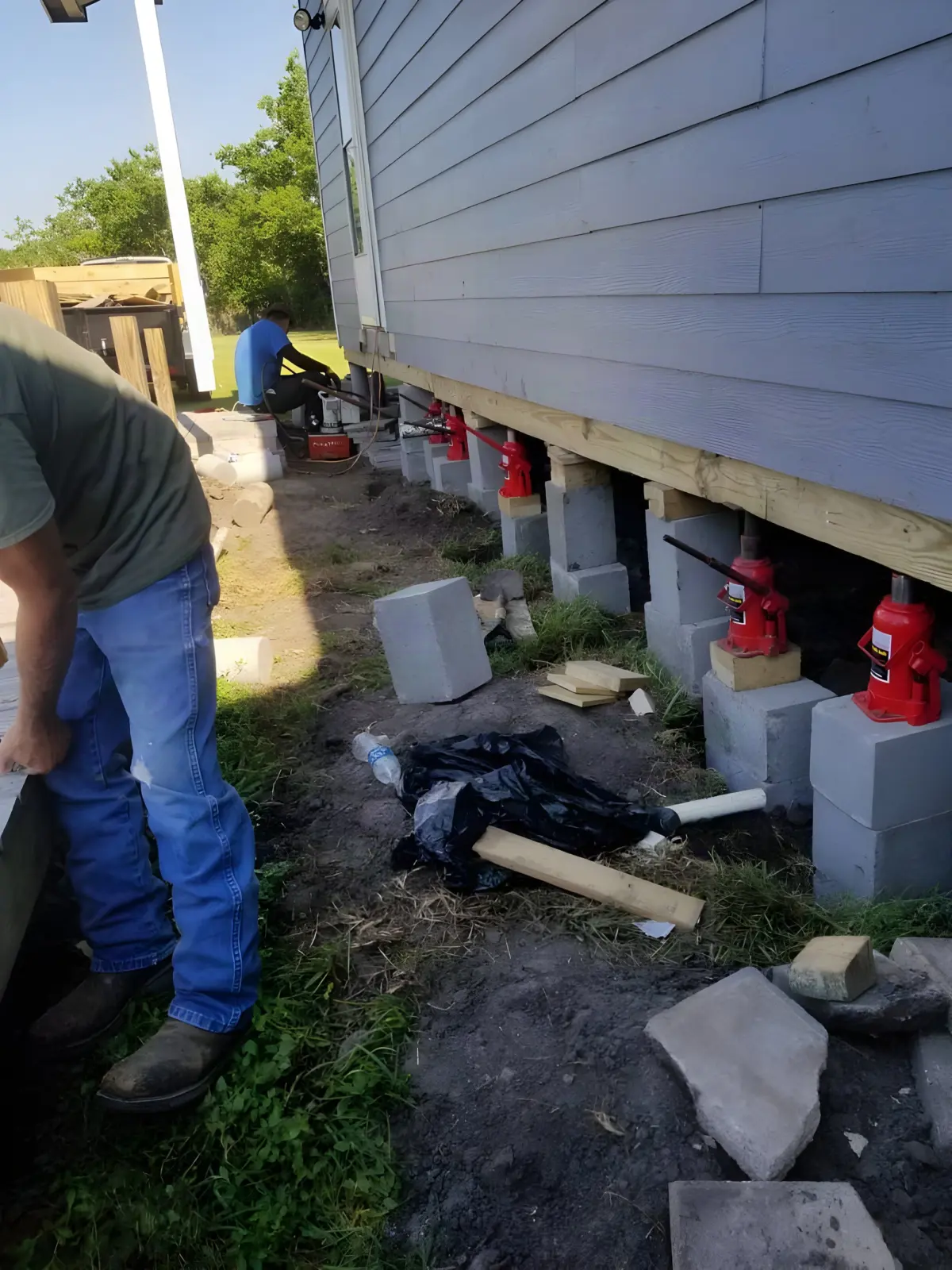
Most of a manufactured home repair happens under the floor, out of sight. Here is how the crew gets under the home, what you can do to get ready, and what the day looks like from inside.
Once you have a written price and a plan, the next question is usually practical: what does repair day actually look like? With a manufactured home, the crew works under the home, along the frame, so the big questions are how they get in, what gets moved, and what you will notice inside.
This guide covers each step, from the inspection to the walk-through at the end. You can also see how every job runs on our process page.
Want to know what is going on under your house?
Matt will measure it for free and show you what he finds. No pressure, no phone guesses.
It Starts With the Inspection
Repair day is planned at the free inspection. Matt measures the floors across the home and goes under it to look at the piers, pads, and soil himself. While he is there, he notes how the crew will get under the home and where the work needs to happen.
That is also when he goes over access with you before any work starts: which sides of the home the crew needs to reach, whether skirting panels will need to come off in those spots, and anything in the way, like a deck, a porch, a shed, or a fenced dog run.
Skirting and How the Crew Gets Under the Home
Skirting closes in the space under the home. It keeps animals out and makes the home look finished, but it also stands between the crew and the piers. Some homes have an access panel or two. Many need more of the skirting opened up so the crew can reach the frame along its length.
- Vinyl skirting usually runs in panels that sit in a top and bottom track.
- Metal skirting is often screwed or nailed to a frame.
- Block, brick, or stone skirting is built in place and can’t simply be lifted out.
- Wood or lattice skirting varies a lot from home to home.
Every home is different, so we go over access with you before work starts. Matt will explain what needs to be opened, and what that means for your skirting, so there are no surprises on the day. If skirting is already damaged or pulling loose, he will point that out too; see skirting pulling away.
Getting Ready the Week Before
You don’t need to do much, but a few things make the day smoother.
- Clear the area right around the home where the crew will work, like flower pots, hoses, and yard furniture.
- Move anything stored under the home on the sides being worked on, if you can reach it safely.
- Plan for pets. Dogs and cats get curious about a crew under the home.
- Take items off high shelves and walls that could shift as the home moves. Our guide on moving furniture for leveling has more tips.
- If you live in a park, check whether the office wants notice that a crew is coming. See park vs. private land.
Please don’t crawl under the home to move things you can’t reach easily. The crew can work around it.
What Happens Under the Home
The repair is new piers under the frame and the home brought back to level. Here is roughly how that goes.
- The crew opens access on the sides where they need to work.
- They set jacks under the frame to carry the load while they work.
- Failed piers come out and new piers go in under the frame where the plan calls for them.
- The home is lifted in small steps, with measurements along the way, until it is back to level.
- The frame is set down onto the new piers and snugged in place.
- The crew checks the floor levels again.
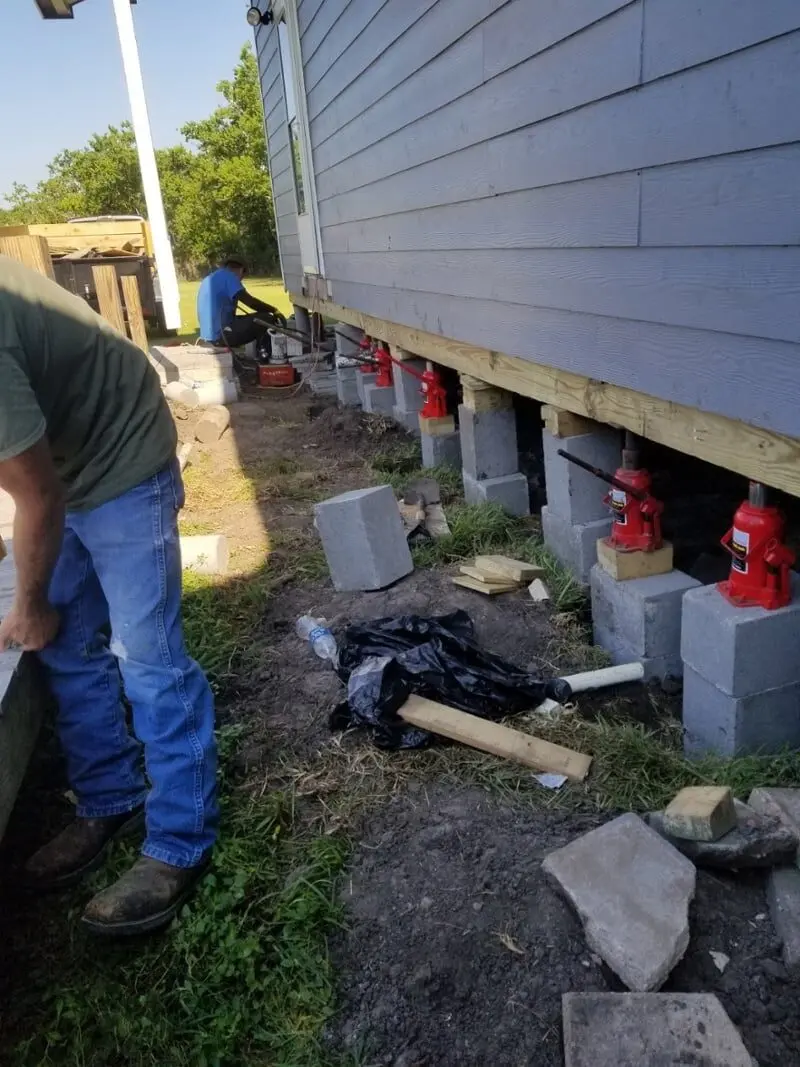
The lift is done slowly on purpose. Raising a home too fast can stress walls, seams, and plumbing. We explain more about this in what happens inside the house when it is lifted.
What You Will Notice Inside
- Noise. You will hear the crew working under the floor, and you may hear creaks as the home moves.
- Doors changing. Doors that stuck may start to swing freely as the home comes back to level. A few may need small adjustments afterward.
- Seams and trim. Ceiling seams and trim strips may shift. Some gaps close up; some need touching up later.
- Water and power. Most of the time these stay on, but Matt will tell you ahead of time if anything needs to be shut off for safety.
Many people stay home during the work. If you would rather be out, let Rosie know so the crew can reach you.
What Affects How Long Repair Day Takes
Every home is different, so we don’t promise a fixed time. These are the things that drive it:
| Factor | Why it matters |
|---|---|
| Single-wide or double-wide | A double-wide has more frame line to support, including the marriage line |
| How many piers need replacing | More new piers means more work under the home |
| How far out of level the home is | A bigger lift is done in more small steps |
| Access and skirting | Tight clearances, block skirting, or decks take more time to work around |
| Ground conditions | Wet or very hard soil changes how the crew works |
Matt will walk you through the plan for your home, and Rosie will keep you posted on scheduling. More on timing in how long manufactured home leveling takes.
Things to Tell Us Ahead of Time
A few details help the crew plan the day. Let Matt or Rosie know if any of these apply:
- A gate code, a lock, or a long drive the truck needs to get down.
- Pets that will be loose in the yard.
- A known leak or wet spot under the home.
- A gas line, propane tank, or AC unit close to the side being worked on.
- A deck, ramp, or porch built tight against the home.
- Anything your park office has asked for.
None of these stop the work. They just help the crew get set up without surprises.
When the Crew Wraps Up
Before leaving, the crew checks the floor levels, cleans up the work area, and walks through the home with you. Matt and Rosie are on every job, so you can ask questions right there.
Every repair is certified by a licensed structural engineer, and we pull permits when they are required, so the paperwork is taken care of as part of the job.
The First Few Weeks After
A home that has been out of level for a while takes a little time to settle into its new position. Over the first few weeks, you may notice small things:
- A door or two that needs a small hinge or strike plate adjustment.
- Ceiling or wall seams that need touching up where they opened while the home was low.
- Skirting that needs to be reset or repaired. Skirting work isn’t part of our repair, so plan for that separately if it is needed.
If something doesn’t seem right, call or text (210) 934-6066 and tell us what you are seeing. For more on how leveling and cracks go together, see will cracks close after leveling.
Questions to Ask Before Repair Day
- Which sides of the home will the crew need to reach?
- What will happen with my skirting in those spots?
- Is there anything I should move, inside or out?
- Will water, power, or gas need to be shut off at any point?
- Does my park office need to know ahead of time?
- Who do I call if I have a question that day?
Related questions
Do I need to be home on repair day?
Not always, but it helps to be reachable. Many owners stay home. Rosie will confirm details with you before the day.
Can I stay in the home while it is being leveled?
Many people do. Matt will tell you ahead of time if there is a part of the work where it is safer to step out.
What if my home has block or brick skirting?
Matt will look at it during the inspection and go over access with you before any work starts.
Will my doors work right afterward?
Many doors that stuck start working again as the home comes back to level. A few may still need small adjustments.
Written by Matthew Zeman, co-owner of We Level Homes, with almost 20 years in foundation repair. Last updated November 18, 2026.