Foundation guide
What Happens Inside the House When It’s Lifted
The piers go in outside or under the floor, but the lift is something you notice inside. Here is what usually happens to the doors, walls, floors, and plumbing while the house comes up, and after.
Most homeowners have a picture of what happens outside on repair day: holes along the foundation, a hydraulic pump, a stack of pier sections. What is harder to picture is what happens inside. Will the dishes rattle? Will the doors pop? Will the walls crack?
Every house is different, but the inside of a house being lifted tends to follow a pattern. Knowing it ahead of time makes the day a lot less stressful. This guide walks through it, from the first pier to the weeks after the crew leaves.
Want to know what is going on under your house?
Matt will measure it for free and show you what he finds. No pressure, no phone guesses.
Before the Lift: Piers Come First
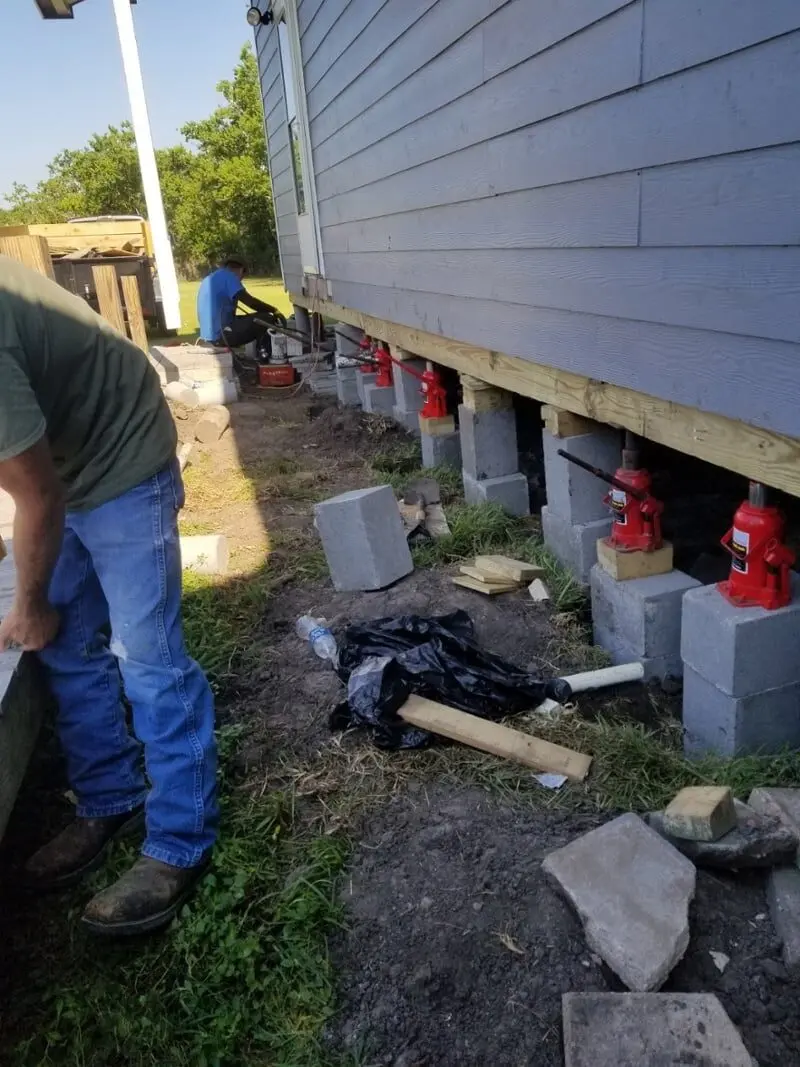
Nothing gets lifted until the piers are in. On a slab home, steel or concrete piers are pressed down hydraulically to 10,000 psi until they stop on bedrock under the parts of the house that settled. On a pier and beam house, rotten or sunken posts come out and poured concrete piers go in. On a manufactured home, new piers go under the frame.
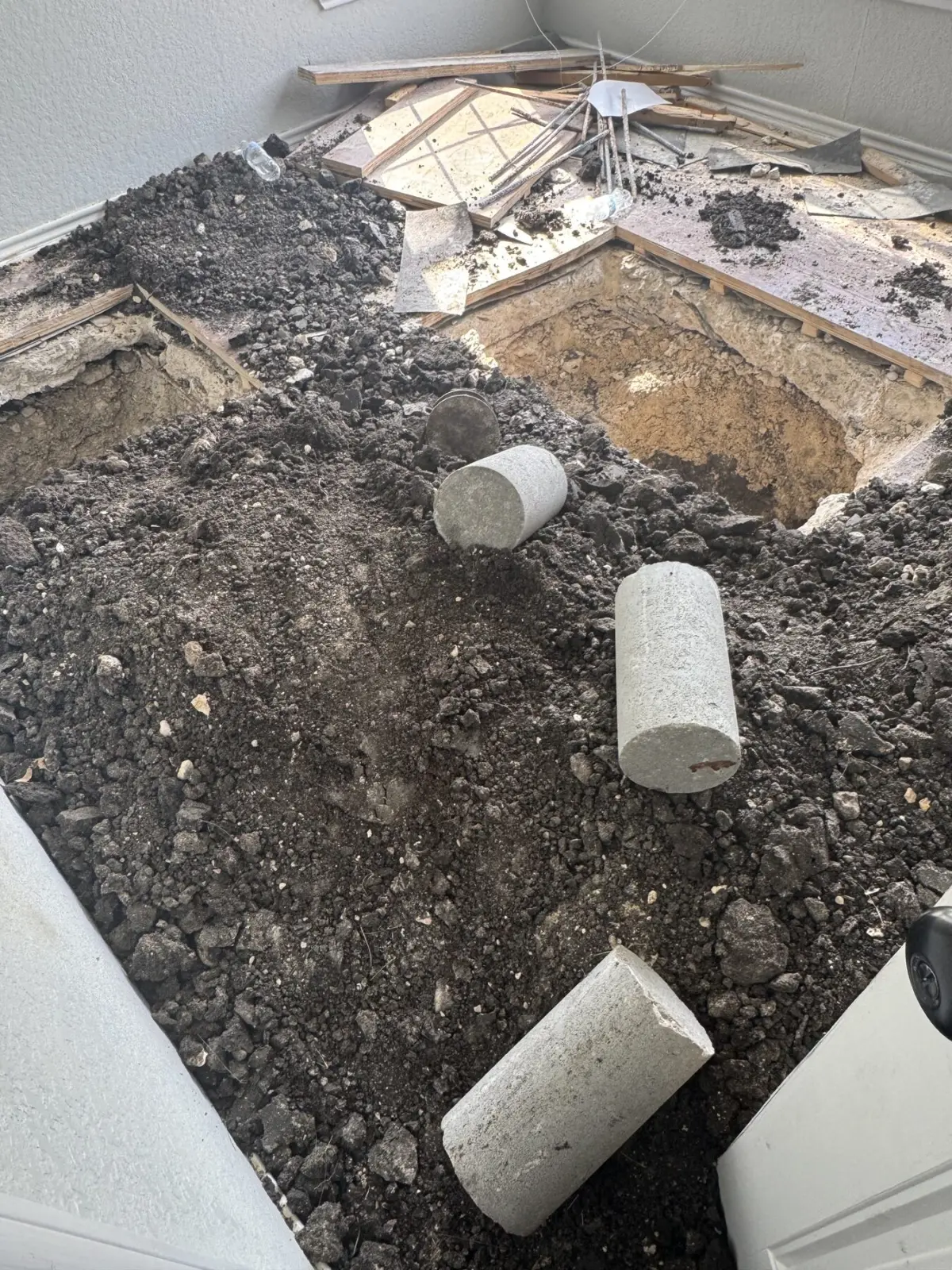
Most of that work happens outside or in the crawl space. If the slab needs support in the middle of the house, the crew cuts small openings through the floor in those spots. That is the part of the job you see most inside.
What You Hear and Feel
A house coming up is rarely dramatic. The lift is done gradually, with the crew working the jacks a little at a time. Inside, people usually notice:
- Creaks and small pops. Wood framing, trim, and nails shifting as the house moves. These are common and usually nothing to worry about.
- Doors changing. A door that stuck may suddenly swing free. One that worked fine may rub for a while.
- Light fixtures and hanging items moving slightly. Pictures can tilt, and loose items on high shelves can shift.
- Not much floor movement underfoot. The lift is small and slow enough that most people don’t feel the floor rising.
Doors and Windows
Doors and windows are usually the first thing homeowners notice. When the low part of the house comes back up, door frames that were racked out of square often move back toward square, and many doors start latching and closing again. That is often the moment people feel the lift was worth it.
Not every door comes all the way back. A door that was planed or rehung while the house was out of level may now rub in a new spot. Our answer on whether doors work again after leveling goes into more detail.
Walls, Ceilings, and Floors
As the house moves back toward level, existing cracks in sheetrock and plaster often close up or get narrower. Some may open slightly as the house adjusts, and an occasional new hairline crack can appear, especially in older plaster or tile. That is part of a house changing shape, even when it is changing back.
Floor tile that already cracked won’t heal, but cracks in it usually stop growing once the house is stable. Cracks are filled after the house is level and stable, not before, so the patch doesn’t crack again with the next bit of movement. For more, see will cracks close after leveling?
Plumbing, Cabinets, and Built-Ins
Plumbing and utilities
Plumbing moves with the house. Most of the time it moves without trouble. In older homes, especially those with cast iron drain lines, lines that were already weak can be stressed by the change. Drains that ran slowly before sometimes run better after, and occasionally a line that was near the end of its life shows a problem.
It is a good idea to ask before the job whether a plumbing test makes sense on your house, and to keep an eye on drains in the days after. A leak under the house is worth fixing quickly either way. Our article on under-slab plumbing leaks explains the connection.
Cabinets, counters, and built-ins
Kitchens and bathrooms often show movement first, because cabinets and counters are long and straight. When part of the house drops, gaps can open between the countertop and the wall, or cabinet doors stop lining up. As the house comes back up, many of those gaps narrow and doors line up better.
Tile backsplashes and grout lines are rigid, so they may show a hairline crack where the house moved. Built-in shelves and long runs of trim can do the same. Most of these are cosmetic fixes once the house is stable. If you are planning a kitchen or bath remodel, it usually makes sense to do it after the leveling, not before.
Interior Openings and Patching
When piers go through the floor, there will be an opening in that room while the work is happening. The crew digs below the slab, presses the pier, sets the jack, and lifts. Once the house is where it should be, the opening is filled and the slab is patched.
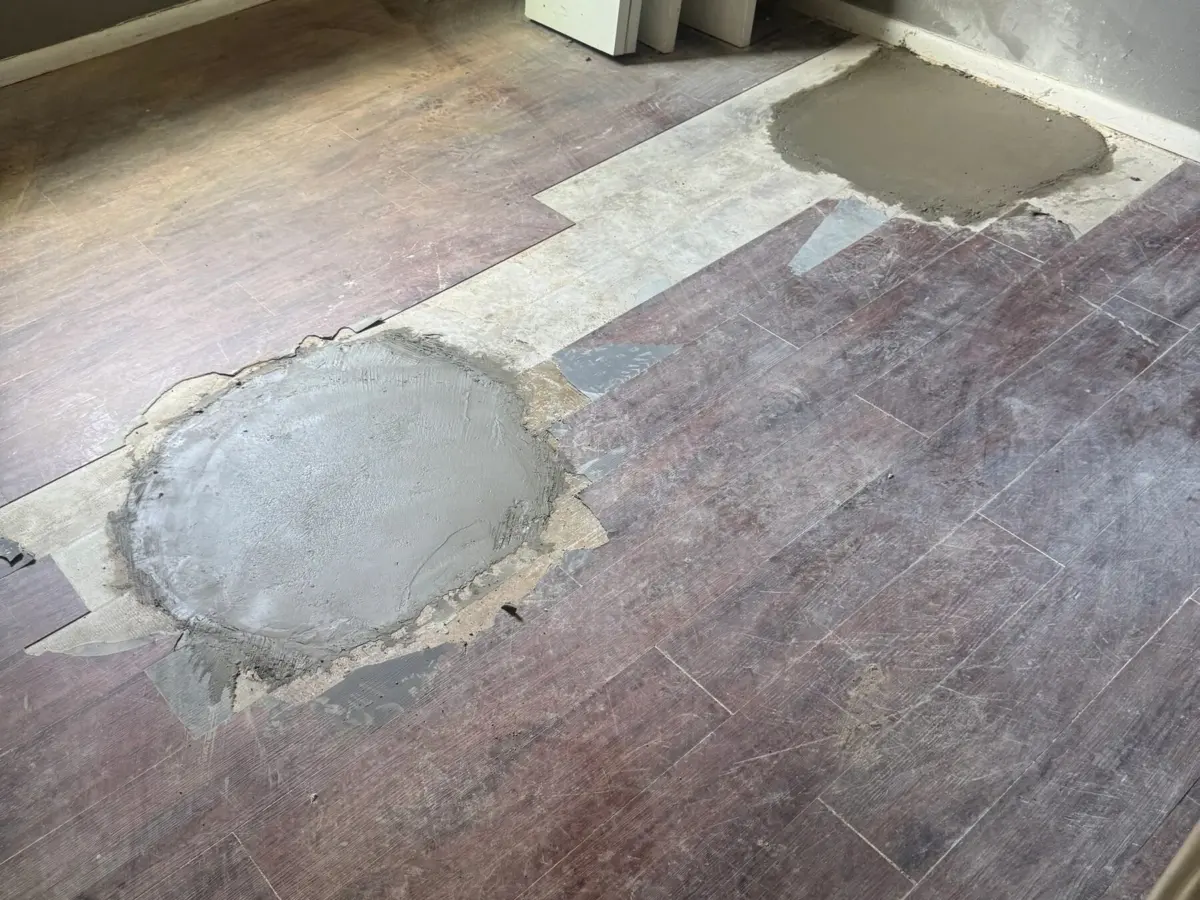
The patched concrete is the slab, not the finished floor. If an opening went through tile, wood, or carpet, the flooring over it is a separate repair. Ask during the estimate where any interior openings would go, so you can plan around rugs, furniture, and flooring. Our guide to patching the slab after piers covers it in more depth.
On a Raised or Manufactured Home
On a pier and beam house, the work happens in the crawl space. Rotten or sunken posts come out, poured concrete piers go in, and the beams are shimmed back to level. Inside, you may hear the crew underneath and feel a bit more movement in the floor than on a slab, because the floor framing itself is being adjusted. Floors that felt soft or sloped over bad posts often feel firmer once the beams are sitting on solid piers.
On a manufactured home, new piers go under the frame and the home is brought back to level. Skirting usually has to come off in places so the crew can reach the frame. Inside, doors and windows often change the way they do in any other house. Our article on skirting, access, and repair day covers what to expect.
The Weeks After the Lift
A house that has been lifted keeps settling into its new position for a while. In the weeks after the job, it is normal to notice small changes: a door that needs a slight adjustment, a hairline crack that shows up where there wasn’t one. Keep notes and take photos.
This is also why we fill cracks and why most people wait on cosmetic work like painting and new flooring until after the house has had time to settle in on its new piers.
A Simple Checklist for Lift Day
- Take pictures and fragile items down from walls in the rooms over the piers.
- Clear shelves of breakable items, especially high ones.
- Move furniture and rugs away from any interior opening spots Matt marked.
- Photograph existing cracks so you can compare after.
- Keep pets away from open holes and the work area.
- Note which doors stick before the lift, and check them after.
- Watch drains for a few days afterward.
For more on getting the house ready, see do I need to move furniture? And for the full job from inspection to warranty, see our process.
Related questions
Can I stay home during the lift?
Usually, yes. Much of the work is outside or under the house, and the lift is gradual. Ask Matt during the estimate if anything about your job would change that.
Will the power or water be shut off?
That depends on the job. Ask Matt during the estimate whether anything in your house will need to be shut off, so you can plan around it.
Is it normal for the house to creak during the lift?
Yes. Creaks and small pops from framing and trim are common as the house moves.
When should I fix the cracks and paint?
After the house is level and stable. Fixing finishes first risks cracking them again as the house moves.
Written by Matthew Zeman, co-owner of We Level Homes, with almost 20 years in foundation repair. Last updated November 18, 2026.