Quick answer
Will Cracks Close After Leveling?
Watching a crack close as the house comes up is satisfying. It doesn’t happen with every crack, though. Here is what to expect.
Short answer
Some will. Cracks in sheetrock and brick often close up or get narrower as the low part of the house is lifted back toward level. Cracks that have been open a long time, cracked tile, and cracks in the slab itself usually don’t close all the way. We fill cracks after the house is level and stable.
Why Some Cracks Close During a Lift
Many cracks open because part of the house dropped and pulled the wall or brick apart. When that part is lifted back up onto new piers, the two sides of the crack move back toward each other. In sheetrock and brick, that often means a crack gets narrower, or closes to a thin line.
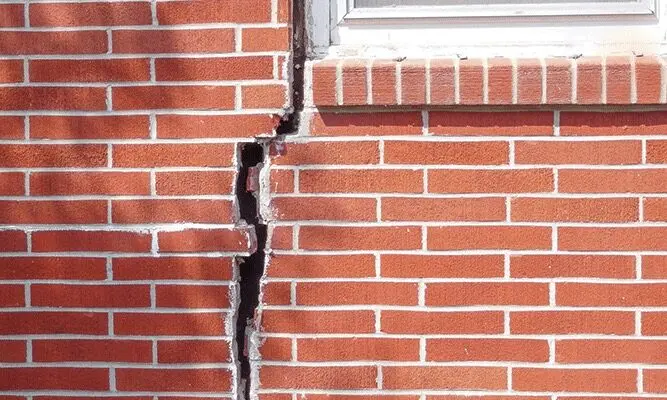
The cracks most likely to change are the ones that line up with the movement: diagonal cracks running up from door and window corners, and stair-step cracks in brick near the corner that settled.
Brick and outside cracks
Stair-step cracks in brick often follow the mortar joints, and they are among the cracks most likely to narrow when the low corner comes back up. A crack that ran through the bricks themselves, or one that has been open long enough to fill with debris, may not close as neatly. Some brick needs mortar work after the house is stable. Gaps at window frames and trim on the outside often tighten up too.
Cracks That Usually Don’t Close
- Cracked tile. Once a tile breaks, it stays broken. Lifting the house usually stops the crack from growing, but the tile may need replacing.
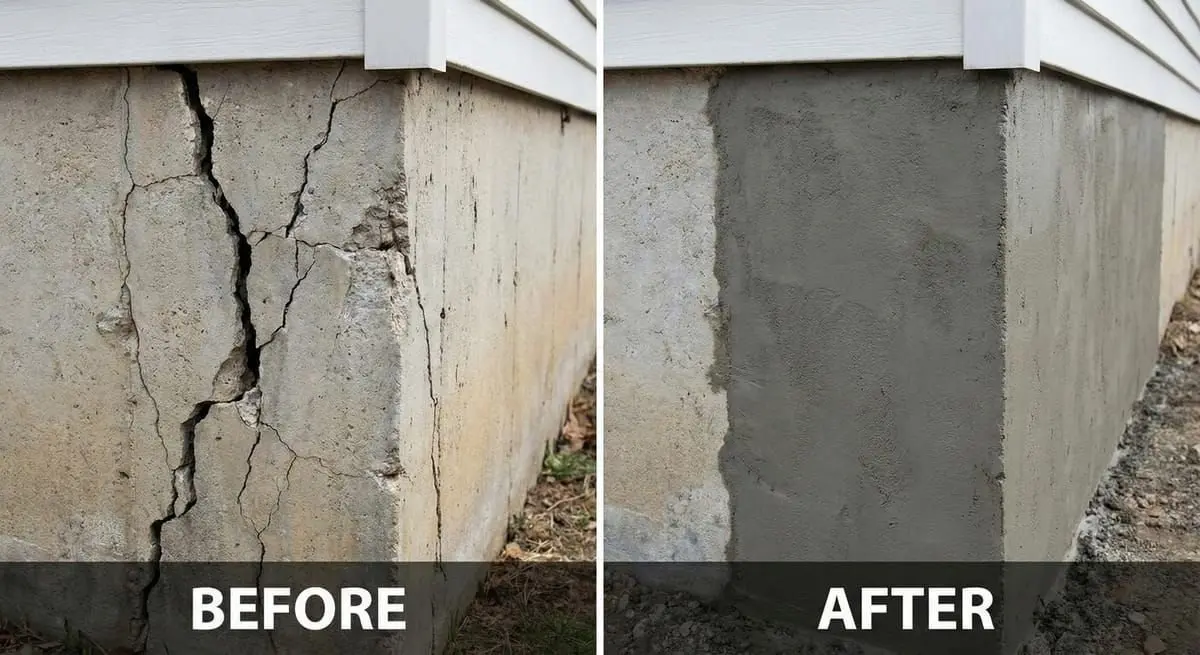
- Cracks in the slab. A crack in the concrete itself may narrow, but it won’t knit back together. Hairline slab cracks are also common in slabs that are performing fine. See are hairline slab cracks normal?
- Old cracks with debris in them. Dirt, mortar, or old filler packed into a crack can keep it from closing.
- Cracks from something other than settling. Shrinkage cracks, or cracks from the house swelling up rather than dropping, may not respond to a lift the same way.
- Plaster. Older plaster is rigid and can crack in new places as well as close in old ones.
Why We Fill Cracks Last
A crack is a symptom. If you fill it while the foundation under it is still moving, it opens back up. That is why cracks are filled after the house is level and stable, not before. By then, the cracks have closed as far as they are going to, and the patch has a solid house behind it.
Our crack repair page explains how that part of the job works. Crack filling isn’t covered by our warranty, which is on the steel and concrete piers.
What About New Cracks?
When a house moves, even back toward where it started, finishes can react. A new hairline crack can appear, especially in older plaster, tile, or around a spot where the house was forced out of shape for a long time. That is normal, and most are small cosmetic fixes. The lift is done gradually and toward level, not to a perfect number, to keep those to a minimum. See will foundation repair crack my sheetrock or tile?
Take photos of your cracks before the job, with the date. It makes it much easier to see what changed afterward.
When to Have Cracks Looked At
Cracks that are growing, that come with sticking doors or sloping floors, or that are wider on one side than the other are worth having measured. At a free inspection, Matt measures floor levels across the house and checks whether your cracks line up with the low spots. For a guide to which cracks matter, see foundation crack types.
Related questions
Should I patch cracks before leveling?
No. Wait until the house is level and stable. A patch on a moving house usually cracks again.
Will brick cracks close?
Stair-step cracks in brick often narrow as the low corner comes up. Some may need mortar work after.
Are cracks covered by the warranty?
No. Our warranty covers the steel and concrete piers. Cracks, drywall, and finishes aren’t included.
How long should I wait to paint?
Long enough for the house to settle onto its new piers. Ask Matt what makes sense for your job; it depends on the house.
Written by Matthew Zeman, co-owner of We Level Homes, with almost 20 years in foundation repair. Last updated November 18, 2026.