Quick answer
Should I Buy a House That Has Had Foundation Repair?
A past foundation repair is not automatically a red flag. What matters is how it was done and what paperwork comes with it. Here is what to ask for.
Short answer
It can be a sound choice, if the repair was done well and documented. Ask for the written warranty, the pier drawing, the engineer’s certification, and any permit records. Have the house inspected, and ask the repair company whether the warranty transfers. A well-documented repair is often easier to judge than an unrepaired problem.
Why a Past Repair Isn’t a Deal-Breaker
In San Antonio, a lot of homes have had foundation work. Expansive clay moves with the seasons, and older homes inside Loop 410 have had decades to settle. A house that was repaired with piers to bedrock, certified by an engineer, and backed by a written warranty may be in better shape than a similar house that has never been looked at.
The question is not “was there a repair?” It is “was it a good one, and can the seller show it?”
Paperwork to Ask For
- The written warranty, including what it covers, how long it runs, and whether it transfers to a new owner. Ask the company that did the work.
- A drawing of where the piers went, so your inspector can see what was supported.
- The engineer’s letter or certification. Our page on engineer letters explains what it is.
- Permit records, if the work was in a city that requires a permit. In San Antonio, foundation repair needs one.
- The date of the repair and the type of piers used.
- Any later reports or adjustments since the original work.
Missing paperwork doesn’t always mean a bad repair, but it does mean more questions.
Questions for the company that did the work
- Is the company still in business, and will it honor the warranty for a new owner?
- How deep did the piers go, and what did they stop on?
- Was the work certified by a licensed engineer?
- Has the house been back for any adjustments since?
Clear, quick answers to these are a good sign. Vague ones are worth following up on.
What to Check in Person
- Doors and windows: do they open and close cleanly?
- Floors: do they feel level, or do they slope toward one side?
- Cracks: are there new ones, or old ones that have been patched and reopened?
- Outside: is water draining away from the house, or pooling against it?
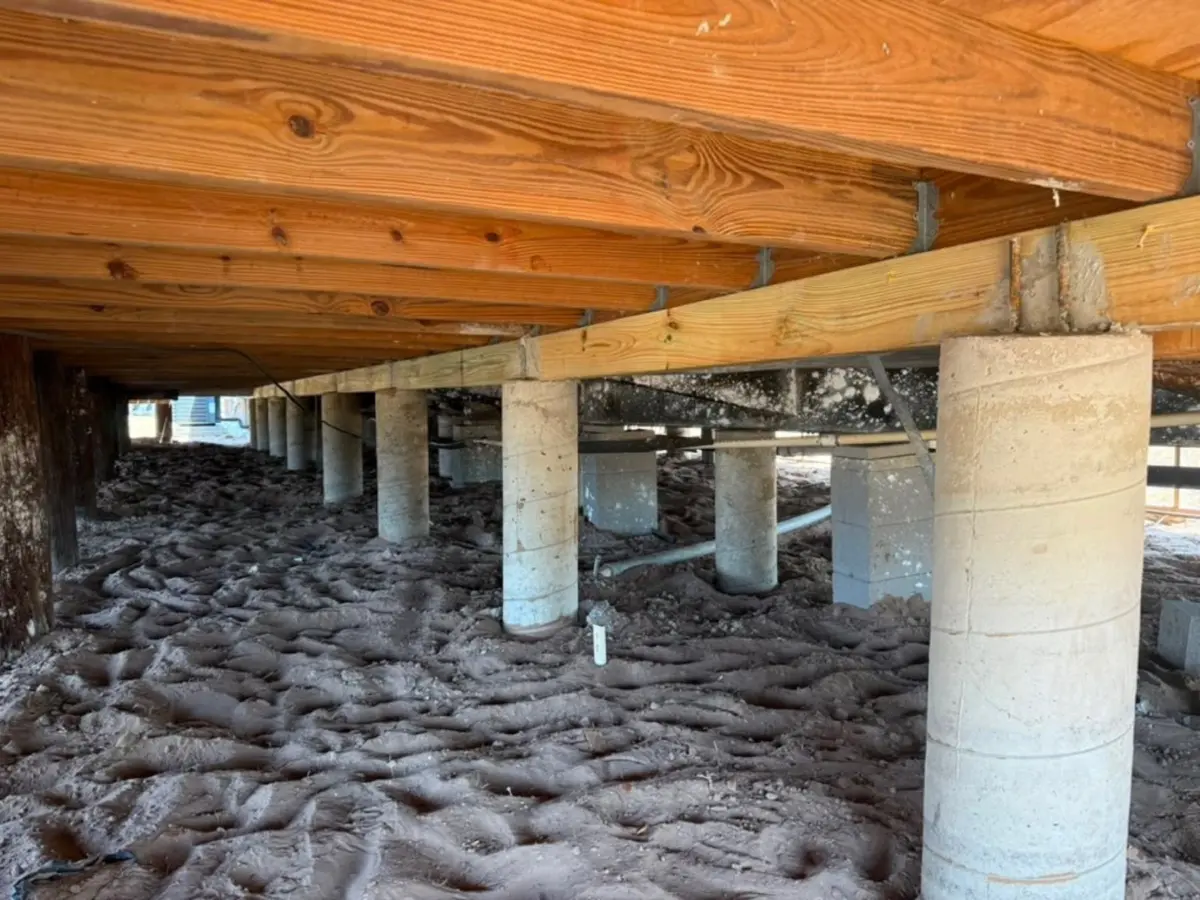
- For a pier and beam home, what the crawl space looks like.
Our foundation inspection guide covers what a good inspection looks at. For older raised homes, our pier and beam buying checklist is a useful companion.
Questions for Your Agent and Inspector
- Has the seller disclosed the repair and any known foundation issues?
- Does the inspection report mention the foundation, and what did it find?
- Should a structural engineer review the house before closing?
- Will the lender or appraiser want to see repair documents?
- How does the past repair affect the price you are offering?
Disclosure rules, contract terms, and negotiation are real estate and legal questions. Ask your real estate agent or a real estate attorney, not a foundation company.
If Something Doesn’t Add Up
If the paperwork is thin or the house shows new signs of movement, slow down. Ask for more time, more documents, or a second opinion. Our article on settling vs. failure explains which signs mean movement is still going on.
And if the paperwork is solid, the doors close, and the floors feel level, a past repair may be one less thing to wonder about. Many buyers end up preferring a house where the foundation question has already been answered, with the documents to prove it.
Related questions
Does a foundation warranty transfer to a new owner?
It depends on the company and the warranty terms. Ask the company that did the work, and get the answer in writing.
Is a repaired house harder to sell later?
It can raise questions, but a documented repair with an engineer’s certification and warranty usually answers many of them. Ask your agent how it plays out in your area.
What if the seller has no paperwork?
Then you know less about the repair. An inspection and a structural engineer’s review can help fill in the gaps.
Should I worry about a few small cracks?
Hairline cracks are common in San Antonio homes. Cracks that are wide, growing, or paired with sticking doors are the ones to ask about.
Written by Matthew Zeman, co-owner of We Level Homes, with almost 20 years in foundation repair. Last updated November 18, 2026.