Foundation guide
Buying an Older San Antonio Home: A Pier-and-Beam Checklist
Older raised homes have a lot going for them. Before you buy one, here is what to look at inside, outside, and underneath, and what to ask.
A lot of the older homes for sale inside Loop 410 are pier and beam. Many were built between the 1920s and the 1950s, and plenty are in good shape. Some have floors that need work underneath, and that is not always obvious during a showing.
This checklist is for buyers. It covers what you can check yourself during a walkthrough, what to ask the seller, and when it makes sense to have someone go under the house before you close. It is general guidance, not real estate or legal advice. Your agent and inspector are the right people for questions about your contract.
Want to know what is going on under your house?
Matt will measure it for free and show you what he finds. No pressure, no phone guesses.
Inside the House
Walk every room slowly. Older raised homes tell you a lot through the floors and doors.
- Floors: dips, slopes toward the middle of the house, or soft and bouncy spots. Rolling a marble or ball can help, but a gentle slope in an old house is common.
- Doors: open and close every interior door. Note any that stick, rub at the top, won’t latch, or swing on their own.
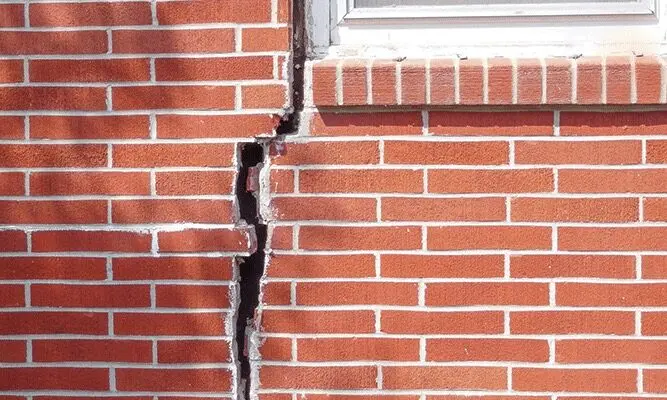
- Walls and ceilings: diagonal cracks at the corners of doors and windows, and cracks that look freshly patched or painted over.
- Trim: gaps between baseboards and the floor, or crown molding pulling away from the ceiling.
- Windows: windows that are hard to open or show gaps in the frame.
- Fresh cosmetic work: new paint or flooring in just one area can be fine, but it is worth asking about.
Outside the House
- The base of the walls: skirting, a perimeter wall, or vents. Look for gaps, sagging, or areas that are pulled loose.
- Access openings: where is the way into the crawl space? Is there one?
- Drainage: does the soil slope away from the house? Are there gutters, and do the downspouts empty away from it?
- Water marks: stains or wet soil along one side, or low spots that hold water.
- Trees: large trees close to the house can dry out the clay on one side. See trees, roots, and your foundation.
- Mud tubes: thin dirt tubes on the foundation or skirting can be a sign of termites.
Under the House
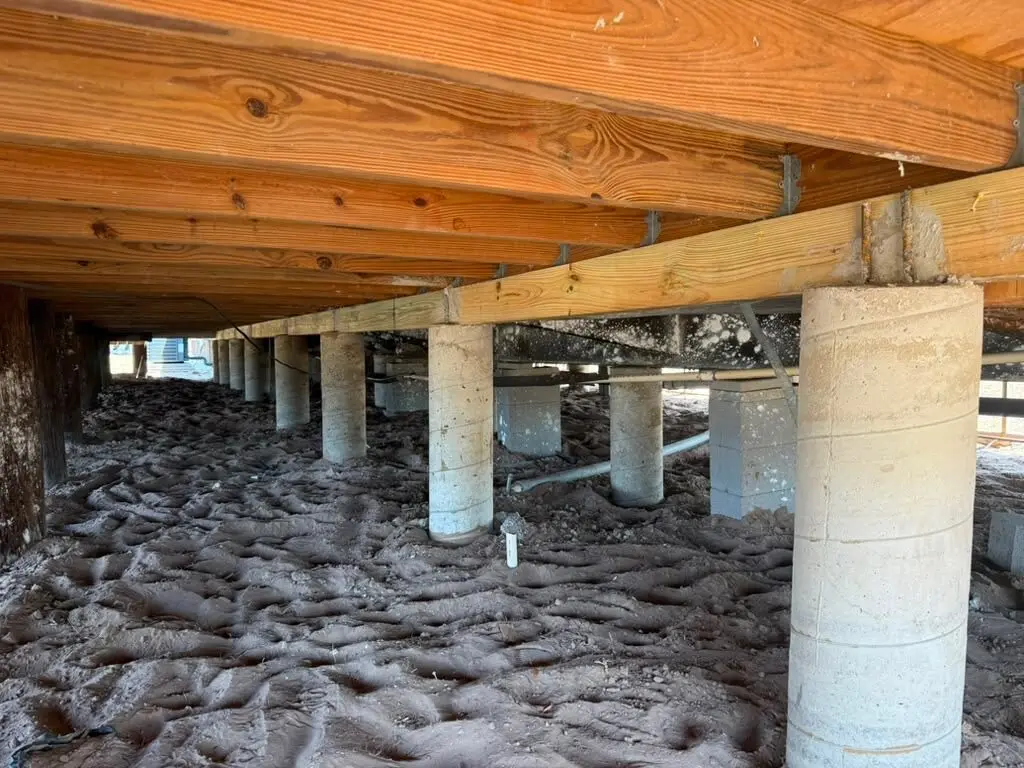
This is where pier and beam homes show their real condition. You don’t need to go under yourself, and if you are not comfortable in a tight space, don’t. Your home inspector or a foundation company can. What they should be looking at:
- Posts: are they wood or concrete? Any that are rotted, leaning, sunk into the dirt, or missing?
- Beams: any that sag, are cracked, or sit on stacked blocks or wood wedges?
- Joists: any that are notched, cut, or water stained?
- Soil: dry, damp, or standing water?
- Plumbing: any active drips or old leak stains? Many pre-1980s homes have cast iron drain lines.
- Earlier repairs: what kind of supports were added, and do they look solid?
- Pests: signs of termites or other activity.
Questions to Ask the Seller
- Has the foundation ever been repaired or leveled? When, and by whom?
- Is there paperwork: a repair plan, an engineer’s letter, a warranty, a drawing of where supports went?
- If there is a warranty, does it transfer to a new owner? (Ask the company that issued it.)
- Were permits pulled for any foundation work?
- Have there been plumbing leaks under the house?
- Has the house been treated for termites? Is there a current pest contract?
- Have any additions been built, and what are they sitting on?
An engineer letter from a past repair is useful paperwork to have. Our article on buying a house that has had foundation repair covers what to look for in it.
Additions and Mixed Foundations
Many older raised homes have a slab addition on the back, often a kitchen, bathroom, or den. The two parts sit on different foundations and can move differently. Look closely at the seam where they meet: a step in the floor, a crack along the joint, or a door between the two rooms that sticks.
It doesn’t mean the house is a bad buy. It means both foundations should be looked at.
Also ask whether a past remodel took out any walls or added heavy finishes. A wall that was removed may have been carrying load down to a beam, and a new tile floor or stone countertop puts extra weight on posts that were already old. Those changes don’t always cause problems, but they are worth knowing about when you look under the house.
When to Get a Foundation Evaluation
A general home inspection is a good start, but a home inspector may only take a quick look under the house. Consider having a foundation company take a closer look if:
- The inspection report mentions sagging, rotted posts, or settlement.
- You noticed sloping floors or several sticking doors.
- The house has had foundation work and the paperwork is thin.
- You plan a remodel that adds weight, like tile floors or a stone countertop.
Ask your agent how that fits into your contract timeline. Our free foundation inspection includes floor level measurements across the house and a look underneath, and if repair is needed, an exact written price you can use in your planning.
If the seller has already had the foundation repaired, the evaluation can also tell you whether the work looks sound today. Supports that were replaced with concrete and beams that sit tight on them are a good sign. Old wood posts with fresh shims on top are worth asking about.
Reading What You Find
| Often minor | Worth a closer look | |
|---|---|---|
| Floors | A gentle, even slope in an old house | Dips, soft spots, or a slope toward the center |
| Doors | One door that rubs in humid weather | Several doors that stick or won’t latch |
| Walls | Thin hairline cracks | Cracks at door and window corners that are wide or growing |
| Under the house | Dry soil and solid supports | Rotted or sunken posts, stacked blocks, standing water |
| Paperwork | Past repair with an engineer letter and warranty | Past repair with no records |
This is a general guide, not a diagnosis. The only way to know is to measure the floors and look at the supports.
What Repairs Can Involve
If the evaluation finds something, it helps to know what kinds of work might be on the list, and who does each part:
- Replacing failed posts. Rotted or sunken wood posts out, poured concrete piers in, and the beams shimmed back toward level. That is a pier and beam repair.
- Framing. Damaged beams or joists are carpentry work, separate from the supports.
- Termites. Treatment by a licensed pest control company.
- Plumbing. Leaks under the house, or aging cast iron drain lines, handled by a plumber.
- Drainage. Water running toward the house. We add drainage only as part of a larger foundation repair.
- Cosmetic patching. Cracks in sheetrock and trim, patched after the house is level and stable.
What a foundation repair costs depends on how many supports have failed, how far the beams need to come up, and how easy the crawl space is to work in. Nobody can give an honest number without measuring the floors and going underneath. Our answer on what drives pier and beam repair cost explains more. If you are under contract, an exact written price gives you and your agent something concrete to work with.
How that price fits into a negotiation, a repair request, or the closing timeline is a question for your agent. Some buyers ask the seller to make repairs, some ask for a price adjustment, and some plan to do the work after closing. What works depends on the deal.
After You Buy
- Keep any repair paperwork, engineer letters, and warranties in one place.
- Keep gutters clean and water draining away from the house.
- Fix plumbing leaks quickly.
- Keep up with termite inspections through a pest control company.
- Take a few photos under the house once a year, if someone can safely reach it, so you can compare over time.
If the floors start to feel different, a pier and beam repair usually means replacing the failed posts with poured concrete piers and shimming the beams back toward level.
Related questions
Should I avoid buying a pier and beam house?
Not because it is pier and beam. Many are in good shape. What matters is the condition of the posts, beams, and soil underneath, and whether past repairs were done well.
Can you look at a house I am thinking about buying?
Matt can do a free foundation inspection. Talk with your agent and the seller about access and timing.
Does a past foundation repair mean I should walk away?
Not on its own. Look for an engineer letter, a written warranty, and a drawing of where supports went. Ask the company whether the warranty transfers.
Will a foundation issue affect my loan or insurance?
It can, depending on the lender and policy. Ask your lender, insurance agent, and real estate agent. We can’t advise on those.
Written by Matthew Zeman, co-owner of We Level Homes, with almost 20 years in foundation repair. Last updated November 18, 2026.