Quick answer
When Should You Repair Foundation Cracks?
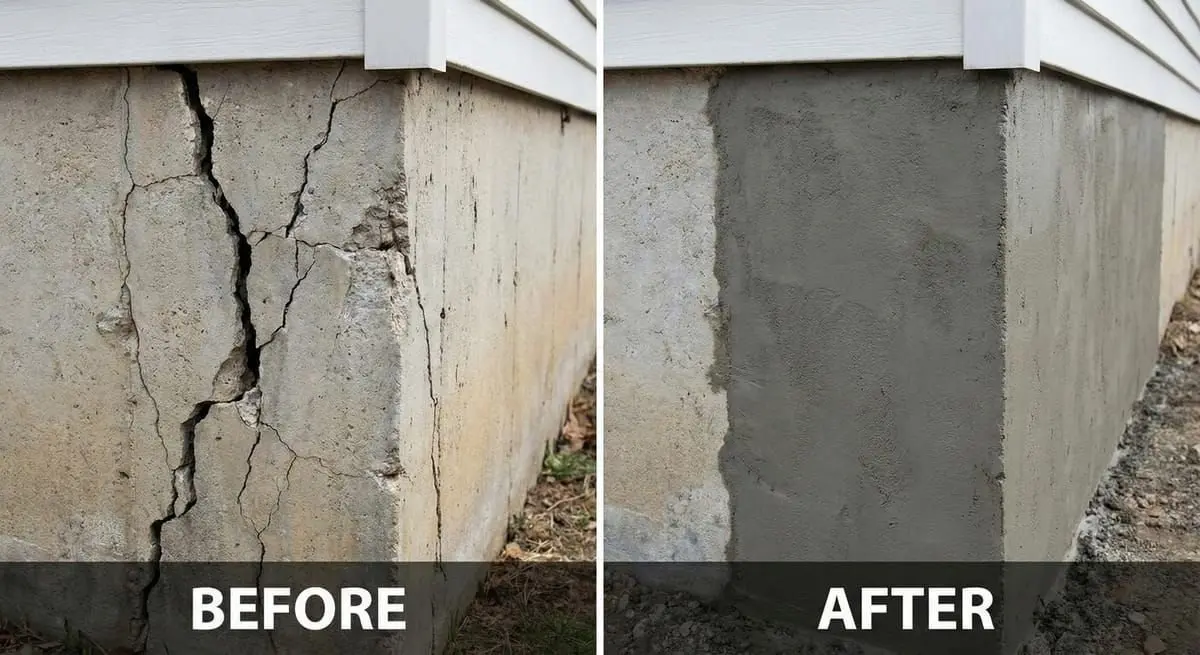
Not every crack needs a repair, and the ones that do need it in the right order. Here is how to tell, and when filling a crack actually lasts.
Short answer
Repair foundation cracks after the house is level and stable. A crack is usually a sign that something moved, so filling it first only hides the movement and the crack tends to come back. Thin hairline cracks that aren’t changing can often just be watched. Wider or growing cracks are worth having measured.
Why the Order Matters
A crack is a symptom. Something under or around the house moved, and the concrete, brick, or sheetrock gave way where it was weakest. If the foundation is still moving, a filled crack usually opens back up, or a new one shows up next to it.
That is why we fill cracks after the house is level and stable, as part of a larger repair. First the piers go in under the parts that moved. Then the house is lifted back toward level. Then the cracks are filled, and the patch has a steady foundation under it. Our crack repair page covers how that works.
Cracks That Can Usually Wait
Plenty of cracks are not a sign that the foundation needs repair. These are often fine to watch:
- Thin hairline cracks in a slab or garage floor that aren’t growing. Concrete shrinks as it cures, and small cracks are common.
- Small cracks in sheetrock or paint with no sticking doors or sloping floors nearby.
- Cracks you have watched for months that haven’t gotten longer or wider.
Our guide to foundation crack types goes into which cracks matter and which don’t.
Inside cracks vs. outside cracks
Cracks inside the house, in sheetrock and paint, often show up first because those finishes are thin and brittle. Cracks outside, in brick and in the exposed edge of the slab, can tell you more about the foundation itself. When inside and outside cracks line up on the same corner of the house, that corner is worth a closer look.
Cracks Worth Having Measured
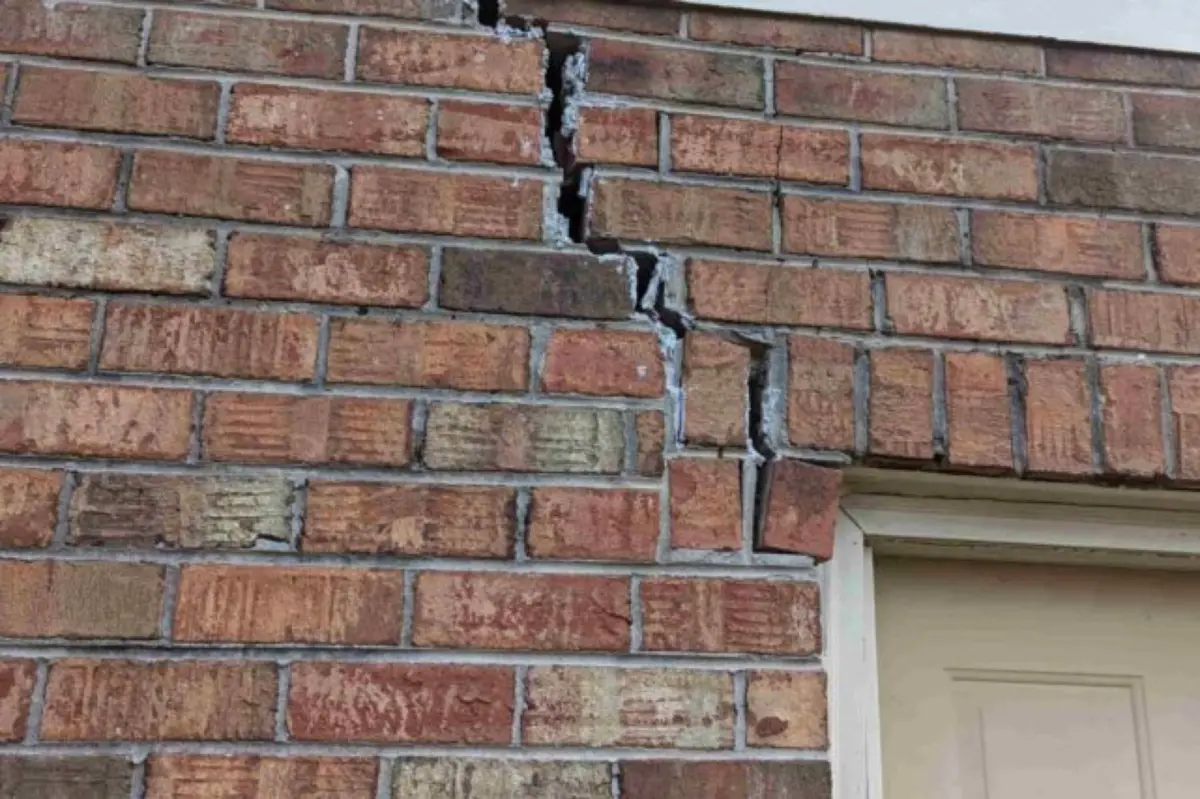
- Stair-step cracks in brick, especially near corners and windows.
- Cracks wider than a hairline, or wider at one end than the other.
- Cracks that grow over a few months.
- Diagonal sheetrock cracks running up from the corners of doors and windows.
- Cracks that show up along with sticking doors, gaps around frames, or floors that slope.
Any of these can mean part of the house has dropped. The way to know is to measure floor levels, not to guess from the crack alone.
A crack’s width on its own doesn’t tell the whole story. A wide crack that has been the same for years may matter less than a thin one that is clearly growing. That is why notes and dates help so much.
What to Do in the Meantime
- Mark the ends of the crack with a pencil and write the date.
- Take a photo with something for scale, like a coin.
- Check again after a dry stretch and after heavy rain.
- Note any doors or windows that start sticking.
- If water or bugs are getting in, sealing the crack to keep them out is fine. Just know it isn’t a foundation repair.
Those notes and photos are useful at an inspection, because they show whether the crack is changing.
How We Decide
At a free inspection, Matt measures floor levels across the house and lines the cracks up with the low spots. If the house needs piers, the plan includes filling the cracks once it is level. If the cracks are cosmetic and the house hasn’t moved much, he will tell you that, and you can handle them as normal upkeep.
Either way, you leave with measurements you can compare against later, which is often the most useful thing a homeowner can have when deciding what to do about a crack.
Related questions
Will cracks close when the house is lifted?
Some can close partly as the house comes back toward level, and some won’t. Cracks in the slab are filled once the house is level and stable.
Do you fill cracks without doing pier work?
Crack filling is done as part of a larger foundation repair, once the house is level and stable.
Is crack repair covered by the warranty?
No. Our written warranty covers the steel and concrete piers we install. Crack repair is not part of it.
Are slab cracks under tile a problem?
Sometimes. Cracked tile can follow a slab crack. Measuring the floor tells you whether the slab moved or the crack is just shrinkage.
Written by Matthew Zeman, co-owner of We Level Homes, with almost 20 years in foundation repair. Last updated November 18, 2026.