Quick answer
Are Pier and Beam Foundations Bad?
Pier and beam homes get a bad reputation, mostly from old houses with old wood posts. The foundation type itself is not the problem.
Short answer
No. Pier and beam foundations are not bad. Many have held up San Antonio homes for decades. Their weak spot is wood posts sitting near damp soil, which can rot, sink, or draw termites. Replace failed posts with concrete piers, keep water away, and a raised home can stay solid for a long time.
Where the Bad Reputation Comes From
Most pier and beam homes in San Antonio are older. Many inside Loop 410 were built between the 1920s and the 1950s. After that many decades, the wood posts under a lot of them have rotted, sunk into the clay, or shifted. People feel the sagging floors and sticking doors and blame the foundation type.
But that is mostly a story about old wood, not about the design. A slab built in the same era, on the same clay, would have its own problems by now.
What Pier and Beam Does Well
- It can be adjusted. The beams can be reached, lifted, and shimmed. If the house moves again later, it can be brought back toward level without breaking concrete.
- Plumbing is easier to reach. Pipes, wiring, and ductwork can often be reached from the crawl space instead of through a concrete floor.
- Failed parts can be swapped out. A rotted post can be taken out and replaced with a concrete pier without rebuilding the house.
- It sits up off the ground. The floor is raised away from surface water.
- It feels softer underfoot. Wood floors on a raised frame have a different feel than floors on concrete, which many people like.
Where It Struggles
- Wood near the soil. Old wood posts sitting on or near damp ground can rot over time. See wood rot and termites under a pier-and-beam home.
- Termites. Subterranean termites can get into wood close to the ground. That is a job for a licensed pest control company.
- Clay movement. Posts sitting in expansive clay ride up and down with the weather, especially near the edges of the house.
- Bouncy floors. Loose, missing, or widely spaced supports can make floors feel soft.
- Tight crawl spaces. Some older homes have very little room underneath, which makes work harder.
Most of these trace back to the supports. Fix those, and most of the list goes away.
What Makes the Difference
A well-kept pier and beam home on solid supports can stay sound for a very long time. These are the things that matter most:
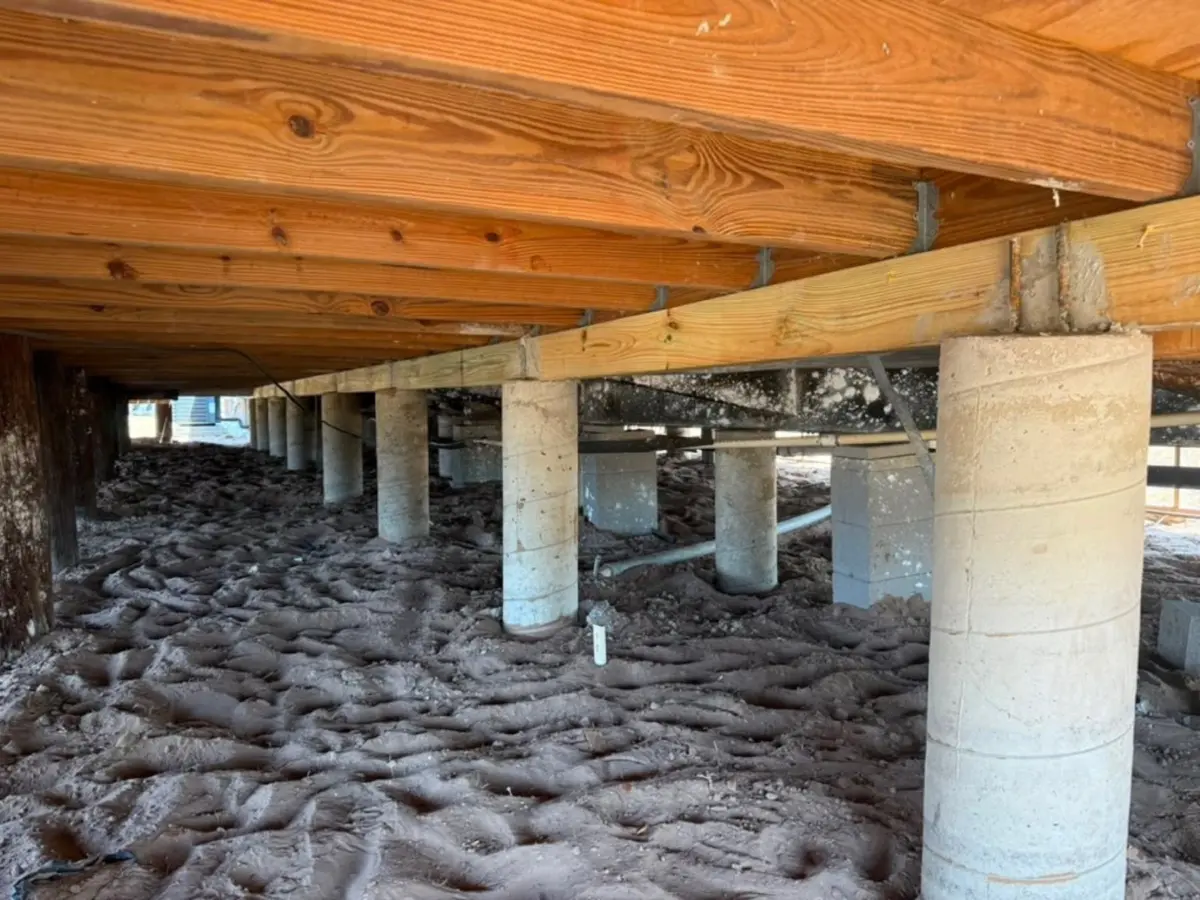
- What the beams sit on. On a pier and beam repair, we take out rotted or sunken wood posts and pour solid concrete piers in their place, then shim the beams back toward level. Concrete won’t rot, and termites don’t eat it.
- Water. Gutters, downspouts, and soil that carry water away from the house keep the crawl space drier.
- Leaks. A plumbing leak under the house keeps the soil soft and speeds up rot. Many pre-1980s homes have cast iron drain lines that can crack with age.
- Pest control. Regular termite inspections through a pest control company.
- Catching problems early. A few failed posts are a smaller job than a house where most of them have given way.
Every repair we do is certified by a licensed structural engineer, and we pull permits when the city requires them.
Should You Avoid Buying One?
Not because it is pier and beam. Look at the condition: the floors, the doors, and what is under the house. Ask about past repairs and paperwork. Our pier-and-beam buying checklist walks through it, and our comparison of pier and beam vs. slab covers how the two stack up.
If you already own one and something feels off, call or text (210) 934-6066 for a free inspection. Matt goes under the house and tells you what he sees.
Related questions
Is slab better than pier and beam?
Neither is better across the board. Each has strengths and weak spots, and both move with San Antonio clay. Condition and upkeep matter more than type.
Do pier and beam homes always need repair eventually?
Many older ones with wood posts do at some point. Replacing those posts with concrete piers takes away the part most likely to fail.
Are pier and beam homes harder to insure?
It depends on the insurer and the condition of the house. Check with your insurance agent.
Can you look at mine even if nothing seems wrong?
Yes. The foundation inspection is free, and if nothing needs to be done, Matt will tell you.
Written by Matthew Zeman, co-owner of We Level Homes, with almost 20 years in foundation repair. Last updated November 18, 2026.