Foundation guide
Wood Rot, Termites, and Structural Damage Under a Pier-and-Beam Home
Rot and termites do their damage out of sight, under the floor. Here is how to spot it, what it does to the house, and who handles which part of the fix.
The supports under most older pier and beam homes are wood. Wood holds up well when it stays dry. Under a house, close to the soil, it often doesn’t stay dry, and that is where rot and termites start.
By the time you feel it in the floor, the damage underneath has usually been building for years. This guide explains what rot and termite damage look like, what they do to a raised home, and how the repair is split between a pest control company, a foundation crew, and sometimes a carpenter.
Want to know what is going on under your house?
Matt will measure it for free and show you what he finds. No pressure, no phone guesses.
Why Wood Rots Under a House
Wood rot is caused by fungi that feed on wood when it stays damp. Under a pier and beam home, a few things keep the wood damp:
- Posts sitting on the soil. Wood in direct contact with dirt soaks up moisture from the ground.
- Water draining toward the house. Rain that runs under the house instead of away from it keeps the crawl space wet.
- Plumbing leaks. A dripping supply line or a cracked drain line can keep one spot wet for years. Many pre-1980s San Antonio homes have cast iron drain lines that can crack with age.
- Poor airflow. Blocked vents or a very low crawl space hold moisture in.
Rot usually starts at the bottom of a post, where it meets the soil or a damp block, and works its way up. It can also show up in a beam or a joist that sits on a wet support or under a leak.
Rot isn’t always easy to see from a distance. Early on, the wood may just look darker than the posts around it. Later it can turn soft, stringy, or crumbly, and a screwdriver pushed into it sinks in with little effort. A post that has rotted badly can look noticeably shorter than its neighbors, with the beam resting on shims or a gap above it.
How Termites Fit In
Subterranean termites are common in Texas. They live in the soil and come up into wood that touches the ground or sits close to it, which describes many old wood posts. They eat the wood from the inside, so a post can look fine on the outside and be hollow in the middle.
Signs people often notice include mud tubes running up a post, block, or foundation wall, wood that sounds hollow when tapped, and wings near windows or doors in the spring.
We don’t do pest control. If you see signs of termites, call a licensed pest control company to inspect and treat. Getting that done before or alongside a foundation repair keeps them out of the new work.
What Rot and Termite Damage Does to the House
A post or beam that has lost wood can’t carry the same load. Here is how that usually shows up above the floor:
| What happens underneath | What you notice inside | |
|---|---|---|
| Rotted post | The post gets shorter and softer, and the beam drops at that point | A dip or soft spot in the floor |
| Several weak posts on one beam | The beam sags along its length | A floor that slopes toward the middle of a room or house |
| Damaged beam | The beam bends or crushes where the wood is weak | A long sag, sometimes with a bouncy feel |
| Damaged joists | The joists lose stiffness or their bearing on the beam | Soft, springy, or uneven floor in one area |
| Post damage near a wall | The wall above drops with the beam | Sticking doors and cracks at door and window corners |
Not every sag means rot. Posts also sink into the clay or slip off their bases. Our guide to sagging floors in a pier-and-beam house covers how to tell posts, beams, and joists apart.
How to Check for Damage Safely
You can learn a lot without going under the house:
- Walk the floors and note any soft, bouncy, or sloping spots.
- Look for mud tubes on the outside foundation wall or skirting.
- Check for water standing near the house after rain, or soil that stays wet along one side.
- Note any musty smell coming up through floor vents.
- Look at past inspection reports or repair paperwork, if you have them.
Crawl spaces are tight, dark, and can have wiring, sharp debris, and pests. If you are not comfortable going under the house, don’t. Matt goes under during the free foundation inspection and looks at the posts, beams, and soil himself.
Who Fixes What
Rot and termite damage under a house is often more than one job. It helps to know which part goes to whom:
- Termites: a licensed pest control company inspects and treats.
- Leaks under the house: a plumber finds and fixes them.
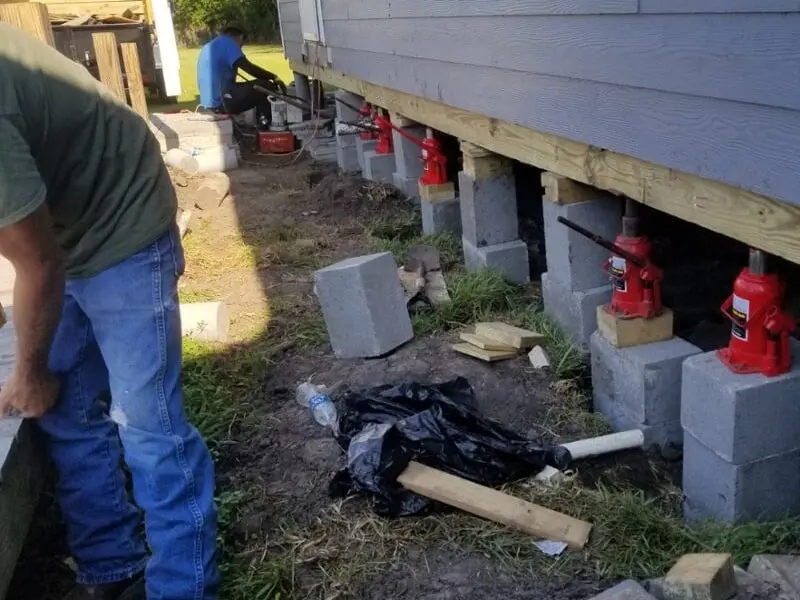
- Rotten or sunken posts: that is our work. The old posts come out, poured concrete piers go in, and the beams are shimmed back toward level.
- Water draining toward the house: we can add drainage as part of a larger foundation repair.
- Badly damaged beams or joists: this is framing work. Matt will point out any he sees so you can plan for it, and you can talk through the options during the estimate.
The order matters. Treating for termites and stopping a leak first means the new supports go into a crawl space that will stay drier and free of the pests that caused the damage.
How We Replace Rotten Posts
Replacing the old posts is the core of a pier and beam repair. On a typical job:
- Matt measures the floors and marks which supports have rotted, sunk, or shifted.
- You get a written plan and an exact written price.
- A licensed structural engineer certifies the repair, and we pull permits when the city requires them.
- The beam is supported while the old post comes out.
- A solid concrete pier is poured in its place. Concrete won’t rot, and termites don’t eat it.
- The beam is shimmed back toward level on the new pier.
Swapping wood for concrete takes away the part that was failing. It does not dry out a wet crawl space or treat termites, which is why the other pieces above matter.
Why Waiting Can Make the Repair Bigger
Rot and termite damage don’t usually stop on their own. A post that is starting to soften today can let its beam sag further, and a beam that sags long enough can take on a permanent bend. Doors and walls above it keep racking, and cracks in sheetrock keep growing.
That doesn’t mean every soft spot is an emergency. It means it is worth having someone look while the damage is limited to a few posts. Our article on whether foundation problems get worse if you wait covers this in more detail.
Common Myths About Rot Under a House
“A little rot is only cosmetic.”
Rot at the bottom of a post is not cosmetic, because the bottom is where the post carries the load. A post that has lost an inch or two of solid wood at its base lets the beam above it drop by about the same amount. Rot in a beam or joist can also go deeper than it looks from the surface.
“Adding a new post beside the old one fixes it.”
It can take some load off for a while. But it leaves the rotted wood in place, often still on damp soil, and if the new support is also wood sitting on the dirt, it can end up the same way. Taking the failed post out and putting a concrete pier in its place removes the part that was failing.
“Concrete piers will dry out the crawl space.”
They won’t. Concrete piers solve the support problem, not the water problem. If water is running under the house or a pipe is leaking, that still needs its own fix, or the soil and the wood that is left (beams, joists, subfloor) stay damp.
“If the floor feels fine, there is no damage.”
Not always. Termites can hollow out a post from the inside before the floor shows anything. That is why it is worth having someone look under an older house now and then, even before the floors change.
Keeping the Area Under the House Healthy After a Repair
- Keep gutters clear and downspouts pointed away from the house.
- Keep soil and mulch sloping away from the foundation, not toward it.
- Keep vents and access openings clear so air can move.
- Fix plumbing leaks as soon as you notice them.
- Keep up with termite inspections through a pest control company.
- Keep wood, firewood, and debris from piling up against the house.
Related questions
Can you tell if a post is rotted just by looking?
Sometimes. A rotted post often looks dark, crumbly, or shorter than the posts around it. Termite damage can hide inside a post that looks fine, which is why Matt checks the supports in person.
Do you treat for termites?
No. We don’t do pest control. A licensed pest control company should inspect and treat for termites.
Will concrete piers rot like the old posts?
No. Concrete doesn’t rot, and termites don’t eat it. That is the main reason we replace wood posts with poured concrete piers.
Do you replace rotted beams or joists?
Our work is replacing the posts with concrete piers and shimming the beams back toward level. If Matt sees damaged beams or joists, he will point them out so you can plan for that framing work.
Written by Matthew Zeman, co-owner of We Level Homes, with almost 20 years in foundation repair. Last updated November 18, 2026.