Foundation guide
Trees, Roots, and Your Foundation in South Texas
A big shade tree is one of the nicest things about an older San Antonio lot. It can also be part of why one side of the house dropped. Here is how trees and foundations interact, and what to do about it.
When Matt finds one corner of a house sitting lower than the rest, one of the first things he looks at is what is growing near that corner. Large trees close to a house are a common part of the story in San Antonio, especially on the clay soils that run under much of the city.
That doesn’t mean every tree is a threat, or that the answer is to cut it down. This guide explains how trees usually affect a foundation, the signs that a tree may be involved, and what a repair does and doesn’t change.
Want to know what is going on under your house?
Matt will measure it for free and show you what he finds. No pressure, no phone guesses.
How Trees Usually Affect a Foundation
Most people picture roots growing under the slab and pushing it up. That can happen, but it is not the most common way trees cause trouble. More often, the issue is water.
A large tree pulls a lot of water out of the soil, especially in the long, hot, dry San Antonio summer. Expansive clay shrinks as it dries. If the clay under one side of the house dries out more than the rest because a big tree is drinking from it, that side can lose support and settle. Then when heavy rain comes, the clay swells again, and the cycle repeats.
The result is often a house that is out of level toward the tree, with cracks and sticking doors on that side. Our guide to what causes foundation problems in San Antonio covers clay movement in more detail.
Why South Texas Clay Makes It Worse
Not all soil reacts to water the same way. Much of San Antonio sits on expansive clay that shrinks noticeably when it dries and swells when it gets wet. Pair that with hot, dry summers and heavy rain, and the soil near a big tree can go through bigger swings than the soil on the other side of the house.
Lots north of Loop 1604, toward the Hill Country edge, often have shallow limestone, where the clay layer is thinner. On the east and south sides of the city, the clay often runs deeper. A tree’s effect on a foundation can differ a lot between those two kinds of lots.
Signs a Tree May Be Involved
None of these prove a tree is the cause, but they are worth noting:
- The low side faces the tree. Floors slope toward the side of the house nearest a large tree.
- Cracks cluster on that side. Stair-step cracks in brick, sheetrock cracks, or sticking doors near the tree.
- The soil pulls away in dry weather. A gap opens between the soil and the foundation on the tree side during dry spells.
- Things change with the seasons. Doors stick in late summer and loosen after a wet stretch.
- Roots at the surface near the house. Large roots visible near the foundation, or lifting a walkway or patio.
For more on how weather plays into it, see our blog on foundation movement after dry weather and rain.
Trees and Pier and Beam Homes
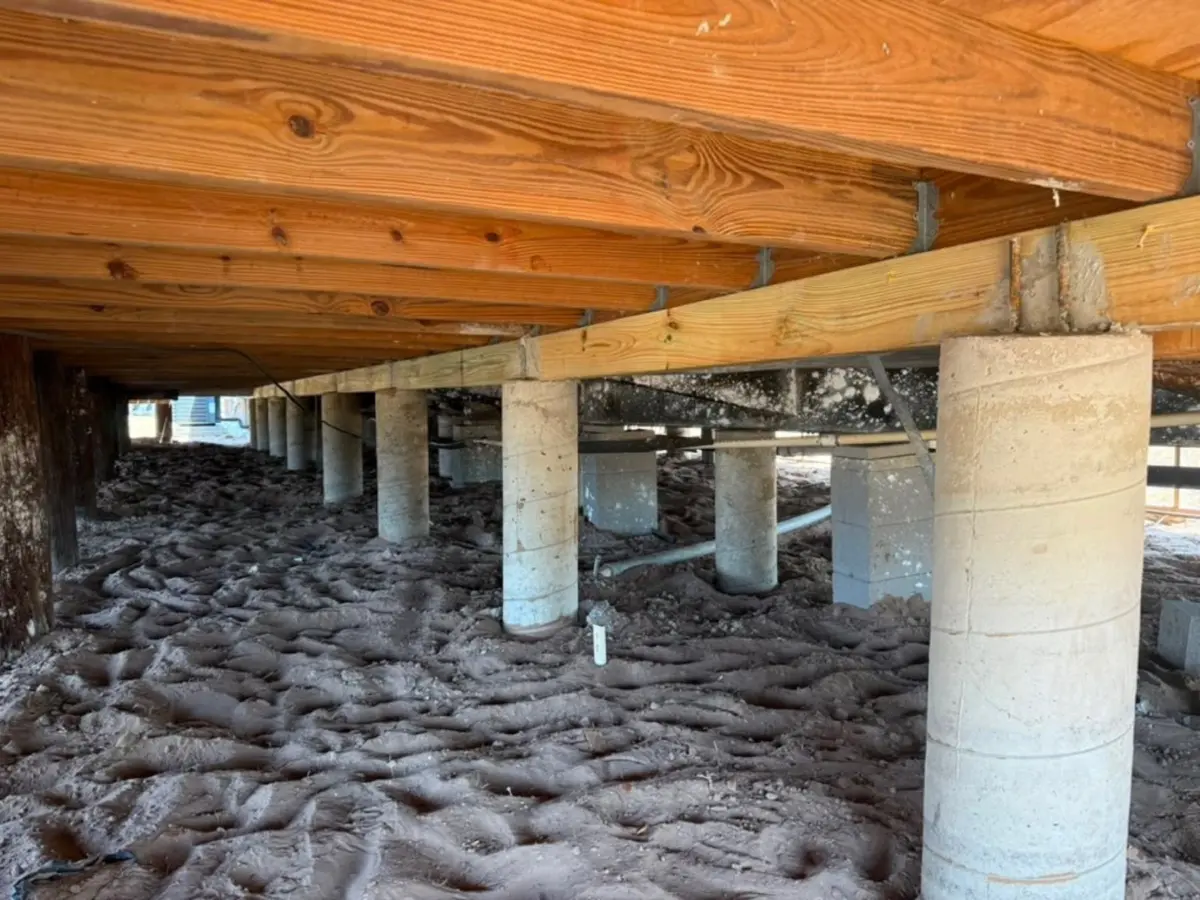
Raised homes react to trees too. The posts or piers under a pier and beam house sit on the soil, and if the soil under some of them dries and shrinks, those posts can drop. Roots in a crawl space can also crowd supports. The fix is the same as for any failing support under a raised house: rotten or sunken posts come out, poured concrete piers go in, and the beams are shimmed back to level.
Trees Rarely Act Alone
A tree is often one part of the story, not all of it. The same side of the house might also have a downspout dumping water at the corner, a yard that slopes toward the wall, or an old cast iron drain line running under it. Each of those changes how wet or dry the clay gets on that side.
That is why it helps to look at the whole picture before blaming the tree. If water is part of the problem, fixing a leak or adding drainage as part of a larger foundation repair can matter as much as anything done about the tree. See drainage solutions with foundation repair.
What Piers Do and Don’t Change
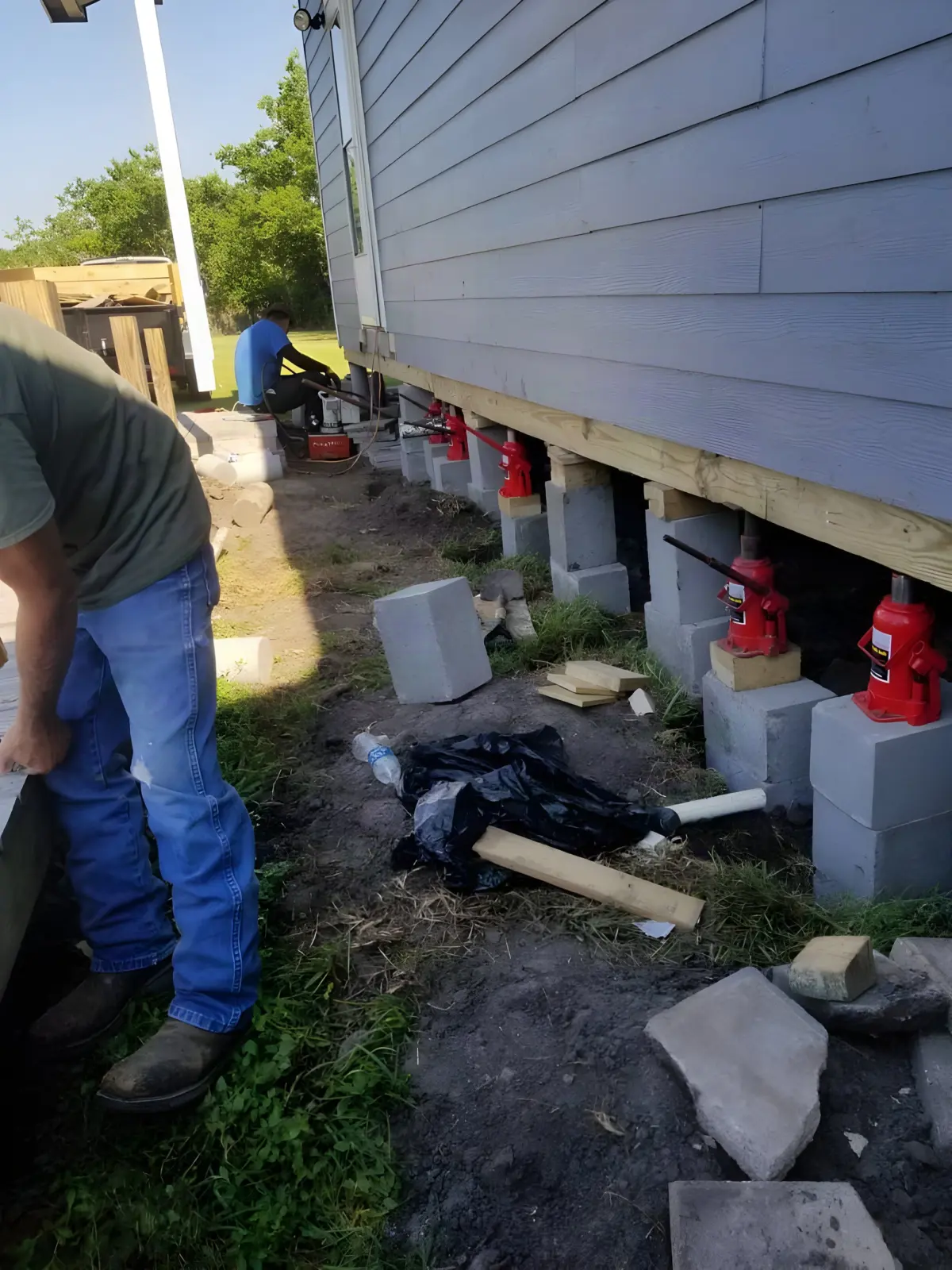
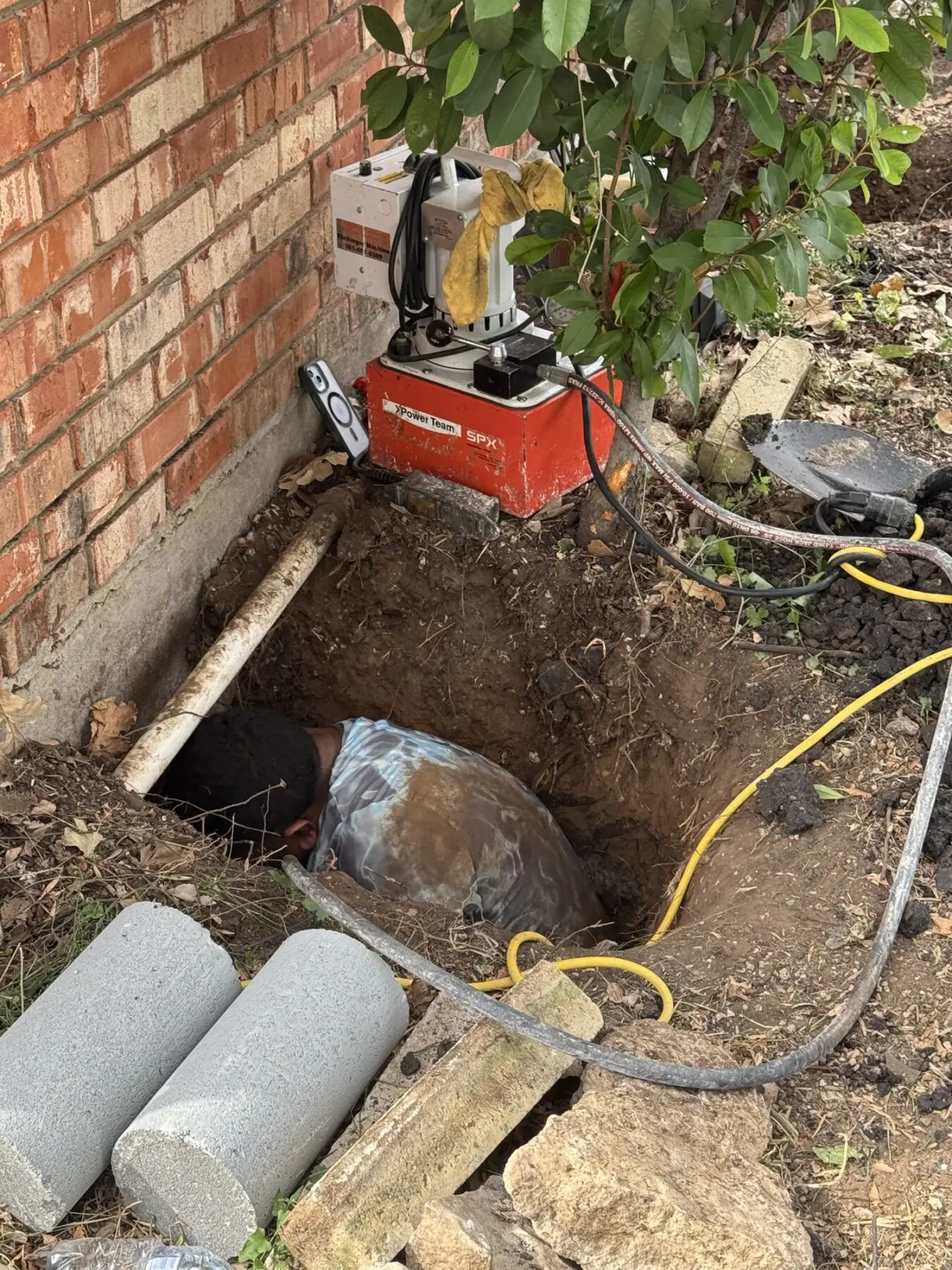
On a slab home, steel or concrete piers are pressed down hydraulically to 10,000 psi until they stop on bedrock. Once the part of the house near the tree is sitting on piers, it is no longer riding on the clay that the tree is drying out. That is the main reason piers are the usual fix when a tree is part of the problem.
What piers don’t do is change the soil. The tree will keep drinking, and the clay will keep shrinking and swelling. Parts of the house without piers are still on that soil. That is worth thinking about when deciding how much of the house to support. See partial vs. whole-house leveling.
Should the Tree Come Out?
That is a question for an arborist, not a foundation company. Trees have value to a home and a lot, and removing one is a big, permanent decision. Some things to know before you talk to one:
- A tree being close to the house doesn’t prove it caused the movement.
- Removing a large tree changes how much water the soil around it holds, which can cause the clay to swell over time.
- Cutting roots near the house is also a decision to make with an arborist, not as an experiment.
Our advice is simple: if you are worried about a tree, talk to an arborist about the tree, and have the foundation measured so you know what the house is actually doing.
Planting near the house
If you are planting new trees, ask an arborist how large the tree will grow and how far from the house it should go. Thinking about it now is easier than dealing with it in twenty years.
What to Note Before the Inspection
- Which trees are closest to the house, and roughly how big they are.
- Whether any trees were removed or planted near the house in the last several years.
- Which side of the house the cracks and sticking doors are on.
- Whether the problems change between dry summers and wet stretches.
- Any plumbing leaks or repairs on the same side.
Those notes help connect what the readings show to what is going on outside.
How We Look at It
At a free foundation inspection, Matt measures floor levels across the house, looks at the cracks and doors you have noticed, and walks the outside, including what is growing near the low spots. If the house needs piers, he will show you where they would go and why, with an exact written price. If the house isn’t moving, he will tell you that, and the tree can stay right where it is.
Related questions
Do tree roots crack foundations?
They can, but more often a big tree causes trouble by drying out the clay near the house so that side settles. Roots pushing directly on a slab is less common.
Will cutting down the tree fix my foundation?
Not on its own, and it can change how the soil behaves. Talk to an arborist about the tree and have the foundation measured.
Can piers go in near a large tree?
Often, yes. Where piers go depends on where the house dropped and what is in the way. Matt will plan around the tree and its roots where he can.
Does the warranty cover movement caused by a tree?
The warranty covers the steel and concrete piers we install. Parts of the house without piers aren’t covered.
Written by Matthew Zeman, co-owner of We Level Homes, with almost 20 years in foundation repair. Last updated November 18, 2026.