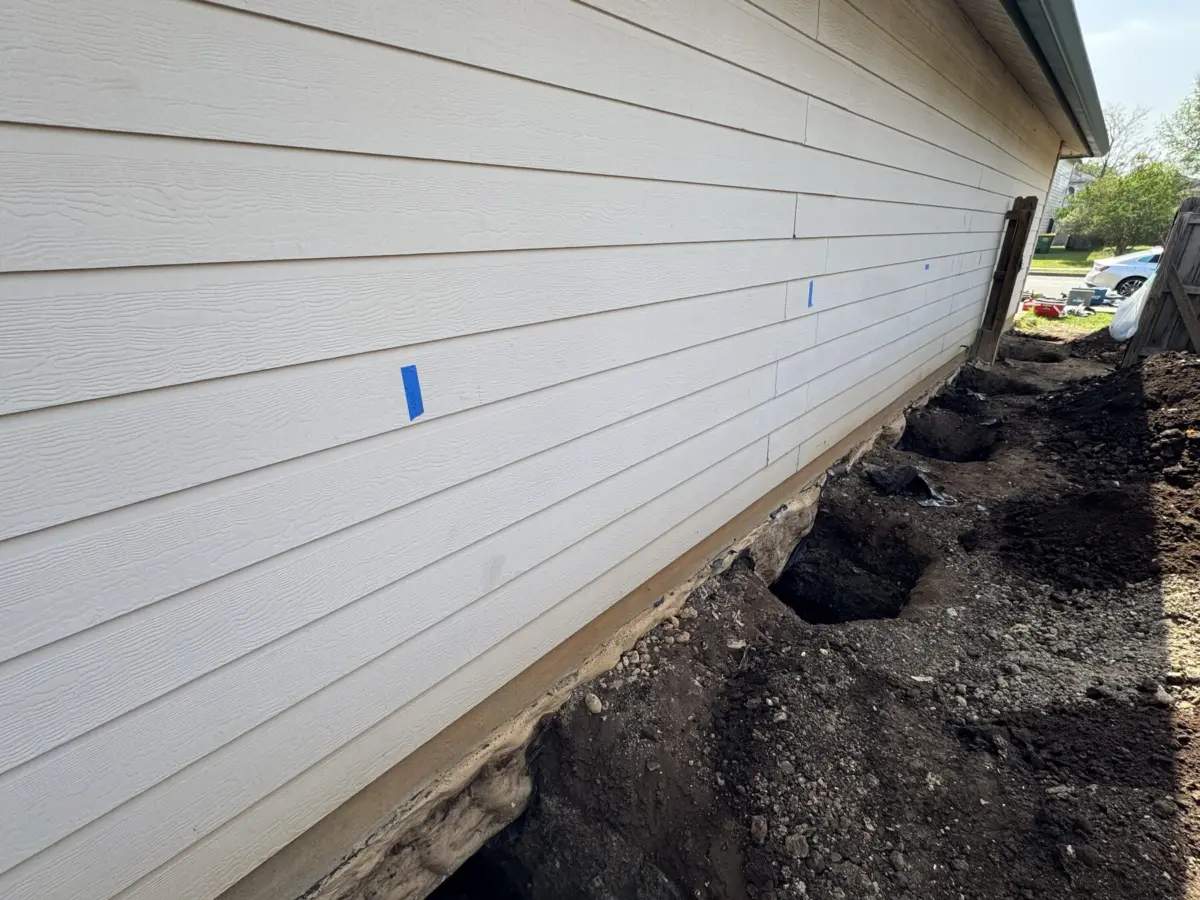
Foundation guide
What Causes Foundation Problems in San Antonio, Texas?
Most foundation trouble here starts in the ground, not the concrete. Below is every common cause, roughly in the order Matt checks for them, with what each one looks like and what actually fixes it.
When a door starts sticking or a crack shows up over a window, the first question is usually “what did this?” The honest answer is that a foundation rarely fails for one reason. In San Antonio it is usually the soil doing most of the work, with one or two other things pushing a single corner of the house further than the rest.
Knowing the cause matters because it decides the fix. Piers under a corner that dropped from a plumbing leak will hold the house up, but if the leak is still running, the soil around it keeps changing. This guide lists the causes we see, what each one tends to look like in a house, and what repairs it.
If you want the warning signs first, start with our guide to signs your home may need foundation repair. This page is about the why.
Want to know what is going on under your house?
Matt will measure it for free and show you what he finds. No pressure, no phone guesses.
The Short List, Ranked
These are ranked roughly by how much ground they cover across the city, from the cause that touches almost every house down to the ones that only apply to certain homes.
| Cause | What it often looks like | What fixes it |
|---|---|---|
| 1. Expansive clay | Doors that stick in summer and loosen after rain, cracks that open and close with the seasons | Piers pressed to bedrock under the parts that dropped, then leveling |
| 2. Uneven moisture around the house | One side or one corner lower than the rest, often the dry side or the side where water pools | Piers and leveling, with drainage added to the repair when water is part of the problem |
| 3. Plumbing leaks under the slab | One area dropping faster than the rest, sometimes near a bathroom or kitchen | A plumber fixes the leak, then piers go under the area that dropped |
| 4. Large trees close to the house | The side nearest the tree settling, worst after long dry spells | Piers to bedrock under that side, plus a conversation about the tree |
| 5. Rotten or sunken wood posts (pier and beam) | Soft, sloping, or bouncy floors in an older raised house | Old posts out, poured concrete piers in, beams shimmed back to level |
| 6. Settled supports (manufactured homes) | Sloping floors, doors out of square, skirting pulling away | New piers under the frame and the home brought back to level |
| 7. How the ground was prepared | Movement in a newer home, often in one area | Depends on what moved; measured and planned like any other repair |
1. Expansive Clay: The Cause Behind Almost Everything
Much of San Antonio sits on expansive clay. Clay holds water the way a sponge does. When it gets wet it swells, and when it dries out it shrinks and cracks open. Hot, dry summers followed by heavy rain put that clay through a big cycle every year.
A slab poured on top of that clay rides up and down with it. If the whole house rose and fell evenly, you might never notice. It doesn’t. The edges of the house dry out faster than the middle, one side gets afternoon sun, and one corner gets the downspout. Over the years, one part ends up lower than the rest.
What it looks like
Symptoms that come and go with the weather are the giveaway. Doors stick after a dry stretch and work again after rain. Cracks open in late summer and close up a little in spring. Our article on foundation movement after dry weather and rain goes deeper on that seasonal pattern.
What fixes it
You can’t stop clay from moving, so the fix is to stop depending on it. Steel or concrete piers are pressed down through the clay until they stop on bedrock, and the house is lifted back toward level on those piers. The clay can keep moving; the house no longer rides on it in those spots.
2. Uneven Moisture Around the House
This is really clay movement with a direction. The soil on one side of the house stays wetter or drier than the other, so that side moves more. Common reasons:
- Sprinklers or flower beds on one side only. The watered side stays damp while the other side bakes.
- Downspouts that dump next to the slab. All the water off one section of roof lands in one spot.
- Low spots in the yard. Water pools against the foundation instead of running away from it.
- Full sun on one face of the house. The south and west sides often dry out hardest in summer.
It usually shows up as one side or one corner that is lower than the rest, with cracks and sticking doors concentrated on that side.
The fix for the movement is the same as above: piers under what dropped. When water is clearly part of the cause, French drains or yard drainage can be added to the foundation repair to move water away from the house. We only install drainage as part of a larger foundation repair, not on its own.
3. Plumbing Leaks Under the Slab
Many San Antonio homes built before the 1980s still have cast iron drain lines under the slab. Cast iron can crack and corrode with age. A slow leak under the floor soaks the clay in one spot, and that spot can soften and drop much faster than the rest of the house.
Signs that point toward a leak include movement centered near a bathroom, kitchen, or laundry room, a damp or musty smell, or a water bill that crept up. None of those prove a leak on their own. A licensed plumber can test the lines.
The leak has to be fixed by a plumber first. Then piers go under the area that dropped. Our article on under-slab plumbing leaks explains why we ask about plumbing before we plan a repair.
4. Large Trees Close to the House
A mature live oak can pull a lot of water out of the ground, and its roots reach well past the edge of its canopy. During a long dry spell, the clay under the side of the house nearest the tree can dry out and shrink more than the rest.
The usual pattern is the side closest to the tree settling, with cracks and gaps showing on that side. Roots rarely push a slab up or break through it; the bigger effect is usually the water they take.
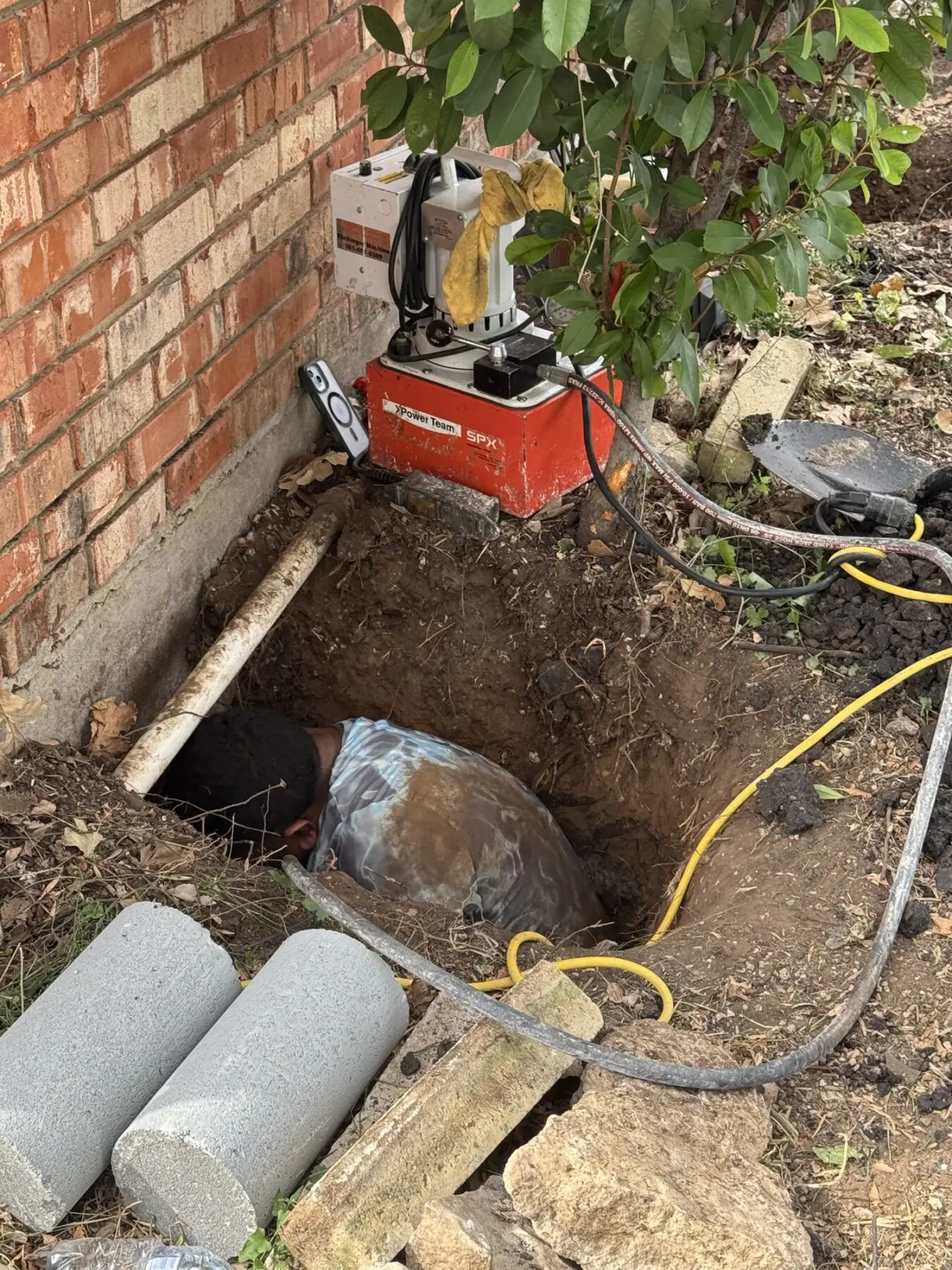
Piers to bedrock under that side carry the house past the dry soil. Whether the tree should stay is a separate question, and one to ask a certified arborist. Our guide to trees, roots, and your foundation covers it in detail.
5. Rotten or Sunken Wood Posts in Pier and Beam Homes
Older homes inside Loop 410 are often built on pier and beam: the house sits on wood beams, carried by posts or piers, with a crawl space underneath. Over decades, wood posts can rot, get damaged by termites, or sink into the clay. When a post drops, the beam above it sags, and the floor sags with it.
This looks like floors that slope, dip, or feel bouncy, doors that won’t latch, and cracks in plaster or sheetrock. The fix is to take the rotten or sunken posts out, pour new concrete piers in their place, and shim the beams back to level. Matt checks the crawl space during the inspection to see which posts have failed.
6. Settled Supports Under Manufactured Homes
A manufactured home sits on piers or blocks under its steel frame. Those supports sit on the same clay as every other house in town, and when they settle unevenly the frame goes out of level. Sloping floors, doors that swing on their own, and skirting pulling away are common signs.
The fix is new piers under the frame and the home brought back to level. Many companies won’t work on manufactured homes. We do.
7. How the Ground Was Prepared
Sometimes the issue goes back to construction. Soil that was filled in and not compacted well can settle under its own weight for years. A lot cut into a slope can have rock under one side and clay under the other, so one side moves and the other doesn’t. This is more common on hillside lots north of Loop 1604, where limestone is often close to the surface.
Newer homes are not exempt. A little movement and some hairline cracks are normal as a new slab cures and the soil adjusts. If movement keeps going, it gets measured and planned like any other repair. Our answer on cracks in a new slab home covers what is normal.
Why the Cause Changes the Plan
Two houses with the same crack can need different repairs. A corner that dropped from seasonal clay movement needs piers. A corner that dropped from a leak needs the leak fixed and then piers. A sagging floor in a raised house needs new posts, not slab piers. That is why Matt measures first and asks questions about water, plumbing, and trees before he recommends anything.
At a free foundation inspection, he takes level readings across the house, looks at the cracks and doors you have noticed, and walks the outside for water and trees. Then he tells you what he thinks moved the house and what it would take to fix it, with an exact written price.
Related questions
Is my foundation problem my fault?
Usually not. The clay under most of San Antonio moves on its own with the weather. Watering and drainage habits can make one side move more, but the soil is the main driver.
Will watering my foundation stop it from moving?
Keeping moisture more even around the house can help reduce seasonal swings. It won’t lift a corner that has already dropped, and it won’t fix a foundation that has moved.
Can a home on rock still have foundation problems?
It can. A lot can have rock under one side and clay or fill under the other, and leaks or rotten posts can cause trouble on any lot.
Do you fix plumbing leaks?
No. A licensed plumber fixes the leak. We repair the foundation movement it caused once the leak is taken care of.
Written by Matthew Zeman, co-owner of We Level Homes, with almost 20 years in foundation repair. Last updated November 18, 2026.