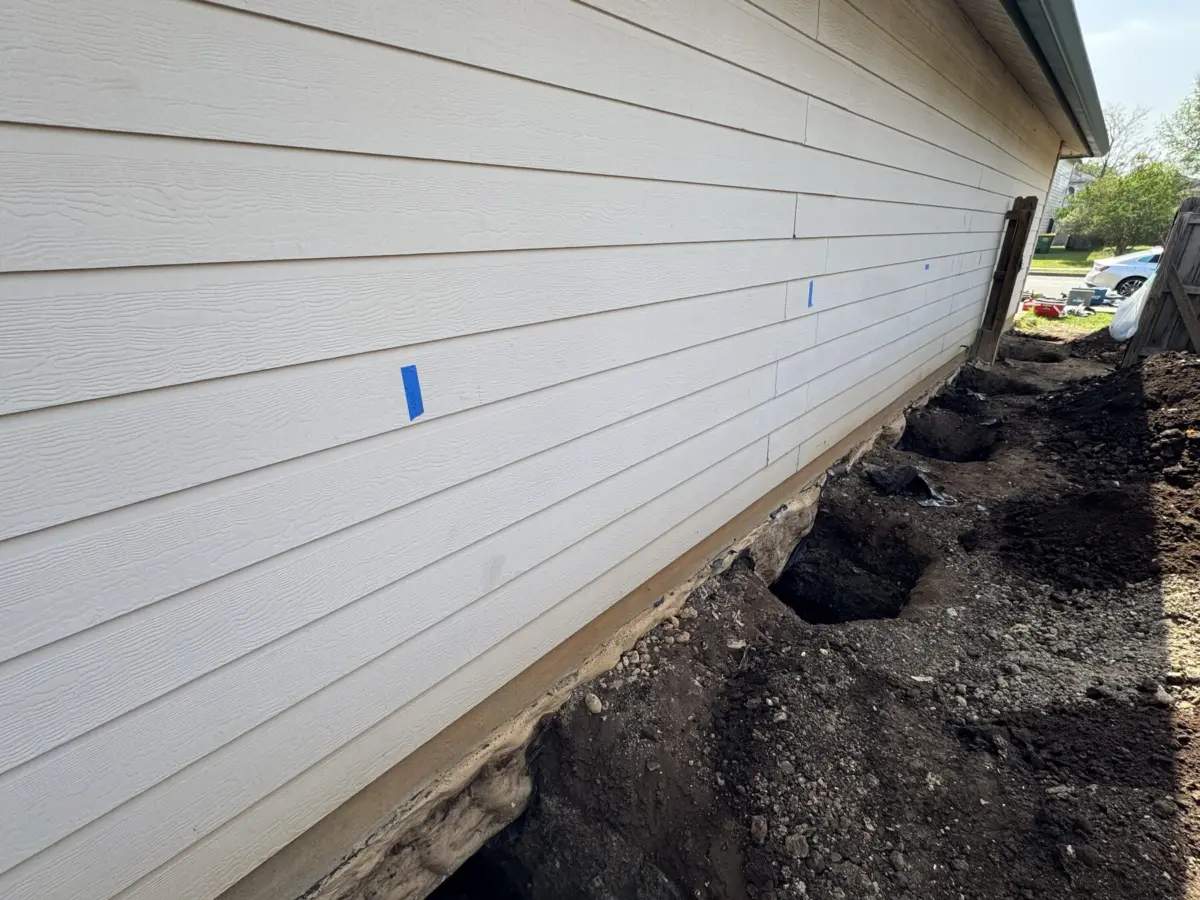
Foundation guide
Slab Foundation Settlement vs. Heave in San Antonio Clay
A slab on clay can move down or it can be pushed up. The cracks often look alike, but the cause and the fix are different, so it pays to know which one your house has.
When a door starts sticking or a crack shows up across the living room tile, most people assume part of the house sank. Often that is right. But on San Antonio clay, a slab can also be pushed up from below. The first is called settlement. The second is called heave.
From inside the house the two can look almost the same: a floor that isn’t flat anymore, cracks in the sheetrock, doors that rub. The difference matters because the repair for one is not the repair for the other. This guide explains both, how we tell them apart, and what that means for your slab.
Want to know what is going on under your house?
Matt will measure it for free and show you what he finds. No pressure, no phone guesses.
Two Directions a Slab Can Move
A slab foundation is a concrete pad poured on the ground, usually with thicker beams around the edge and often under the inside too. It only stays flat if the soil under it stays put. On expansive clay, it doesn’t. The clay changes volume with moisture, and the slab rides along.
- Settlement is when part of the slab drops because the soil under it shrank, softened, or was never packed well to begin with.
- Heave is when part of the slab rises because the clay under it soaked up water and swelled.
A house can have one, the other, or both at different times of year. That is why a single look on a single day doesn’t always tell the whole story.
What Is Foundation Settlement?
Settlement means a section of the foundation has moved down relative to the rest. In San Antonio the usual causes are:
- Clay drying out. Long, hot, dry summers pull moisture out of the soil, and expansive clay shrinks as it dries. The edges of the slab are the most exposed, so they often drop first.
- Trees close to the house. Big roots can draw a lot of water out of the soil along one side. Our guide to trees, roots, and your foundation covers this in more detail.
- Soft, wet soil. A plumbing leak or water that collects in one spot can soften the soil until it can’t carry the load.
- Poorly packed fill. Soil brought in to level a lot before the slab was poured can compress over time if it wasn’t compacted well.
Settlement is the kind of movement piers are made for. A pier carries that part of the house down past the clay to bedrock, so it stops riding up and down with the weather.
What Is Foundation Heave?
Heave is the opposite: part of the slab gets pushed up. Expansive clay swells when it gets wet, and swelling clay can push with a lot of force. When the clay under one area swells more than the clay around it, that area rises.
Center heave
The soil under the middle of a slab is shaded and covered, so it usually stays wetter than the soil at the edges. In a long drought, the edges can dry and drop while the middle stays high. Water from a leak under the slab can also swell the clay in the middle. Either way, the center ends up higher than the perimeter, and the house can look like it is “sinking at the edges” when the real story is a raised middle.
Edge heave
After heavy rain, the clay around the outside of the house can soak up water faster than the clay under the middle. If water sits against one side because of poor drainage or a downspout that dumps right at the wall, that edge can rise.
Heave usually comes back to water: rain, a leak, or drainage that sends water toward the house. Settlement often comes back to drying, soft soil, or poor fill. Finding the water source is a big part of telling them apart.
Why San Antonio Clay Does Both
Expansive clay covers much of San Antonio. Our weather swings between hot, dry summers and heavy rain, so the same soil can shrink for months and then swell in a few wet weeks. A slab sitting on it gets pulled down in one season and pushed up in the next.
Geography plays a part too. North of Loop 1604, toward the Hill Country, limestone is often close to the surface and the clay layer can be thin. On the east and south sides of town, the clay can run much deeper, so there is more soil to swell and shrink. Our article on what causes foundation problems in San Antonio goes further into the soil and weather.
Signs of Settlement vs. Signs of Heave
No single sign proves one or the other, but some patterns tend to show up with each.
| Settlement (part of the slab dropped) | Heave (part of the slab rose) | |
|---|---|---|
| Floor shape | One corner or side lower than the rest | A hump or high spot, often near the middle |
| Interior doors | Doors near the low side rub or swing on their own | Doors near the middle bind at the top |
| Cracks | Stair-step cracks in brick near the low corner | Cracks spreading out from a high area inside |
| Timing | Often shows up or gets worse in drought | Often shows up or gets worse after heavy rain |
| Common cause | Clay drying out, trees, soft soil, poor fill | Water: rain, a leak, or poor drainage |
The other trouble is that a house can show both at once. A slab with a dropped corner and a raised middle will crack in ways that point in two directions. That is where measuring beats guessing.
How We Tell Them Apart
At a free foundation inspection, Matt measures floor levels across the whole house. The numbers show the shape of the slab: which areas are high, which are low, and by how much. That shape usually says more than any one crack does.
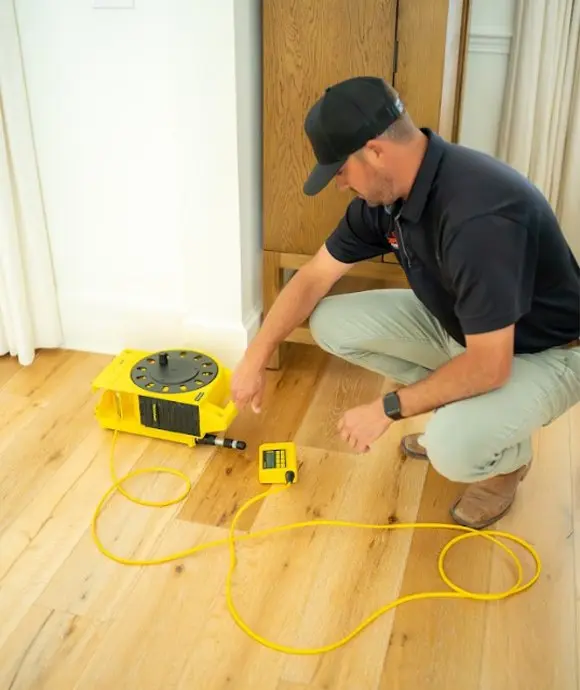
He also looks at where water goes around the house, where the trees are, how the cracks run, and whether anything points to a plumbing leak. If a leak is possible, he may ask you to have a licensed plumber test the lines before any repair is planned. Our guide to under-slab plumbing leaks explains why. You can read more about the measuring itself in how we measure level.
Why the Repair Is Different
Repairing settlement
For settlement, the usual repair is piers. Steel or concrete piers go under the parts that dropped, pressed hydraulically all the way to bedrock at 10,000 psi. Then that part of the house is lifted back toward level and the holes and openings are patched. Every repair is certified by a licensed structural engineer.
Dealing with heave
Heave is harder to “fix” in a single step, because pressed piers are built to stop a slab from going down, not to pull a raised slab back down. The first step is usually to find and stop the water: repair a leak, or fix drainage that sends water toward the house. Once the source is handled, the plan may be to bring the lower parts of the slab up to meet the high area, rather than trying to lower the high area. Whether that is the right call depends on the house, and the engineer has a say.
When drainage is part of the problem, we can add drainage work to a larger foundation repair. We don’t do drainage as a job on its own.
What You Can Watch at Home
Neither settlement nor heave usually happens overnight. A little tracking makes the inspection more useful:
- Take dated photos of cracks and gaps, with a coin or ruler next to them for scale.
- Note when doors start to stick, and whether it was after a dry spell or a wet one.
- Watch where water goes during a hard rain. Look for puddles against the wall or downspouts that empty right at the slab.
- Keep an eye on your water bill for an unexplained jump, which can point to a supply line leak.
Bring what you have to the inspection. Seasonal notes like these help show whether the house is going down, coming up, or both.
When to Have It Measured
A little seasonal movement is normal on clay, and thin hairline cracks are common. It is worth having the house measured when cracks keep getting wider, a door that used to close fine now won’t, or the floor feels like it slopes. Call or text (210) 934-6066 and Matt will come out, measure, and tell you whether the slab dropped, rose, or doesn’t need anything at all.
Related questions
Can piers fix heave?
Pressed piers support a slab against going down. They are not a cure for clay pushing up. With heave, the water source usually gets dealt with first, and then the plan may bring the low areas up to match.
Can a house have settlement and heave at the same time?
Yes. A slab can have a dropped edge and a raised middle at once, especially after a long drought followed by heavy rain. Measuring floor levels across the house shows both.
Is heave common in San Antonio?
It can happen anywhere there is expansive clay, which covers much of the city. It tends to show up where water collects: a leak under the slab or poor drainage on one side.
Will the slab go back down on its own after heave?
Sometimes part of it does as the soil dries, and sometimes it doesn’t. That is one reason the water source gets handled before a repair is planned.
Written by Matthew Zeman, co-owner of We Level Homes, with almost 20 years in foundation repair. Last updated November 18, 2026.