Foundation guide
Under-Slab Plumbing Leaks and Foundation Movement (Why We Ask for a Plumbing Test)
Water from a leak under the slab can sink one part of a house or push it up. If anything points to a leak, we want it found and fixed by a licensed plumber before the foundation is repaired.
Every slab home has pipes under it. Water supply lines bring fresh water in, and drain lines carry waste water out to the sewer. Most of the time nobody thinks about them. But when one leaks, the water goes straight into the soil under your foundation, and on San Antonio clay that can move the house.
That is why Matt sometimes asks for a plumbing test before a slab repair. We are not plumbers, and we don’t test or repair plumbing. A licensed plumber does that. This guide explains why the test matters, what the signs of a leak are, and why the leak should be fixed before the house is lifted.
Want to know what is going on under your house?
Matt will measure it for free and show you what he finds. No pressure, no phone guesses.
How a Leak Under the Slab Moves a House
Soil under a slab carries the weight of the house. Add a steady supply of water to one spot and that soil changes:
- It can soften. Wet soil can lose strength and compress under the load, so the floor above it sinks.
- It can swell. Expansive clay grows when it soaks up water, so the floor above it can be pushed up.
- It can wash out. A leak that runs for a long time can carry fine soil away and leave a soft area under the slab.
Which one happens depends on the soil and how long the leak has been running. That is why a leak can cause either settlement or heave. Our guide to settlement vs. heave explains the difference.
Signs of a Leak Under the Slab
Some leaks are obvious. Many are not, especially slow drain leaks. These signs are worth mentioning to a plumber and to Matt:
- A water bill that jumps without a change in how you use water.
- The sound of running water when every faucet is off.
- A warm spot on the floor, which can point to a hot water line leak.
- Damp flooring, a musty smell, or mildew with no clear source.
- Drains that are slow, back up, or gurgle, especially in more than one fixture.
- Cracks, a dip, or a hump in the floor near a bathroom, kitchen, or laundry room.
None of these proves a leak by itself. Testing does.
Supply Lines vs. Drain Lines
The two kinds of pipe leak in different ways, and they are tested in different ways.
| Water supply lines | Drain lines | |
|---|---|---|
| What they carry | Fresh water into the house | Waste water out to the sewer |
| Under pressure? | Yes, all the time | No, only when water runs down them |
| How a leak shows up | Often on the water meter or the bill | Often hidden, since it only leaks when used |
| How it is usually checked | Pressure and meter checks by a plumber | Tests and camera checks by a plumber |
| Who tests and repairs it | A licensed plumber | A licensed plumber |
Drain lines deserve extra attention. Many San Antonio homes built before about 1980 have cast iron drain lines under the slab. Cast iron can crack and corrode with age. Because drains aren’t under pressure, a broken drain can leak under the house for a long time without showing up on the water bill.
Should I Get a Plumbing Test Before Foundation Repair?
Often, yes. Matt is most likely to ask for one when:
- Any of the leak signs above are present.
- The low or high spot in the slab is near a bathroom, kitchen, or laundry room.
- The house is older and may have original cast iron drain lines.
- Interior piers are planned near where the plumbing runs.
There are two reasons. First, if a leak is part of why the house moved, repairing the foundation without stopping the water leaves the cause in place. Second, it is much better to know the condition of the plumbing before the house is lifted than to find out afterward.
The test is done by a licensed plumber you choose. Ask the plumber what kind of test they recommend for your house, what it covers, and what it costs. Keep the results and any repair paperwork, and share them with us before the repair is scheduled.
We are foundation repair, not plumbing. We don’t test lines or repair pipes. When a leak is found, a licensed plumber fixes it.
Leveling and Plumbing: Which Comes First?
In most cases, the plumbing comes first. The usual order looks like this:
- Free inspection. Matt measures the house and tells you if anything points to a leak.
- Plumbing test. A licensed plumber tests the lines.
- Plumbing repair. If a leak is found, the plumber repairs it.
- Foundation plan. With the leak handled, Matt puts together the pier plan and an exact written price. The repair is certified by a licensed structural engineer.
- Repair day. Piers are pressed to bedrock at 10,000 psi and the house is lifted back toward level.
- Patch and warranty. Holes are filled, slab openings are patched, and you get your written pier warranty.
Why not lift first and fix the pipe later? Because lifting a house moves everything attached to the slab, including the pipes under it. Old, brittle drain lines in particular don’t like being moved. Knowing their condition ahead of time lets you and your plumber decide what to repair before the lift. Some homeowners also have the plumber check the lines again after the lift. Ask your plumber whether that makes sense for your house.
Our guide to what happens inside the house when it’s lifted covers the other changes you may notice.
When the Leak Is Under an Interior Pier Spot
Plumbing runs under the same parts of the house where interior piers sometimes go: near bathrooms, the kitchen, and the laundry. Knowing where the lines are and whether they are sound helps plan where each opening goes.
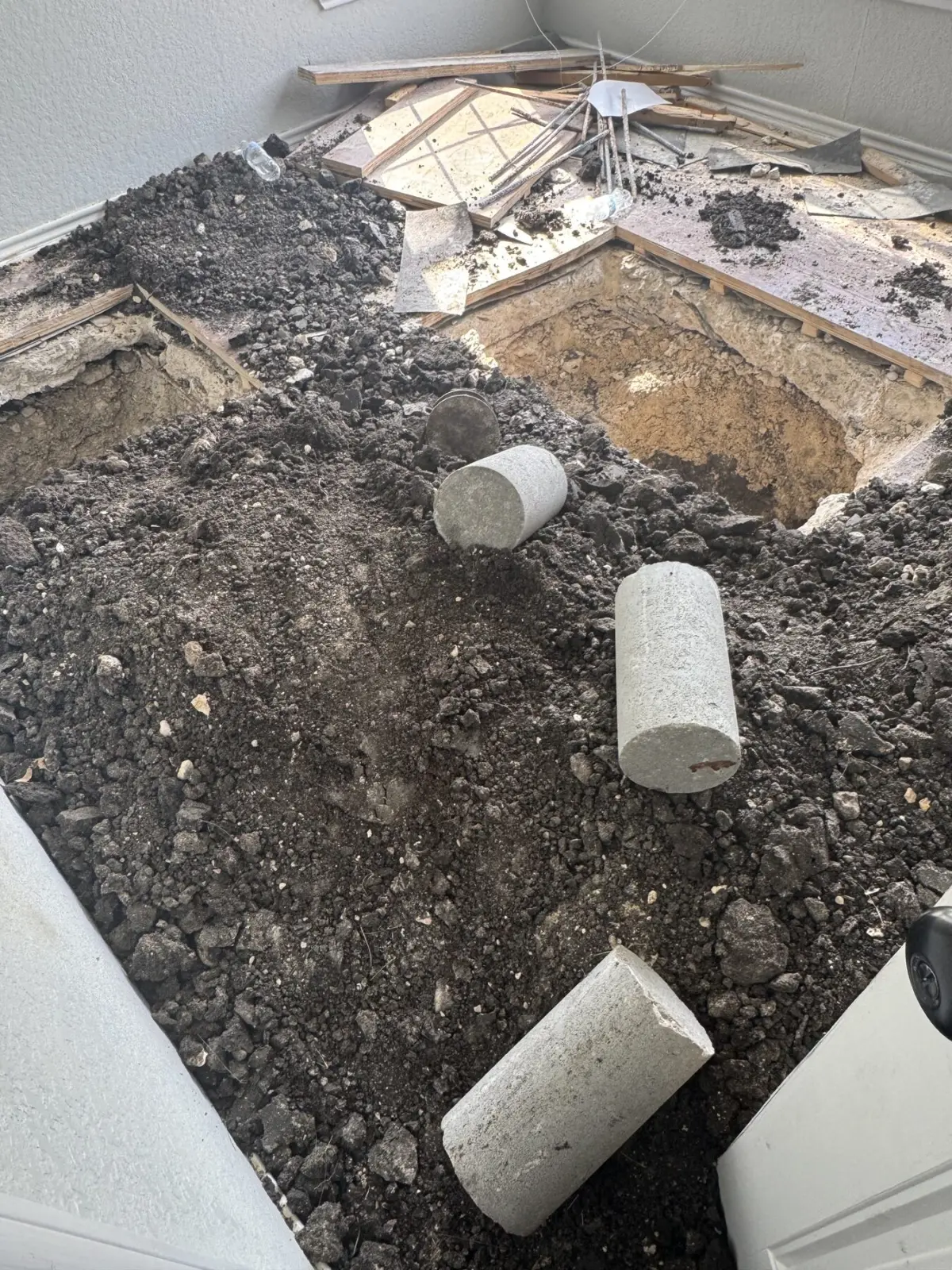
If the plumber needs to open the floor to repair a pipe, talk with both of us about timing. Sometimes it makes sense to plan the plumbing repair and the foundation work around each other.
After the Repair: Keeping an Eye on the Plumbing
A repaired slab and sound plumbing go together. Once the house is on piers and the leak is fixed, a little attention helps keep it that way:
- Watch the water bill for any jump that doesn’t match how you use water.
- Pay attention to slow drains or gurgling, especially in more than one fixture.
- Note any new damp spots, musty smells, or warm spots on the floor.
- If something seems off, call a licensed plumber rather than waiting to see if it gets worse.
Piers carry the parts of the house they support down to bedrock, but the parts of the slab without piers still sit on clay. A new leak under one of those areas can still move that part of the house. Keeping water out of the soil under the slab is one of the most useful things you can do after any foundation repair.
What to Have Ready for the Inspection
- Any recent water bills that look high.
- Past plumbing test results or repair records, with dates.
- Notes on slow drains, backups, or damp spots and where they are.
- Photos of cracks near bathrooms, the kitchen, or laundry.
Our foundation inspection guide has a fuller list of what helps. You can also see each step of the job on our process page.
Related questions
Do you do the plumbing test?
No. We are not plumbers. A licensed plumber you choose does the testing and any repairs. We use the results to plan the foundation work.
Will lifting the house break my pipes?
Lifting moves the pipes along with the slab, and old or damaged lines are more at risk. That is why we want the plumbing tested before the lift, so problems are known ahead of time.
Can a leak cause a house to rise?
It can. On expansive clay, water from a leak can make the soil swell and push part of the slab up. It can also soften the soil and let that part sink.
If I fix the leak, will the foundation go back to normal?
Stopping the water removes one cause, but a slab that has already moved usually stays where it is. Matt can measure it after the plumbing is fixed and tell you if it needs piers.
Written by Matthew Zeman, co-owner of We Level Homes, with almost 20 years in foundation repair. Last updated November 18, 2026.