Foundation guide
Buying or Selling a Manufactured Home in Texas: Foundation Checklist
Whether you are buying a manufactured home or getting one ready to sell, what is under it matters. Use this checklist to know what to look at, what papers to ask for, and when to bring someone in to measure.
Most people look at the kitchen, the roof, and the AC when they shop for a manufactured home. Fewer look underneath. But a home that is out of level can mean sticking doors, open ceiling seams, and a repair bill after closing. A seller who knows the home’s condition up front avoids surprises in the middle of a deal.
This checklist covers what to look at from inside, outside, and on paper. It is general information. Sales, titles, and financing for manufactured homes in Texas have their own rules, so ask a real estate agent or a real estate attorney about the legal and paperwork side.
Want to know what is going on under your house?
Matt will measure it for free and show you what he finds. No pressure, no phone guesses.
Why the Foundation Matters in a Manufactured Home Sale
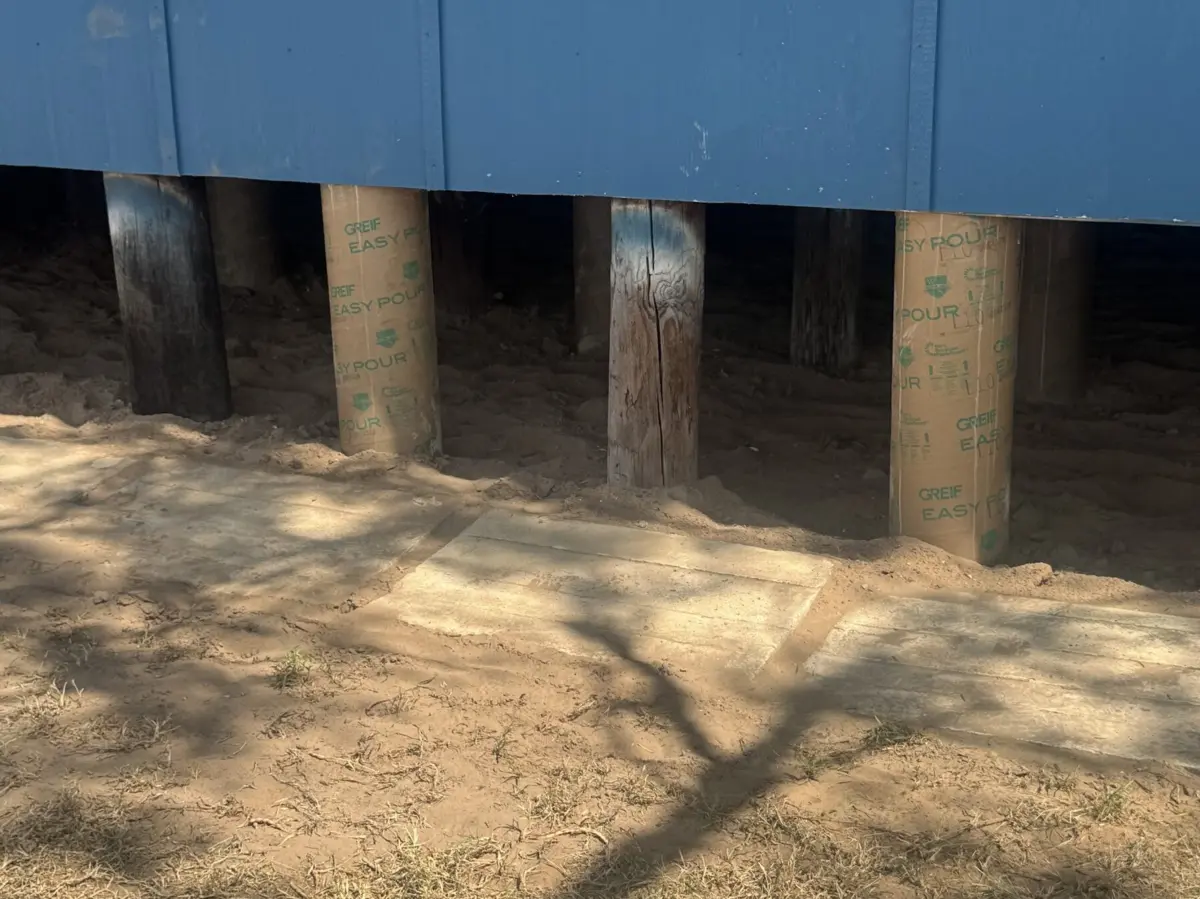
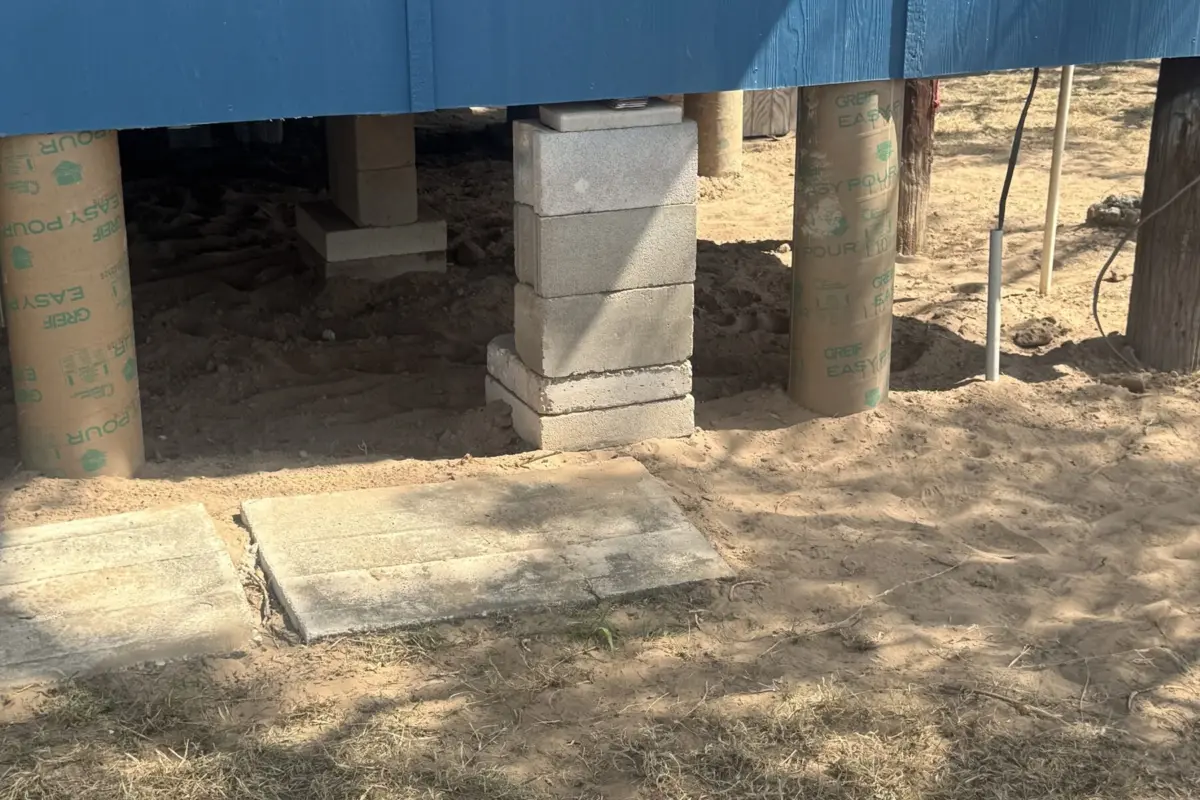
A manufactured home rests on piers under a steel frame. If those piers have settled, tipped, or broken down, the home goes out of level. That shows up inside in ways buyers notice on a walk-through, and inspectors and lenders may notice too.
The good news is that a home being out of level is usually fixable. The repair is new piers under the frame and the home brought back to level. Knowing about it before the sale gives both sides time to plan.
Checklist: Inside the Home
- Open and close every door. Note any that rub, swing on their own, or won’t latch.
- Open a few windows in each room. Note any that bind.
- Walk the floors slowly. Feel for slopes, dips, and soft spots.
- Look along the ceiling seams, especially down the middle of a double-wide.
- Check wall panel seams and trim strips for gaps or pulled-loose strips.
- Look at the corners of door frames for cracks or gaps.
For more on what each of these can mean, see signs your manufactured home is out of level.
Checklist: Outside and Underneath
- Walk around the home and look at the skirting. Is it bowed, buckled, or pulling away?
- Stand back and look along the roofline for dips or a low corner.
- Check steps, porches, and decks for gaps where they meet the home.
- Look at where water goes. Does the yard slope toward the home?
- If you can see under the home through a vent or access panel, look for standing water, leaning piers, or blocks off their pads.
Look from the outside only. Don’t crawl under a home you are touring. The space can be tight and unsafe.
Checklist: Papers to Ask For
Paperwork tells you what has already been done. Ask the seller, or gather these if you are selling:
- Past leveling or pier work. Who did it, when, and what was done.
- Engineer letters or reports. Any report from a licensed structural engineer about the home’s support.
- Permits. Any permits pulled for work on the home’s support.
- Warranty papers. If earlier work came with a warranty, ask whether it transfers. Read the terms.
- Installation records. If available, records of when and how the home was set.
- Repair receipts. Plumbing leaks under the home and drainage work are worth knowing about.
Our article on engineer’s certification for a manufactured home explains what those letters usually cover.
Park or Private Land Changes the Checklist
If the home sits in a park, the lot lease, park rules, and any rules about work on homes come into the sale too. If it sits on its own land, the land and the home may be handled together or separately, depending on how the home is titled. Both are questions for your agent or a real estate attorney. For the foundation side, see park vs. private land: who approves the work.
If You Are Buying
- Use the inside and outside checklists on your first or second visit.
- If you see several signs together, ask your agent about getting the home’s support looked at before you commit.
- Ask for any past repair paperwork.
- If the home needs work, get an exact written price, so you know what you are taking on.
- Talk with your agent or a real estate attorney about how a needed repair fits into your offer.
Matt does the free inspection himself. Whoever owns the home needs to give permission for him to go under it.
If You Are Selling
- Walk through the checklists yourself before you list the home.
- If doors stick or floors slope, think about getting it looked at early, before a buyer’s inspection finds it.
- Gather any past repair papers and engineer letters in one folder.
- If you have work done, keep the written estimate, the final paperwork, and the engineer certification.
- Ask your agent how to share what you know with buyers. Disclosure rules are a question for your agent or a real estate attorney.
Many of the same questions come up with site-built homes; see should I level before I sell.
Questions to Ask the Seller
- Has the home ever been leveled or had piers replaced? When, and by whom?
- Have you noticed doors sticking or floors changing, and when did it start?
- Has there been a leak under the home?
- Does water collect under the home after rain?
- Has the skirting been replaced or repaired, and why?
- Is the home in a park or on its own land, and are there rules about work on it?
Answers that line up with the paperwork are a good sign. Answers that don’t are worth a closer look.
What a Foundation Problem Can Mean for the Deal
| What you find | What it can mean | What to do |
|---|---|---|
| One sticky door, nothing else | Often minor | Note it and keep looking |
| Several signs together | The home has likely moved out of level | Get the support looked at before committing |
| Past repair with paperwork | Work was done and documented | Read the papers and ask questions |
| Past repair, no paperwork | Hard to know what was done | Have the home checked |
| Water under the home | Ongoing risk to the piers | Find the source and have the piers checked |
How any of this affects price, financing, or terms is a question for your agent or attorney. Our page on foundation problems and home value has more general background.
What We Can Do Before a Sale
Matt can measure the home, go under it, and show you what he finds. If the home needs work, you get an exact written price for new piers under the frame and bringing the home back to level. Every repair is certified by a licensed structural engineer, and we pull permits when they are required.
If the home doesn’t need work, he will tell you that, which can be just as useful going into a sale.
After Closing: What to Watch
Once the home is yours, a few habits help you catch movement early:
- Notice which doors stick and whether it changes with the seasons.
- Walk around the skirting after big storms.
- Watch where rainwater goes, and fix low spots that send it under the home.
- Look under sinks and around the water heater for leaks.
- Keep any repair paperwork, engineer letters, and permits together for the next sale.
Our article on why manufactured homes settle explains what to look for over time.
A Short Version to Print
- Doors and windows: do they open, close, and latch?
- Floors: slopes, dips, or soft spots?
- Ceiling and wall seams: any opening up?
- Skirting and roofline: bowed, buckled, or dipping?
- Under the home: water, leaning piers, blocks off pads?
- Papers: past repairs, engineer letters, permits, warranties?
Related questions
Should a buyer pay for an inspection on a home they don’t own yet?
Our inspection is free, but the owner has to give permission for Matt to go under the home. Your agent can help arrange that.
Does a past leveling job mean the home is a bad buy?
Not on its own. A documented repair with an engineer letter can be a good sign. Missing paperwork is more of a question mark.
Do I have to disclose that my home was out of level?
Disclosure rules are a legal question. Ask your real estate agent or a real estate attorney.
Can you give a seller a written price?
Yes. After the free inspection, you get an exact written price for the work the home needs.
Written by Matthew Zeman, co-owner of We Level Homes, with almost 20 years in foundation repair. Last updated November 18, 2026.