Foundation guide
Signs Your Manufactured Home Is Out of Level
A manufactured home tells you when it has moved. The trick is knowing which signs point to the piers underneath and which ones are just wear. Here is what to look for, room by room and outside.
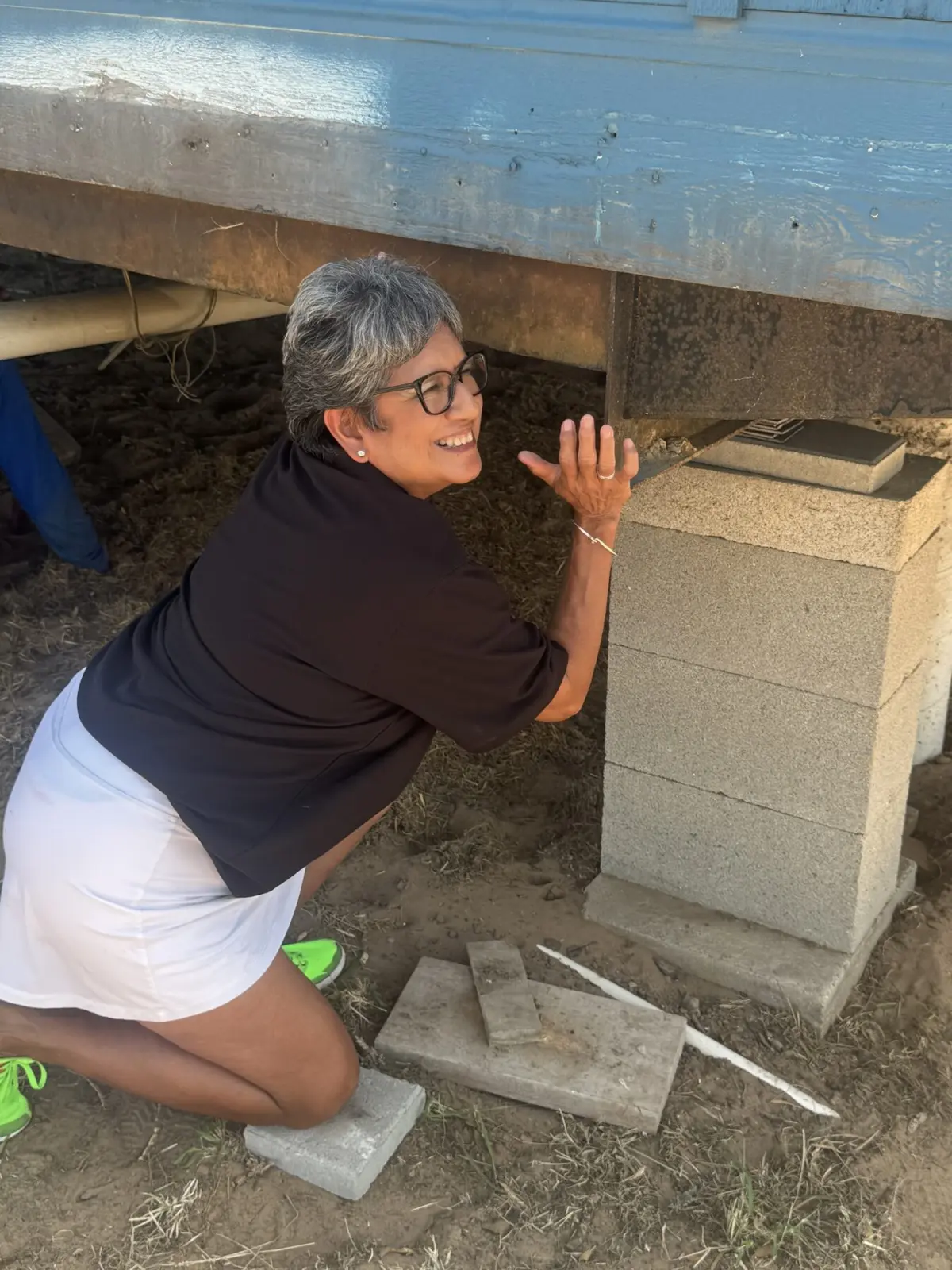
A manufactured home sits on a steel frame, and that frame rests on a row of piers. When one of those piers sinks, tips, or loses the soil under it, the frame drops a little at that spot. The walls, doors, and floors above it follow. Most owners notice the inside first: a door that used to close easily now has to be pushed, or a marble rolls toward one end of the kitchen.
Some of these signs are small and some are worth a call. This guide walks through what each one usually means, how to check it yourself without crawling under the home, and when it makes sense to have someone look at the piers. It is the same walk-through Matt does at the start of a free inspection.
Want to know what is going on under your house?
Matt will measure it for free and show you what he finds. No pressure, no phone guesses.
Why Manufactured Homes Show Movement Quickly
A site-built slab home is heavy and stiff. When the ground under it shifts, it can take a while for cracks and sticking doors to show up. A manufactured home is lighter and built to flex a bit for the trip down the highway. That flexibility is a good thing on the road, but it also means the home shows movement sooner once it is set.
The piers under a manufactured home are also spaced along the frame, so each one carries a share of the load. If one pier settles, that share shifts to the piers beside it, and the frame can sag between them. You feel that sag inside as a soft dip or a slope.
Signs Inside the Home
Start inside, because this is where most owners first notice something is off.
Doors that stick, swing, or won’t latch
Doors are one of the most reliable signs. When the frame drops at one end, door openings go out of square. A door may rub at the top corner, drift open or shut on its own, or stop latching. If several doors start doing this around the same time, the home has likely moved. We cover this in more detail in why mobile home doors stick.
Floors that slope or dip
A slope from one end to the other, or a dip in the middle of a room, often lines up with a pier that has settled. A soft, spongy spot is different. That is usually the floor decking itself, not the piers, and we explain the difference in soft or sloping floors.
Windows that bind
Windows sit in the same walls as the doors. When the wall racks out of square, sliding windows can catch and single-hung windows can get hard to raise.
Seams and cracks in walls and ceilings
Many manufactured homes use wall panels with batten strips or taped seams. When the home moves, those seams can open, the strips can pull loose, and the ceiling panels can separate. In a double-wide, a crack along the ceiling where the two halves meet is a common one to watch.
Signs Outside and Underneath
Walk around the home next. You do not need to go under it to spot most of these.
- Skirting that bows, buckles, or pulls away. Skirting is attached near the bottom of the home. When the home drops or tips, the skirting gets squeezed or pulled. See skirting pulling away for more.
- Gaps at steps, porches, or decks. Steps and decks are often built separately from the home. A new gap between them and the door is a sign one of them moved.
- A roofline that dips. Stand back and look along the roof edge. A sag in the middle or a low corner can point to the piers below.
- Water standing under the home. If water collects under the home after rain, the soil under the piers can soften and let them sink.
- Leaning or tipped piers. If you can see through a vent or an open skirting panel, look for piers that lean or blocks that have shifted off their pads.
Simple Checks You Can Do Yourself
None of these replace a real measurement, but they help you decide whether to call.
- Close every interior and exterior door and note which ones rub or won’t latch.
- Set a marble or a small ball on the floor in a few rooms and see if it rolls the same way each time.
- Lay a long straight board or a level on the floor across the low spot.
- Look along the ceiling seams with a flashlight held flat to the ceiling.
- Walk around the outside and take photos of the skirting, steps, and roofline.
- Write down the date, so you can compare in a few months.
Please don’t crawl under the home or try to jack it up to check. The home is heavy, and the space under it can hide sharp edges, wiring, and pests. Matt does that part.
Which Signs Matter Most
| Sign | What it often means | How soon to look |
|---|---|---|
| One door sticking in humid weather | Could be the door or the season, not the piers | Watch it |
| Several doors sticking at once | The home has likely moved out of level | Worth an inspection |
| Floor slopes toward one end | Piers at that end may have settled | Worth an inspection |
| Soft, spongy floor spot | Usually the floor decking, not the piers | Talk to a flooring or repair contractor |
| Ceiling seam opening in a double-wide | The two halves may have moved differently | Worth an inspection |
| Skirting bowing or pulling loose | The home may have dropped or tipped | Worth an inspection |
| Water standing under the home | Soil under the piers can soften | Fix the water, then have the piers checked |
One sign alone is not always a problem. Two or three together, especially if they showed up around the same time, usually are.
What Usually Causes It
In San Antonio and the towns around it, the soil does a lot of the work. Much of the area sits on expansive clay that shrinks in long dry summers and swells when the rain comes back. Piers sitting on that clay ride up and down with it. Water running under the home after storms can wash out the soil around a pad. And some homes were set on piers that were never sized or spaced well to begin with.
We go deeper on this in why manufactured homes settle in South Texas soil.
What Happens When You Call
Call or text (210) 934-6066. Rosie will set a time for Matt to come out, Monday to Saturday, 8 AM to 7 PM. The inspection and the in-home estimate are free.
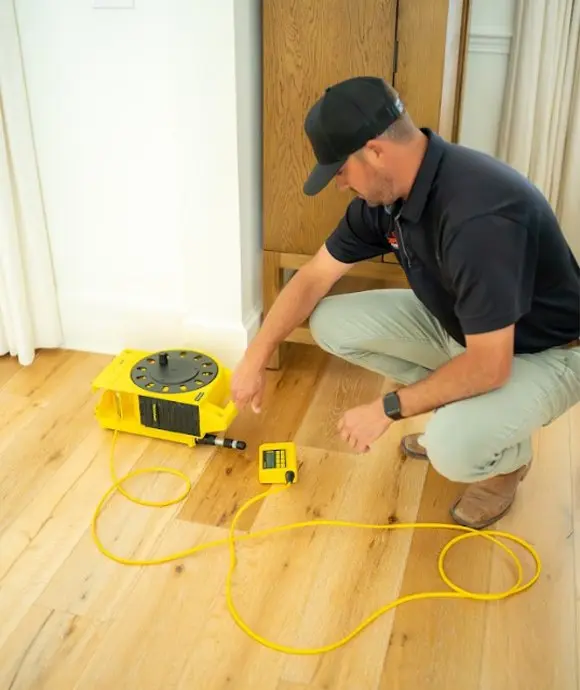
- Matt measures the floors across the home to see which parts are low and by how much.
- He goes under the home and looks at the piers, pads, and soil himself.
- He shows you what he found, with photos, in plain words.
- If the home needs work, you get an exact written price for new piers under the frame and bringing the home back to level.
- If it doesn’t need work, he tells you that.
Every repair we do is certified by a licensed structural engineer, and we pull permits when they are required.
When to Call Sooner Rather Than Later
Most signs build slowly, and there is usually time to watch them for a few weeks. A few are worth a quicker call, because they tell you the home is still moving or that a pier may have given way.
- A sudden change. A door that worked fine last week and now won’t close at all.
- A pier you can see leaning or broken. If you spot one through a vent, don’t go under to fix it. Call.
- New gaps that keep growing. Ceiling seams or skirting gaps that get wider month to month.
- Floors that feel different after a storm. Heavy rain can soften the soil under several piers at once.
- Water that won’t drain from under the home. The longer it sits, the more it works on the soil under the pads.
Catching movement early often means fewer piers need replacing. A home that has been sinking for years usually needs more work than one that has just started. Our article on whether foundation problems get worse if you wait covers this for all kinds of homes.
Keep a simple record
Write down which doors stick, roll the marble in the same spots, and take a photo of the same corner of skirting every month or two. When Matt comes out, those notes help him see how fast the home has been moving and where it started.
Things That Look Like Settling but Aren’t
- A soft floor spot near a sink, tub, or door. That is often water damage to the decking. We don’t repair floor decking, and Matt will tell you if that is what he sees.
- A door that only sticks in summer. Wood doors can swell with humidity. If it is one door and it comes and goes, it may not be the piers.
- Skirting damaged by wind, a mower, or animals. Skirting can bend for reasons that have nothing to do with the home moving.
- A loose ceiling strip in one spot. Sometimes it is just the adhesive giving up with age.
Matt checks for these too, so you don’t pay for work the home doesn’t need.
Related questions
Is it normal for a manufactured home to move a little?
A little seasonal movement is common on clay. What matters is whether it keeps getting worse and whether doors, floors, and seams are showing it.
Can I tell how far out of level my home is without going under it?
You can get a rough idea with a marble or a level. A real measurement across the whole home takes a floor survey, which Matt does at the free inspection.
Do you look at single-wides and double-wides?
Yes. We work on both, in town or on acreage, across San Antonio and the 36 towns around it.
Will you tell me if it’s not the piers?
Yes. If the problem is the floor decking, a door, or the skirting itself, Matt will say so.
Written by Matthew Zeman, co-owner of We Level Homes, with almost 20 years in foundation repair. Last updated November 18, 2026.