Foundation guide
Why Manufactured Homes Settle in South Texas Soil
A manufactured home rests on piers that sit close to the surface, right in the soil that moves the most. Here is what that soil does around San Antonio, and why some homes drop out of level while others stay put.
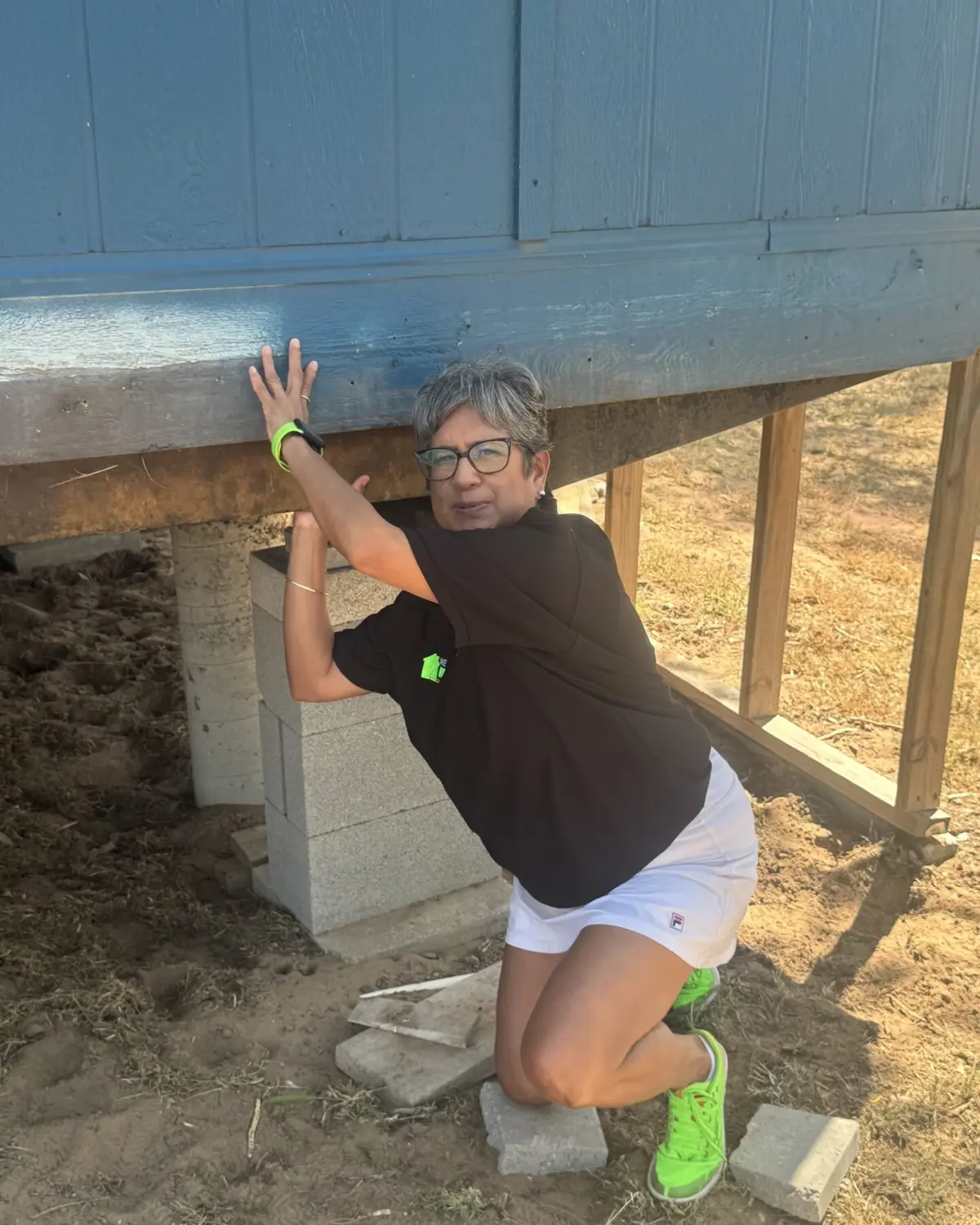
A slab home spreads its weight over the whole footprint of the house. A manufactured home puts its weight down through a row of piers, each one resting on a pad near the top of the ground. That top layer of soil is the part that dries out the fastest in summer and gets the wettest when it rains. So when the soil moves, the piers under a manufactured home feel it first.
Settling isn’t a sign that the home was poorly made. It is mostly about what the home sits on and what water does around it. This guide walks through the main causes we see in San Antonio and the towns around it, and what you can do about each one.
Want to know what is going on under your house?
Matt will measure it for free and show you what he finds. No pressure, no phone guesses.
Expansive Clay: The Biggest Factor
Much of San Antonio sits on expansive clay. Clay soil soaks up water and swells, then gives it up and shrinks. In a long, hot, dry summer, the clay can shrink enough to open wide cracks in the yard. When heavy rain comes back, it swells again.
A pier sitting on a pad near the surface rides that cycle up and down. The trouble is that the soil doesn’t move evenly. The side of the home that gets afternoon sun dries out more. The spot under a gutter downspout stays wetter. Over a few seasons, some piers end up lower than others, and the frame follows them.
How soil varies across the area
Soil changes from one part of town to another. North of Loop 1604 and toward the Hill Country, limestone is often close to the surface. On the east and south sides, the clay can run much deeper. Two homes a few miles apart can behave very differently for that reason alone.
Drought, Then Heavy Rain
South Texas weather tends to swing between long dry stretches and short, heavy storms. That swing is hard on shallow supports. During a drought the soil under the piers shrinks and pads can drop. Then a storm dumps a lot of water at once, and soil that was hard and cracked turns soft.
Owners often notice that doors stick worse in late summer and ease up after a wet spell. That back-and-forth is the clay at work. Our blog on foundation movement after dry weather and rain goes into it in more detail.
Water Under and Around the Home
Water is the cause we see most often in one corner or along one side of a home. A few common sources:
- Roof runoff. Many manufactured homes don’t have gutters, so rain pours off the roof edge straight onto the soil beside the skirting.
- Low spots in the yard. If the ground slopes toward the home, water runs under it and sits there.
- Leaks under the home. A dripping water line or drain under the floor can keep one patch of soil soaked for months.
- AC condensate lines. A line that drips under the home or right beside it can soften the soil under a pier.
Wet soil loses its strength, and a pad sitting on it can sink or tip. Washed-out soil around a pad can leave it with nothing solid under one edge.
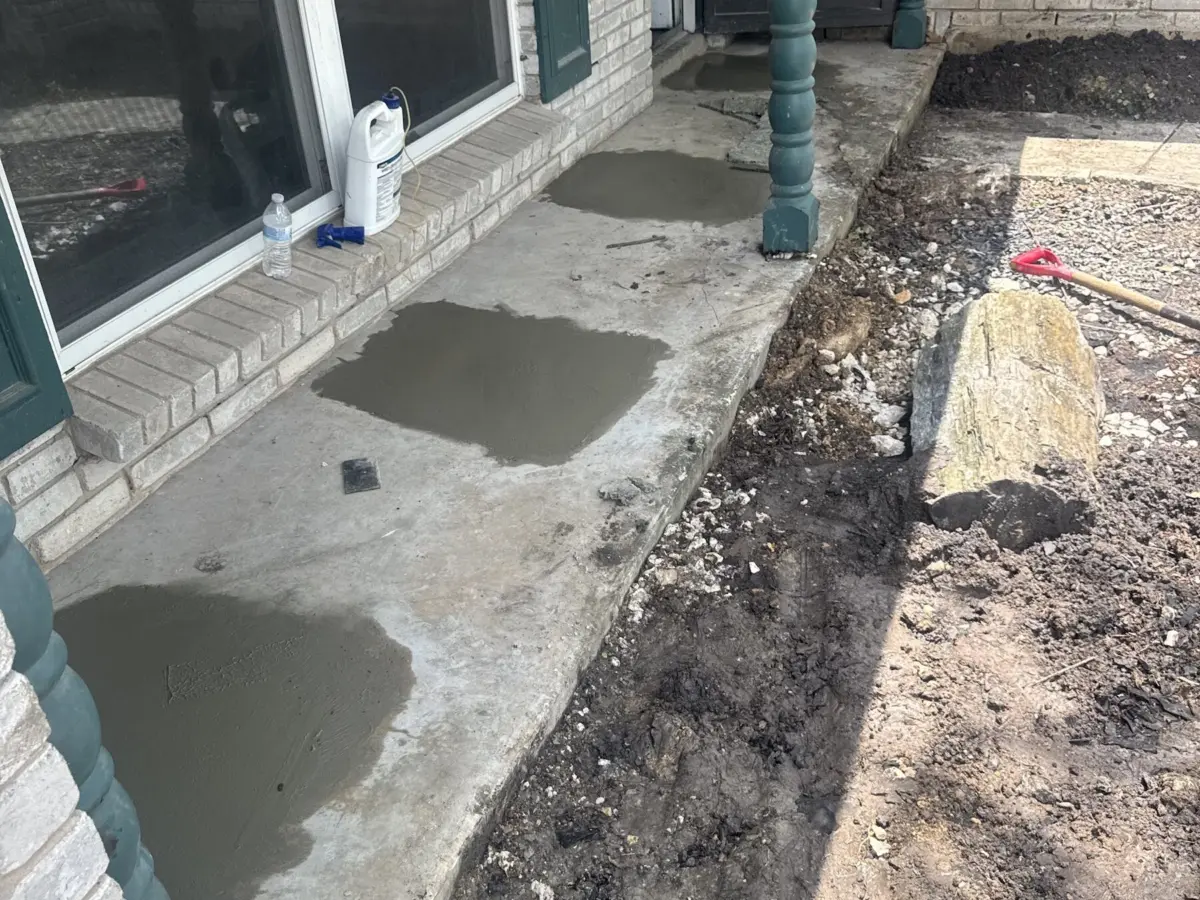
If water is part of the problem, it helps to fix that too. We only add drainage work as part of a larger foundation repair, not on its own.
How the Home Was Set
Not every settling problem starts with the soil. Some start on the day the home was set.
- Pads on loose fill. If the pad site wasn’t firm, pads can sink as the fill packs down.
- Piers spaced too far apart. Long spans between piers let the frame sag.
- Too few piers at heavy spots. Ends of the home, large openings, and the marriage line of a double-wide carry more weight.
- Piers that weren’t plumb. A pier that starts out leaning can keep leaning.
Matt sees the full range when he goes under homes. Some were set carefully decades ago and still look good. Others had trouble from the start.
Aging Piers, Pads, and Shims
Even a well-set home has parts that wear. Wood shims dry out, split, or rot. Concrete blocks can crack. Plastic pads can tip on soft ground. Each small change takes a little support away from one spot. Over the years, those small changes add up to a home you can feel is out of level.
You can see the parts that wear in our guide to piers, pads, and blocks.
Trees and Roots
A big tree close to the home can pull a lot of water out of the clay, especially in summer. That dries out the soil on one side more than the other. If the low side of your home is the side near a large tree, that may be part of the reason. Our article on trees, roots, and foundations covers this for all kinds of homes.
Why One End Drops Before the Other
Owners often ask why only one end or one side of the home has moved. Usually it comes down to something that is different about that spot:
- More water. The end where the roof drains, the yard dips, or a hose bib drips gets wetter than the rest.
- More sun. A side that bakes all afternoon can dry the clay out more in summer.
- A big tree. Roots pull water from the soil on one side.
- Heavier loads. Kitchens, bathrooms, and water heaters put more weight on certain piers.
- An older repair. If one end was shimmed or re-blocked before, the rest of the home may be sitting on older supports.
Finding the reason for one low spot helps make sure the fix lasts. If Matt sees water collecting at the low end, for example, he will tell you that, along with where new piers need to go.
Does the Age of the Home Matter?
It can. Older homes have had more seasons of wet and dry for their piers and pads to shift through, and their shims have had more time to dry out and loosen. But newer homes can settle too, especially in the first few years as the ground under fresh pads packs down. Age alone doesn’t tell you much. The signs inside and what is under the home tell you more.
Common Causes at a Glance
| Cause | What it does to the home | What can help |
|---|---|---|
| Expansive clay | Piers ride up and down unevenly with the seasons | Solid new piers and bringing the home back to level |
| Drought | Soil shrinks and pads drop | Keeping soil moisture more even around the home |
| Heavy rain | Soil softens and pads sink or tip | Moving water away from the home |
| Water under the home | One area keeps settling | Finding and fixing the leak or the low spot |
| How it was set | Frame sags between piers | Piers where the home actually needs them |
| Aging shims and blocks | Slow loss of support at single piers | Replacing failed piers under the frame |
What You Can Do Now
- Watch where water goes during the next heavy rain. Note any spot where it runs toward or under the home.
- Look under the home through a vent for standing water or wet soil.
- Check for drips from water lines and AC lines.
- Write down which doors stick and when, so you can see whether it changes with the seasons.
- If several signs show up at once, book a free inspection.
How We Fix a Home That Has Settled
Matt goes under the home and measures it, then looks at every pier, pad, and shim. If the home needs work, the repair is new piers under the frame and the home brought back to level. You get an exact written price first, and every repair is certified by a licensed structural engineer.
If water is a big part of the problem, Matt will tell you that too, so the new piers aren’t sitting in the same soaked soil that caused the trouble.
Related questions
Does a manufactured home settle more than a site-built home?
It can show movement sooner, because its piers sit near the surface where clay moves the most and the home is lighter and more flexible.
Is my home settling because it was installed wrong?
Sometimes. More often it is the soil and water. Matt looks at both when he goes under the home.
Will fixing drainage alone level my home?
No. Better drainage can help slow future movement, but a home already out of level needs its support fixed.
Does the side of town matter?
It can. Rock is often closer to the surface north of Loop 1604, while clay runs deeper on the east and south sides.
Written by Matthew Zeman, co-owner of We Level Homes, with almost 20 years in foundation repair. Last updated November 18, 2026.