Quick answer
Why Are My Floors Bouncy?
A floor that gives underfoot is almost always a raised-home problem. The question is which part underneath has lost its grip.
Short answer
Bouncy floors usually mean something under the floor isn’t carrying its share. In a pier and beam house, that is often a post that has rotted, sunk, or come loose from the beam, a beam that sags between supports, or joists that are weak, cut, or water damaged. Checking underneath tells you which.
The Usual Causes
A raised floor is a stack: posts hold up beams, beams hold up joists, and joists hold up the floor. Bounce comes from one of those layers not doing its job.
A post that isn’t touching the beam
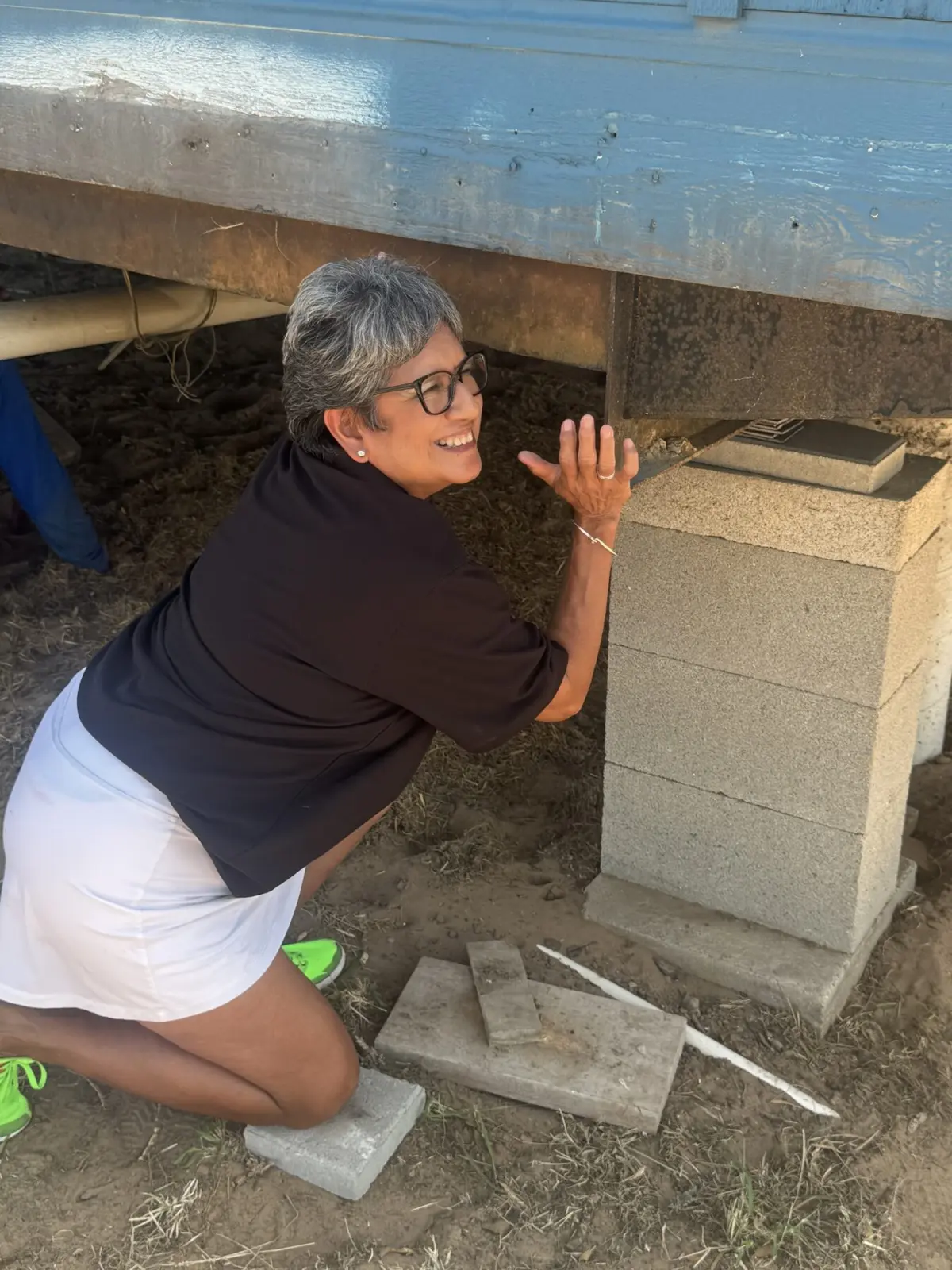
When a wood post rots at the bottom or sinks into the clay, a gap can open between the top of the post and the beam. The beam is now spanning further than it was meant to, and the floor above flexes when you walk on it. This is one of the most common causes in older San Antonio homes.
A sagging beam
A beam with posts spaced far apart, or one that is damaged, can bend under load. That shows up as a long, springy feel across part of a room.
Weak joists
Joists that were small for the span, notched for plumbing or wiring, or softened by a leak under a bathroom or kitchen can make one area feel soft. Joist bounce tends to be local, in one spot rather than across the house.
The floor itself
Sometimes it is the subfloor or flooring, not the structure. Old boards can work loose, and water can soften subfloor near a tub or sink.
How to Tell Which It Is
| What it feels like | What it often is | |
|---|---|---|
| Bounce plus a dip | Soft and lower than the floor around it | A post that dropped away from the beam |
| Long springy feel | Flexes across a wide area between walls | A beam sagging between supports |
| One soft spot | Gives in one small area | Damaged or cut joists, or subfloor |
| Near a tub or sink | Soft, sometimes with a musty smell | Water damage to joists or subfloor |
These are patterns, not a diagnosis. Many bouncy floors have more than one cause. Our guide to sagging floors: posts, beams, or joists goes deeper on reading the floor.
What Fixes It
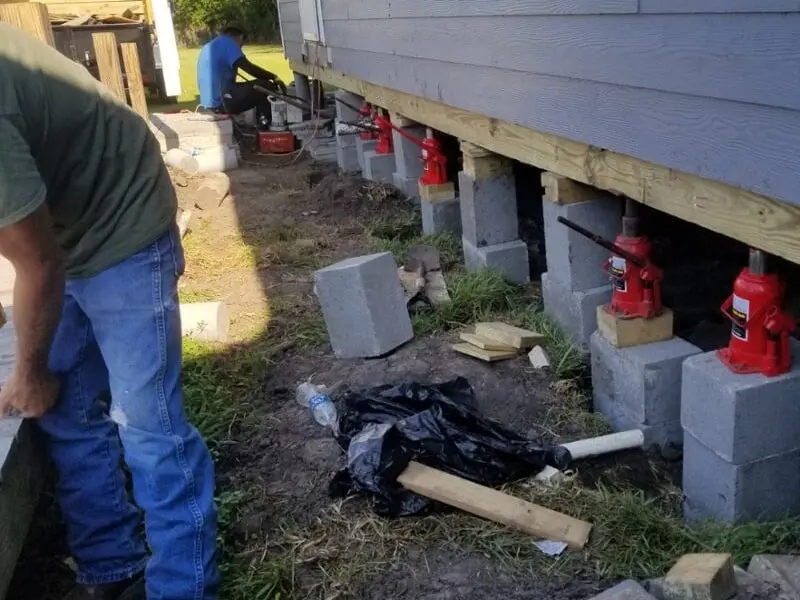
When the bounce comes from the supports, a pier and beam repair usually takes care of it. The rotted, sunken, or loose wood posts come out, poured concrete piers go in, and the beams are shimmed tight and back toward level on them. With the beam resting firmly on every support again, the floor above usually feels solid.
When a beam sags because the supports are far apart, a new support under the span can often help. Matt will tell you if that applies to your house.
When the bounce comes from damaged joists or subfloor, that is framing or flooring work. Matt will point out what he sees so you know what you are dealing with, and if a leak is behind it, a plumber should fix that first.
Is a Bouncy Floor Dangerous?
Most bouncy floors are a sign of wear, not a sudden failure. But they don’t usually fix themselves. A post that has lost contact with the beam leaves more load on the posts around it, and a soft spot near a leak tends to get softer. It is worth having it looked at while the damage is limited.
If a floor feels like it is sinking noticeably, or you see a beam or joist that is cracked through, stay off that area and call. Call or text (210) 934-6066 for a free inspection. Matt goes under the house to see what is causing the bounce and tells you what he would do.
What About Manufactured Homes?
Manufactured homes can feel bouncy too, often from supports under the frame that have settled or shifted. We work on those as well. See our answer on soft or sloping mobile home floors.
Related questions
Can a slab house have bouncy floors?
Not in the same way. A slab floor sits on concrete, so it doesn’t flex. A soft spot over a slab is usually the flooring, not the foundation.
Will leveling fix a bouncy floor?
Often, when the bounce comes from posts that have dropped or come loose. Damaged joists or subfloor need framing or flooring work.
Can I just add a jack under the soft spot?
A jack set on the dirt can sink and move with the clay, much like the old posts did. It is worth finding out what is actually causing the bounce first.
Do you check the joists during the inspection?
Yes. Matt looks at the posts, beams, joists, and soil while he is under the house.
Written by Matthew Zeman, co-owner of We Level Homes, with almost 20 years in foundation repair. Last updated November 18, 2026.