Quick answer
How Do I Know If My Pier and Beam Foundation Is Failing?
On a raised house, you usually feel the problem in the floors before you see it anywhere else. Here is what to watch for, inside, outside, and underneath.
Short answer
The most common signs are floors that sag, slope, or feel bouncy, doors that stick or won’t latch, and cracks at the corners of doors and windows. Under the house, look for wood posts that are rotted, leaning, sunk into the dirt, or missing. A free inspection tells you what is actually going on.
Signs Inside the House
- Sagging or sloping floors. A dip in the middle of a room, or a slope toward the center of the house, often points to posts that have dropped.
- Bouncy or soft floors. A floor that gives underfoot can mean a loose or missing post, a sagging beam, or weak joists. See why floors feel bouncy.
- Sticking doors. Doors that rub at the top, won’t latch, or swing on their own as the wall around them drops.
- Cracks at door and window corners. Diagonal cracks in sheetrock or plaster where framing is being pulled out of square.
- Gaps at trim. Baseboards pulling away from the floor, or crown molding separating from the ceiling.
- Tile or countertop cracks. Hard finishes crack when the floor under them moves.
One of these on its own isn’t always a foundation problem. Several of them in the same part of the house usually point to the supports under it. Our guide to foundation warning signs covers more.
Signs Outside and Under the House
You can check a lot from outside without crawling under:
- Skirting or perimeter wall that is sagging, cracked, or pulled loose.
- Water standing near the house after rain, or wet soil along one side.
- Mud tubes on the foundation or skirting, which can be a sign of termites. Call a licensed pest control company if you see them.
- Gaps where porches or steps meet the house.
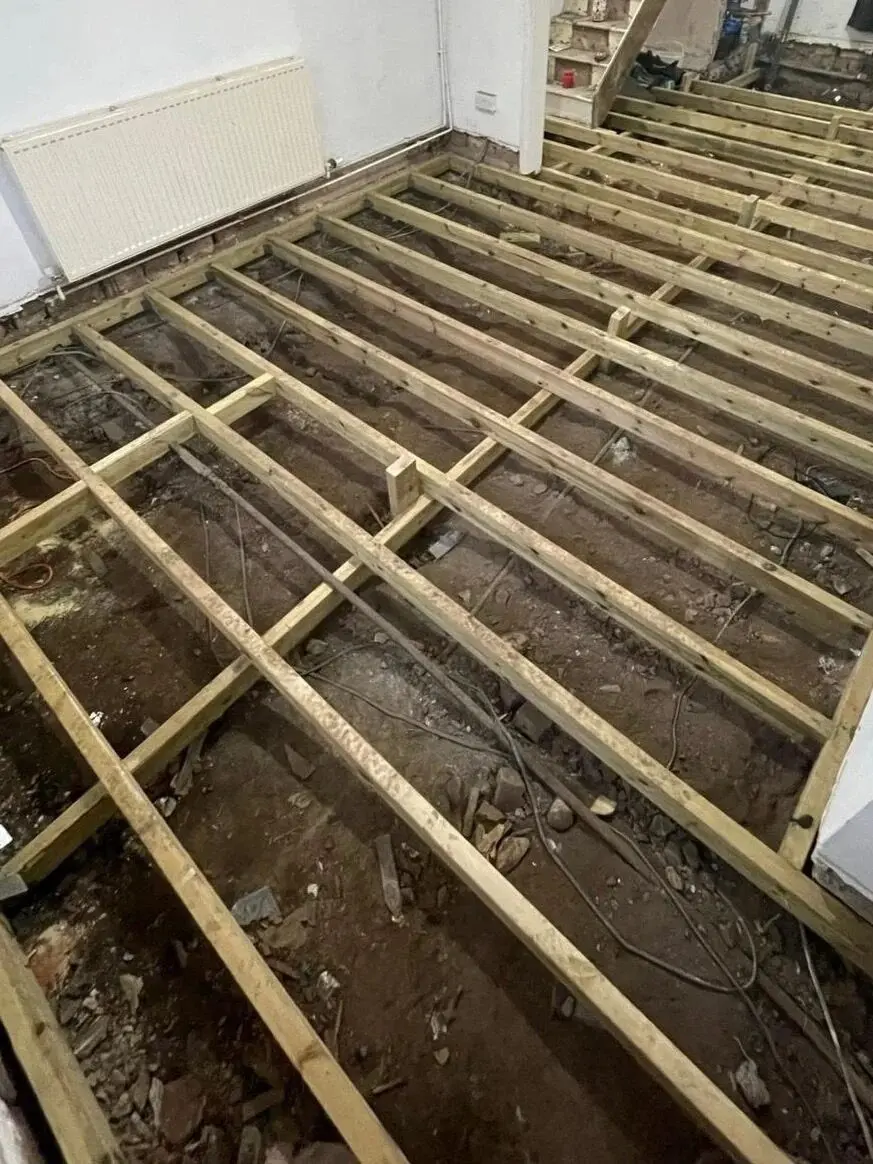
If you can look in from the crawl space opening with a flashlight, these are the things that matter:
- Wood posts that are dark, crumbly, or shorter than the ones around them.
- Posts that lean, have slipped off their blocks, or are missing.
- Beams with a visible sag, or a gap between a beam and the post under it.
- Stacked blocks or wood wedges from earlier fixes.
- Damp soil, standing water, or a dripping pipe.
Don’t go into a tight crawl space if you are not comfortable doing it. Matt goes under during the free inspection.
Failing vs. Just Old
Older raised homes are rarely perfectly level, and some unevenness is normal. These are the things that separate a house that is old from one with supports that are giving way:
| Often normal in an older home | Worth a closer look | |
|---|---|---|
| Floors | A gentle, even slope | New dips, soft spots, or a slope that is getting worse |
| Doors | One that rubs in humid weather | Several that stick, or one that suddenly won’t latch |
| Cracks | Thin hairline cracks that don’t change | Cracks that are wide, growing, or keep coming back after patching |
| Under the house | Solid posts and dry soil | Rotted, leaning, or sunken posts, or standing water |
Change over time is the biggest clue. Take dated photos of cracks and note which doors stick, so you can compare. Our article on settling vs. failure covers this in more detail.
What to Do If You See the Signs
- Write down what you have noticed and when, with photos.
- Fix anything obvious that is adding water, like a leaking pipe or a downspout emptying next to the house.
- Call a licensed pest control company if you see signs of termites.
- Call or text (210) 934-6066 for a free foundation inspection. Matt measures the floors, goes under the house, and tells you what he finds.
If the supports have failed, the usual pier and beam repair is replacing the rotted or sunken posts with poured concrete piers and shimming the beams back toward level. If they haven’t, Matt will tell you that too.
Related questions
Is a sloping floor in an old house always a problem?
No. Many older homes have a gentle slope that has been there for decades. A slope that is new or getting worse is the one to have checked.
Can a failing pier and beam foundation be fixed?
Usually, yes. The failed posts are replaced with concrete piers and the beams are shimmed back toward level.
Should I go under the house myself?
Only if you are comfortable and it is safe. Crawl spaces can be tight and have wiring, debris, and pests. Matt goes under during the free inspection.
Do the signs change with the seasons?
They can. San Antonio clay shrinks in dry weather and swells after heavy rain, so a door may stick in summer and work in spring.
Written by Matthew Zeman, co-owner of We Level Homes, with almost 20 years in foundation repair. Last updated November 18, 2026.