Foundation guide
Uneven, Sloping, and Sinking Floors: Causes and Fixes in San Antonio Homes
A floor that runs downhill, dips by a wall, or feels soft underfoot is one of the most common reasons people call us. Sometimes it is the foundation. Sometimes it isn’t. Here is how to tell, and what fixes each kind.
Most people notice it in small ways first. A marble or a toy car rolls to one side of the room. A chair drifts when you sit down. The hallway feels like it runs a little downhill toward the back of the house. Then a door starts rubbing, or a line of tile cracks, and the question becomes hard to ignore.
An uneven floor is a symptom, not a diagnosis. On a lot of San Antonio homes it does mean part of the house has dropped, but a sloping floor can also come from how the house was built, from framing, or from movement that happened years ago and stopped. This guide walks through the causes, how slab and raised floors differ, and what the fix looks like for each.
Want to know what is going on under your house?
Matt will measure it for free and show you what he finds. No pressure, no phone guesses.
What Uneven Floors Usually Look and Feel Like
Floors go out of level in a few recognizable patterns. Knowing which one you have helps narrow down the cause:
- A steady slope toward one side. The whole room, or the whole house, seems to tilt one way. This often points to one side or corner of the foundation settling.
- A dip near an outside wall. The floor drops in the last few feet before the wall. On a slab, that is a common sign the edge has settled.
- A low spot in the middle. The center of a room or hallway sits lower than the edges. On a slab this can be interior settlement; on a raised house it is often a sunken or rotten post.
- A hump or crown. One area sits higher than everything around it. On clay, that can be the soil swelling and pushing up rather than anything sinking.
- A soft or bouncy feel. The floor gives as you walk. That is usually framing or supports under a raised floor, not a slab.
Is a Sloping Floor Always a Foundation Problem?
No. A floor can be out of level for reasons that have nothing to do with the foundation moving today:
- It was built that way. Houses are rarely perfectly level, even when they are new. Older homes especially can have small differences that have been there for decades.
- Old movement that has stopped. A house can settle early in its life and then sit still for years. The slope is real, but it is not getting worse.
- Framing, not foundation. On a raised house, joists can sag between supports, or a wall can be carrying more than it should. The foundation under it may be fine.
- Flooring changes. Going from carpet to tile, or a patched subfloor, can create a step or a hump that feels like a slope.
- Additions. A room added later may sit on a different foundation and settle differently from the original house.
The question that matters is not just whether the floor is out of level, but whether it is moving, how far it has moved, and what is causing it. That takes measuring the whole house, not just the room where you noticed it. For more on telling active movement from old, settled movement, see foundation settling vs. foundation failure.
Why Floors Go Out of Level in San Antonio
When a sloping floor is a foundation problem, the cause is usually the ground under part of the house, not the house itself.
Clay that shrinks and swells
Much of San Antonio sits on expansive clay. During long, hot, dry summers it shrinks and pulls away from the foundation. When the heavy rain comes, it swells again. If one side of the house dries out more than the other, that side drops, and over the years the floor above it follows.
Plumbing leaks
A leak under the house can soften the soil in one spot, and that spot can sink faster than the rest. Many pre-1980s San Antonio homes still have cast iron drain lines, which can crack with age. If the low spot lines up with a bathroom or kitchen, a plumbing test is worth asking about. Our article on under-slab plumbing leaks explains why.
Trees close to the house
Large trees pull a lot of water out of the soil. Near the house, that can dry the clay along one side and let it shrink. See trees, roots, and your foundation for more.
Rotten or sunken posts under raised homes
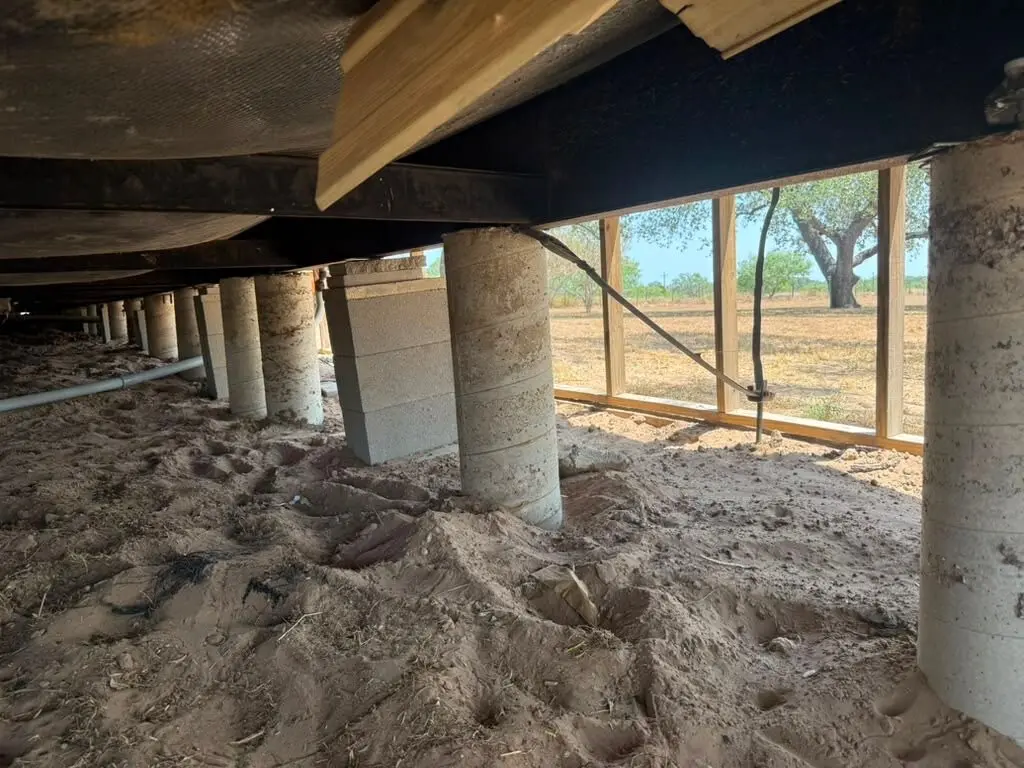
Older pier and beam homes, common inside Loop 410, often sit on wood posts. Over time those posts rot, sink into the soil, or shift, and the beams above them sag. The floor goes soft or sloped right over the bad posts.
Slab Floors vs. Raised Floors
The type of foundation changes both the likely cause and the fix.
| Slab home | Pier and beam home | Manufactured home | |
|---|---|---|---|
| What the floor sits on | A concrete slab poured on the ground | Wood joists and beams on posts or piers | A steel frame on piers or supports |
| Common cause of sloping | Clay under one area shrinks or softens | Posts rot, sink, or shift | Supports settle or shift in the soil |
| How it feels | Firm, but tilted or dipping | Often soft or bouncy as well as sloped | Sloped, sometimes soft near the ends |
| How we fix it | Steel or concrete piers pressed to bedrock, then a lift | Poured concrete piers replace bad posts, beams shimmed level | New piers under the frame, home brought back to level |
Simple Checks You Can Do at Home
None of these replace a measurement, but they help you describe what you are seeing:
- Roll something. A marble or ball that keeps rolling the same way in several rooms says more than one that rolls in one spot.
- Check the doors. Doors that rub at a top corner, won’t latch, or drift open on their own often sit over the part of the house that moved. Our guide to sticking doors and windows covers what to look for.
- Look at the walls. Diagonal cracks running up from door and window corners, or gaps at the top of baseboards, often cluster near a low spot.
- Walk the outside. Stair-step cracks in brick, or brick pulling away at a corner, can confirm which side dropped.
- Write it down. Take photos and note the date. Whether a crack or gap is growing is one of the most useful things to know.
How Uneven Floors Get Fixed
If the floor is sloping because the foundation moved, the fix is to put solid support under the part that dropped and bring it back up onto that support. That is what house leveling is.
On a slab
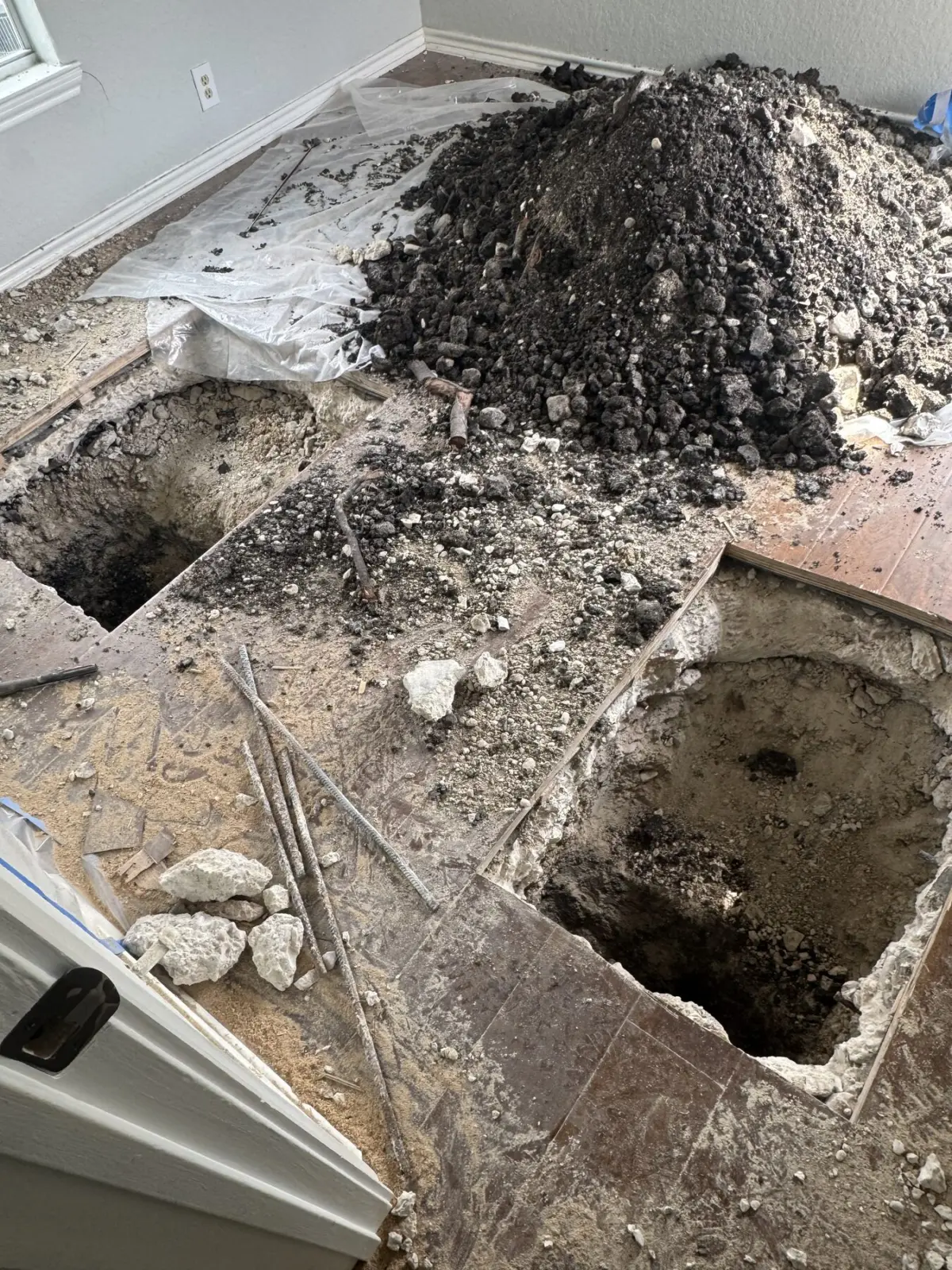
Steel or concrete piers go under the parts of the slab that settled. They are pressed down hydraulically to 10,000 psi until they stop on bedrock, then the slab is lifted back toward level on them. Piers along the outside go in from holes at the slab edge. When the low spot is in the middle of the house, a small opening is cut through the floor and patched after.
On a pier and beam house
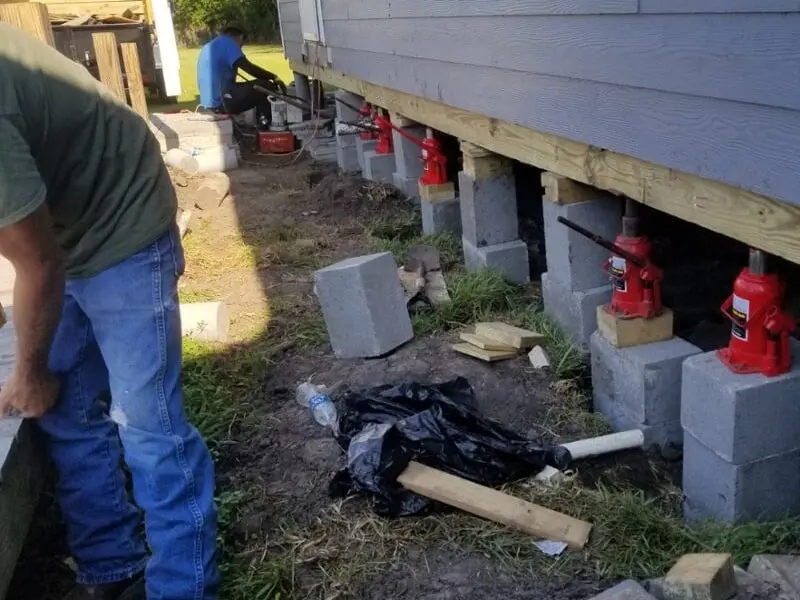
The rotten or sunken wood posts come out, poured concrete piers go in, and the beams are shimmed back to level. Some floors also need framing work where joists have sagged.
On a manufactured home
New piers go under the frame and the home is brought back to level. Many companies won’t work on manufactured homes. We do.
What Leveling Can and Can’t Do for a Floor
Leveling brings the low parts of the house back up toward the rest and holds them there. It often makes a big difference you can feel: doors start closing, the slope you noticed fades, and cracks stop growing.
It is honest to say what it won’t do, too. A house that was never perfectly level won’t become perfectly level. Flooring that cracked or buckled may still need replacing. Framing that sagged between supports may need its own repair. And if the floor is out of level for a reason that has nothing to do with the foundation, piers won’t fix it. Matt will tell you which of these applies to your house.
When to Have Your Floors Measured
It is worth having someone look when the slope is getting worse, when it comes with sticking doors or new cracks, or when you are buying or selling. A free foundation inspection starts with Matt measuring floor levels across the house, so you see which parts moved and how far. If the floors are within a normal range and the house is not moving, he will tell you that, and you can stop wondering.
Related questions
Can a floor slope without cracks showing anywhere?
Yes. Some houses move slowly enough, or have flexible enough finishes, that the floor changes before any crack shows. Measuring the floors is the way to know.
Does carpet hide a sloping floor?
It can hide small dips. Many people only notice the slope when they pull up carpet or lay hard flooring.
Will new flooring fix a sloping floor?
Not if the foundation is still moving. New flooring laid over a moving foundation can crack or separate again. It is usually better to level first and replace flooring after.
Who comes out to look at the floors?
Matt, one of the two owners, does the inspection himself. Rosie calls or texts to set up the time.
Written by Matthew Zeman, co-owner of We Level Homes, with almost 20 years in foundation repair. Last updated November 18, 2026.