Quick answer
Why Is My Mobile Home Floor Soft or Sloping?
Soft and sloping sound alike, but they usually have different causes and need different fixes. Here is how to tell them apart, and which one we repair.
Short answer
A sloping floor usually means the home has moved out of level because piers under the frame have settled. That is what we fix. A soft, spongy floor is usually damaged floor decking, often from a water leak. We don’t repair decking, and Matt will tell you honestly if that is the problem.
Soft vs. Sloping: Two Different Problems
| Sloping floor | Soft floor | |
|---|---|---|
| How it feels | Floor runs downhill; a marble rolls one way | Floor gives or flexes underfoot in one spot |
| Where it shows up | Across a room, toward one end or side, or along the middle of a double-wide | Near sinks, tubs, toilets, washers, and exterior doors |
| Usual cause | Piers under the frame sank, tipped, or lost their shims | Floor decking damaged by water or wear |
| Other signs nearby | Sticking doors, open ceiling seams, skirting pulling away | Stains, odor, or a past leak |
| Who fixes it | Us: new piers under the frame, home brought back to level | A flooring or general repair contractor |
Why Floors Slope
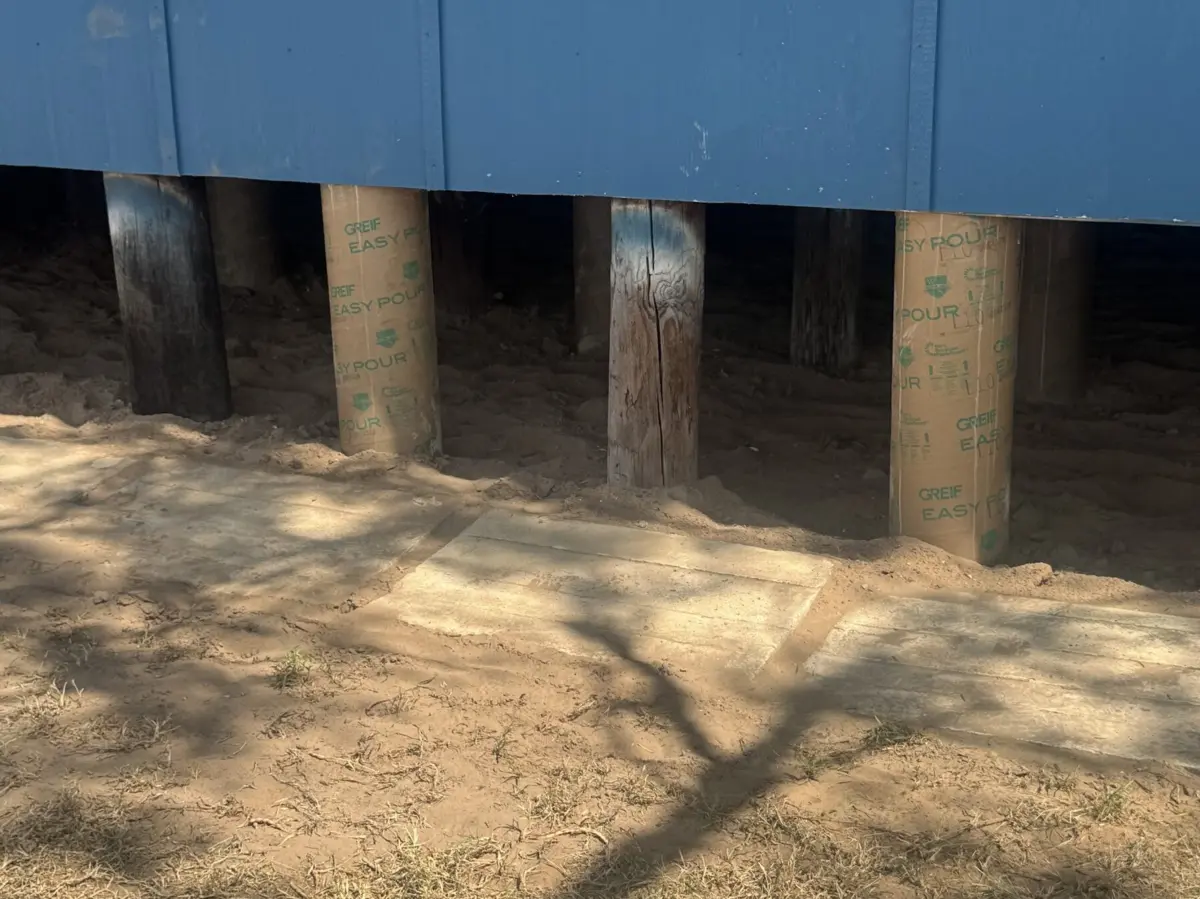
A manufactured home floor is built on top of a steel frame, and the frame rests on piers. If a pier settles in soft clay, a pad tips, or a wood shim dries out and loosens, the frame drops at that spot and the floor goes with it. The slope is the floor following the frame.
In San Antonio, expansive clay and heavy rain after long dry spells are common reasons piers move. See why manufactured homes settle.
Why Floors Go Soft
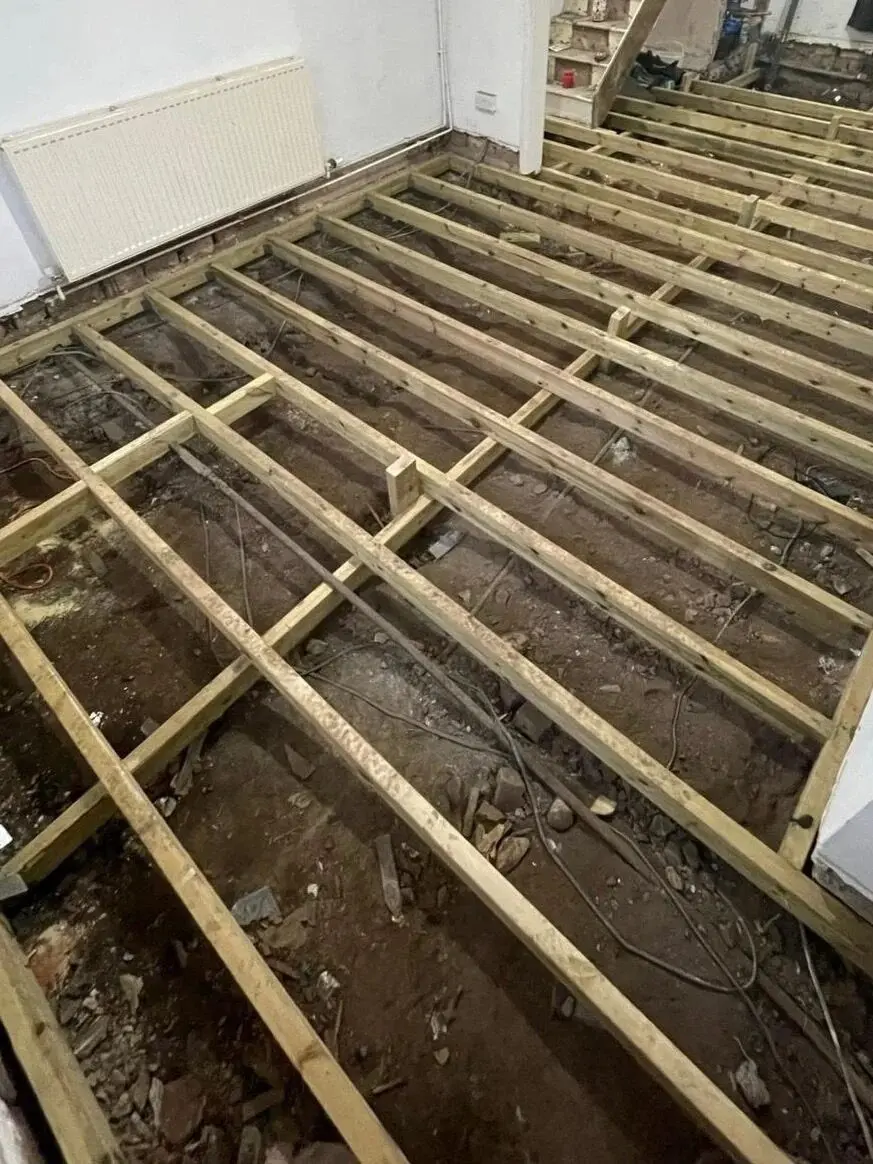
Many manufactured homes use particleboard or similar decking under the carpet or vinyl. When it gets wet from a leaking supply line, a toilet seal, or water coming in at a door, it can swell and lose its strength. That leaves a spot that feels spongy or gives when you step on it.
That is a problem with the floor itself, not the support under the home. Leveling won’t fix it. We don’t repair floor decking, so if Matt finds a soft spot during the inspection, he will tell you so and you can call a contractor who does that work.
If a soft spot keeps growing, look for an active leak. Fixing the water first protects the new decking and the piers under it.
When You Have Both
It happens. A leak under the home can soak the decking and the soil under a pier at the same time. In that case, the order matters: stop the leak, then deal with the support and the floor. Matt can tell you which parts are ours and which aren’t, so you can plan the work in the right order.
What Matt Checks at the Inspection
Matt measures the floors across the home to map where it slopes and by how much. Then he goes under the home and looks at the piers, pads, shims, and soil under the low areas. If he finds a soft spot in the floor above a pier that looks fine, he will tell you the problem is likely the decking, not the support. If the piers have failed, you get an exact written price for new piers under the frame and bringing the home back to level.
What to Do Now
- Roll a marble in a few rooms. If it rolls the same way each time, note the direction.
- Press on any soft spots and note where they are.
- Look for leaks under sinks, around the toilet, and near the water heater.
- Check for other signs like sticking doors and skirting gaps. See signs your home is out of level.
- Book a free inspection if the floor slopes or you see several signs.
Related questions
Will leveling fix a soft floor?
No. A soft floor is usually damaged decking. Leveling fixes the slope, not the decking.
Can a sloping floor be fixed without replacing the floor?
Usually, yes. If the floor slopes because the piers settled, new piers under the frame and bringing the home back to level fixes the slope.
Why does my floor slope toward the middle of my double-wide?
The marriage line may have lost support. Matt will check the piers along it.
Do you go under the home to check?
Yes. Matt goes under the home himself at the free inspection.
Written by Matthew Zeman, co-owner of We Level Homes, with almost 20 years in foundation repair. Last updated November 18, 2026.