Quick answer
Is It Normal for a New Slab Home to Crack in San Antonio?
You bought a new house to avoid problems, so a crack in the first year or two can feel like a bad sign. Often it isn’t. Here is how to sort the normal from the worth-a-look.
Short answer
Some cracking is normal. New concrete shrinks as it cures, and new framing and sheetrock settle in, so thin cracks in the slab and at drywall corners are common in the first few years. Cracks that keep widening, doors that start sticking, or a floor that slopes are worth having measured.
Why New Homes Crack a Little
A new house is still adjusting. A few things happen in the first years that can cause small cracks without anything being wrong:
- The concrete cures. Slabs shrink as they dry, and thin hairline cracks are common. Our answer on hairline cracks in a slab goes into these.
- The lumber dries. Framing lumber loses moisture after the house is closed in, and small cracks can show up at drywall seams and the corners of doors and windows.
- The soil adjusts. Soil disturbed and filled during construction can settle a little under the new weight, and San Antonio clay moves with the seasons.
These cracks are usually thin, don’t have one side higher than the other, and stop changing after a while.
When It Is More Than Settling In
These signs point to the slab moving, even in a new house:
- Cracks you can fit a coin in, or that keep getting wider.
- A crack in the slab with one side higher than the other.
- Doors that used to close fine and now stick or won’t latch. Our guide to sticking doors and windows covers what that pattern means.
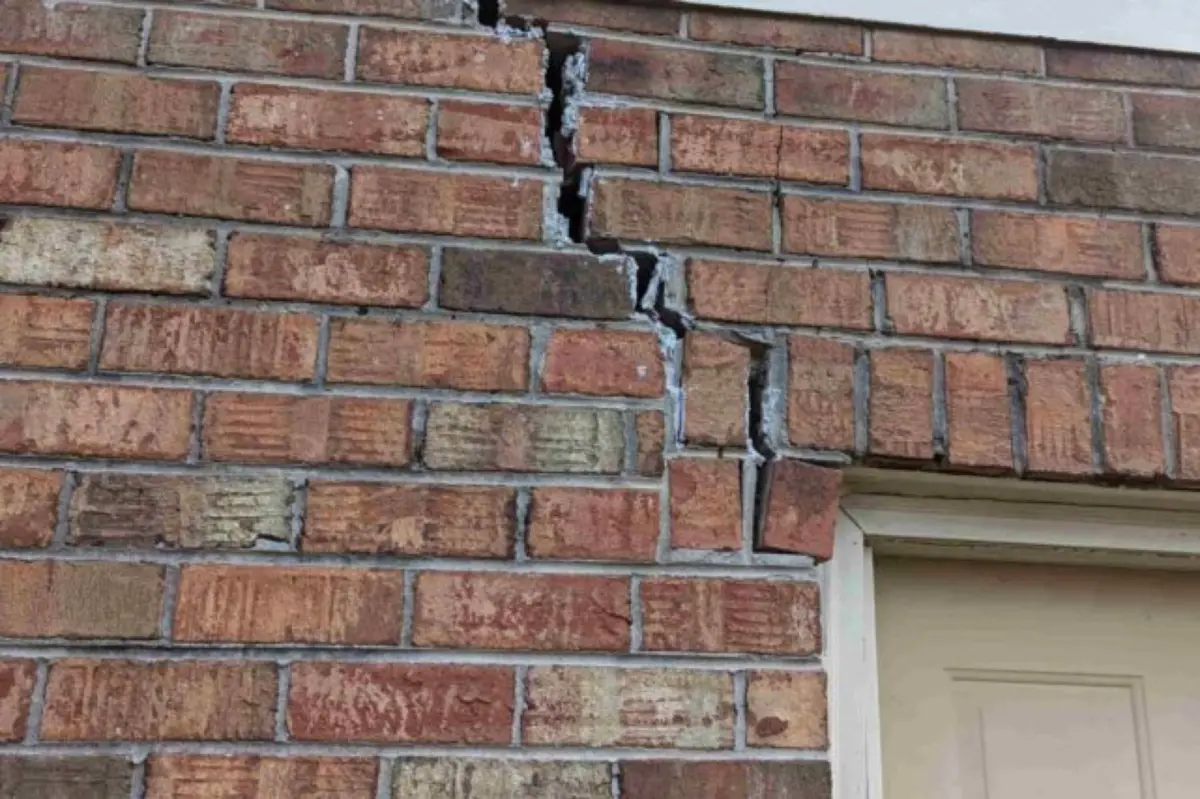
- Stair-step cracks in the brick, or brick pulling away at a corner.
- Floors that feel like they slope, or tile cracking in a line across a room.
Many newer homes have post-tension slabs, which are stiffer and may show fewer slab cracks even when the house has moved. Our article on post-tension vs. conventional slabs explains the difference.
Start With Your Builder’s Warranty Process
If your home is new, it may still be covered by a builder warranty. Before anyone does foundation work, check your builder’s warranty documents and follow the process they describe. In general:
- Read what your warranty says about the foundation, how to report a problem, and any time limits.
- Report the problem in writing, the way the warranty asks, and keep copies.
- Keep dated photos of every crack and sign you report.
- Check whether the warranty says anything about outside repairs before you have anyone else do work.
Warranty terms vary from builder to builder. If you have questions about your rights or what your warranty covers, ask your builder’s warranty department or a real estate attorney. We can’t give legal advice.
Getting an Independent Look
Some homeowners want a second set of eyes, either to decide whether to file a claim or after a builder’s response. A free inspection from us gives you floor level measurements across the house and Matt’s honest read on what he sees, including when it looks like normal settling in.
If the house does need repair and you are not going through a builder warranty, you get an exact written price, a repair certified by a licensed structural engineer, and a written pier warranty: lifetime on steel piers and 25 years on concrete piers. Call or text (210) 934-6066. For how weather plays into all of this, see how weather moves your foundation.
Related questions
How long does a new house keep settling?
It varies with the soil, the weather, and how the lot was prepared. Small cracks often show up early and then stop changing. Cracks that keep growing are worth having measured.
Can you handle my builder warranty claim?
The warranty is between you and your builder, so the claim is yours to make. We can measure the house and tell you what we see, and you can share that however you choose.
Are drywall cracks in a new home a foundation problem?
Often not. Thin cracks at drywall seams and door corners are common as new lumber dries. Doors that stick or cracks that keep widening are different.
Should I fill the cracks in my new slab?
Check your builder’s warranty first, and take dated photos before anything is filled. Covering a crack can make it harder to show what happened.
Written by Matthew Zeman, co-owner of We Level Homes, with almost 20 years in foundation repair. Last updated November 18, 2026.