Foundation guide
Widening Expansion Joints and What They Tell You
Expansion joints are built to let a house move a little. When one keeps opening, tilts, or shifts out of line, it is often telling you the foundation under it has moved.
Walk around a brick house in San Antonio and you will usually find a few vertical lines filled with caulk instead of mortar. Those are expansion joints. They are there on purpose, so the brick has room to move with heat, cold, and moisture without cracking.
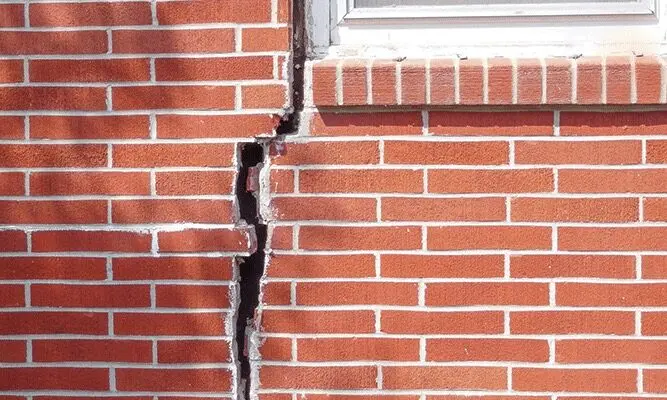
Because they are made to move, a little change in an expansion joint is normal. But a joint that keeps getting wider, opens more at the top than the bottom, or has one side sitting higher than the other is often a sign of foundation movement. This guide explains what to look for and how to keep track of it.
Want to know what is going on under your house?
Matt will measure it for free and show you what he finds. No pressure, no phone guesses.
What an Expansion Joint Is
Building materials grow and shrink a little with temperature and moisture. An expansion joint is a planned gap that lets that happen in a controlled place. On a slab home, you will usually see them in a few spots:
- In brick veneer. Vertical joints filled with sealant, often near corners, beside windows, or along long walls.
- Where an addition meets the house. A room added later often sits on its own slab, and the joint between old and new lets them move separately.
- In the slab itself. Some slabs have cut or formed joints that give the concrete a planned place to crack as it shrinks. You may only see these when flooring comes up or along the exposed edge of the slab.
Not every house has all of these, and some joints are hard to see once the house is finished. The ones in the brick and at additions are the ones most homeowners notice.
When Movement Is Normal
Sealant dries out and shrinks in the Texas sun. Brick and concrete grow a little on hot days and shrink on cool nights. Over a year, an expansion joint can open and close slightly with the seasons. A joint with old, cracked caulk that hasn’t changed width over time is usually a maintenance item, not a foundation problem.
The question is not whether the joint moved at all. It is whether it keeps moving in one direction, and whether other parts of the house are showing the same thing.
When a Widening Joint Points to the Foundation
These patterns often mean the slab under that wall has moved:
- It keeps getting wider. A joint that is noticeably wider this year than last, and doesn’t close back up when the weather changes.
- It is tapered. Wider at the top than the bottom, or the other way around. That usually means one side of the wall is tilting or dropping.
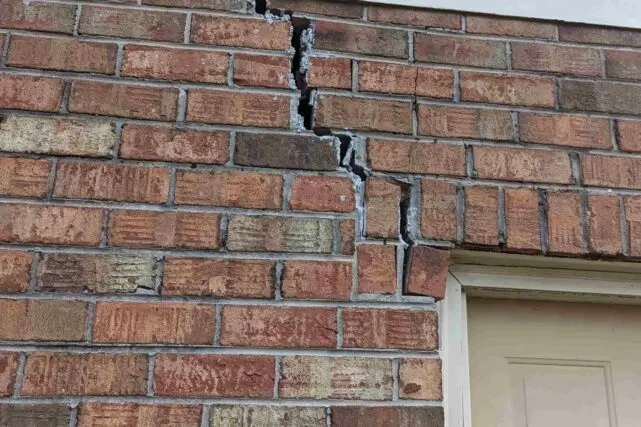
- One side is higher. The brick courses on each side of the joint no longer line up. That is a vertical offset, and it often means one section dropped.
- The sealant has torn. Caulk that has pulled apart in the middle, not just dried and cracked on the surface.
- Other signs nearby. Gaps around windows and doors, stair-step cracks in the brick, or a door inside that started sticking.
Additions Pulling Away
Additions deserve their own mention. A room added years after the house was built often sits on a separate slab, poured at a different time, sometimes on different fill. The two slabs can settle at different rates, and the joint between them is where it shows.
Signs include a gap that opens where the addition’s wall meets the original house, a step in the floor at the doorway between them, or a roofline that no longer meets cleanly. In many cases the addition is the part that dropped, and the repair is piers under the addition’s edge. Matt will measure both sides to see which part actually moved.
What You See and What It Often Means
| What it often means | What to do | |
|---|---|---|
| Old caulk, cracked, same width as before | Sealant aging in the sun | Re-caulk as normal upkeep |
| Joint wider than last year | The wall on one side may be moving | Start tracking it and have it measured |
| Wider at the top than the bottom | One side of the wall tilting or dropping | Have floor levels measured |
| Brick courses no longer line up | One section dropped relative to the other | Have floor levels measured |
| Gap where an addition meets the house | The two slabs settling differently | Have both slabs measured |
A table like this helps you decide what to watch. It isn’t a diagnosis. Measuring the floor across the house is what shows whether the slab moved.
What to Check Inside the House
A joint outside rarely moves alone. If the slab under that wall shifted, the rooms on the other side of the wall usually show it too. When you find a joint that has opened, walk inside and look at the same part of the house:
- Doors and windows on that wall. A door that rubs at the top corner, or a window that is harder to open than it used to be.
- Sheetrock above openings. Cracks running at an angle from the corners of door frames and windows.
- Where walls meet the ceiling. A gap opening along the top of a wall, or tape lifting at a corner.
- Baseboards and floors. A gap under the baseboard that is wider at one end, or tile cracking near that wall.
Finding signs inside that line up with the joint outside makes it much more likely the foundation moved. Finding nothing inside, with a joint that has only aged, points the other way. Either way, write down what you see and where, so the inspection can start from your notes.
Timing helps too. In San Antonio, many joints open the most late in a hot, dry summer, when the clay along the edge of the house has shrunk. If a joint opens every summer and closes up again after the fall rains, that seasonal swing is worth mentioning to Matt, even if the joint never gets much wider overall.
How to Track a Joint Over Time
A widening joint is easier to judge with a record. A simple routine works:
- Take a photo of the joint with a ruler or coin held against it, and write the date on the photo or in a note.
- Make a small pencil mark at the top and bottom of the joint so you measure the same spot each time.
- Check it again after a long dry spell and again after heavy rain.
- Note whether the brick on each side still lines up, and whether nearby doors and windows still work.
- Bring the photos to your inspection.
If the joint changes a lot between dry and wet weather, the clay under that wall is likely active. If it only ever goes one way, the wall may be settling.
Why Re-Caulking Isn’t a Repair
Fresh caulk makes a joint look better, and on a joint that hasn’t moved, that is all it needs. But if the foundation under it is still moving, new caulk will tear again. The same goes for cracks in the slab: we fill them after the house is level and stable, not before. Our crack repair page explains why the order matters.
If the joint is widening because a section of the slab dropped, the fix is under the house. Piers go under the low section, pressed all the way to bedrock at 10,000 psi, and that part of the house is lifted back toward level. After that, the joint and any cracks can be closed up for good.
What Matt Looks At During an Inspection
At a free inspection, Matt looks at the joint you noticed and the walls on both sides of it. He measures floor levels inside, checks the brick for other cracks, and looks at how water drains along that side of the house. Then he tells you whether the joint is just old caulk or a sign of movement, and if it is movement, where it is coming from. Our guide to foundation crack types covers the related cracks he checks at the same time.
Related questions
How wide is too wide for an expansion joint?
There isn’t one number that fits every house. What matters more is whether it keeps getting wider, whether it is tapered, and whether the brick on each side still lines up.
Should I re-caulk a widening joint?
Re-caulking is fine as upkeep, and it keeps water out. Just take a dated photo first so you still have a record if the new caulk tears.
Do all slab homes have expansion joints?
Most brick homes have them in the veneer. Joints in the slab itself vary by house and are often hidden under flooring.
Can a widening joint close back up after repair?
It can close some once the low section is lifted, but how much depends on how the wall moved. Any gap that is left can be sealed once the house is stable.
Written by Matthew Zeman, co-owner of We Level Homes, with almost 20 years in foundation repair. Last updated November 18, 2026.