Foundation guide
Separating Fascia Boards and Other Roofline Clues
When a corner of the house drops, the roofline often shows it before anything inside does. Here is what to look for up high, and how to tell foundation movement from rot or a heavy gutter.
Fascia boards are the long boards along the edge of the roof, where the gutters usually hang. At the corners of the house, two fascia boards meet in a tight joint. When the foundation under that corner drops, the walls below it drop too, and that joint can open up into a gap or pull out of line.
Because the roofline is long and straight, it shows small movements clearly. Most people never look up there, so it is one of the signs homeowners miss. It is also one of the easiest to misread, because wood rot and gutters cause similar gaps.
Want to know what is going on under your house?
Matt will measure it for free and show you what he finds. No pressure, no phone guesses.
Why the Roofline Shows Foundation Movement
A house is one connected frame. The foundation carries the walls, and the walls carry the roof. If one corner of the foundation settles, the wall above it settles too, and the roof framing over that corner sags or twists a little. The fascia is nailed to the ends of that framing, so it follows.
At the corner, two boards are trying to follow two walls that moved by different amounts. The joint between them opens, often wider at the bottom or the outer edge. Along a long wall, the fascia can also show a dip or wave where the wall below has dropped.
Roofline Clues to Look For
- Fascia corners pulling apart. A gap at the corner joint, often wider at one end, or one board sitting lower than the other.
- A wavy or dipping fascia line. Stand at one end of the house and sight down the edge of the roof. A dip in the middle or at one end can follow a low spot below.
- Frieze board gaps. The frieze board runs along the top of the wall under the soffit. A gap between it and the brick or siding, wider at one end, follows the same pattern.
- Soffit panels shifting. Soffit panels or vents that have pulled out of their channels at a corner.
- Gutters that no longer drain. A gutter that held water fine for years and now pools in one spot can mean the fascia it hangs on has dropped.
- A chimney pulling away. A chimney that leans away from the house, or shows a gap where it meets the wall or roof, has its own footing and may be moving separately.
Chimneys, Porches, and Add-Ons
Parts of a house that were built separately, or that sit on their own footing, often move differently from the main house. Where they join, the roofline tells you.
- Chimneys. A brick chimney is heavy and usually sits on its own footing. If that footing settles, the chimney can tilt away from the wall. Look for a gap that widens toward the top, or flashing that has pulled loose where the chimney meets the roof.
- Porch roofs and columns. A porch roof tied into the main roof can sag at the outer edge if the porch slab or column footings drop. Columns that lean, or a porch beam that dips in the middle, are worth noting.
- Room additions and garages. An addition built years after the house sits on a separate foundation. A gap or crooked line where the two rooflines meet can mean one has moved relative to the other.
These joints don’t always mean the main foundation has a problem. They do tell you where to look next.
If a chimney is pulling away, it is worth having it looked at soon, both for the foundation question and because a gap at the roof can let water in. A roofer or mason can check the flashing and brick while you find out whether the foundation is involved.
Causes That Aren’t the Foundation
Roofline problems are often just roofline problems. Rule these out:
Wood rot
Fascia boards take a lot of water, especially behind gutters. Rotten wood shrinks, swells, and loses its grip on nails, and the corner joint opens. Press the wood with a screwdriver. If it is soft, rot is the likely cause.
Gutter weight
A gutter full of leaves and water is heavy. Over time it can pull the fascia forward and open the corner joint. If the gap is at the top of the board and the gutter hangs low, the gutter is the more likely suspect.
Normal wood movement
Wood shrinks and swells with the seasons. A thin, even gap at a corner joint, with paint cracked along it, can be nothing more than the boards drying out.
Roof framing
A sagging ridge or roof deck can come from the roof structure itself. That is a question for a roofer or framer, not a foundation company.
How to Tell Which It Is
| Clue | Points toward the foundation | Points toward something else |
|---|---|---|
| Wood condition | Solid, paint intact away from the joint | Soft, flaking, or stained |
| Shape of the gap | Tapered, with one board lower | Even, or at the top behind a heavy gutter |
| Location | Above a corner with brick cracks or gaps below | Under a valley or a gutter that overflows |
| Inside the house | Sticking doors or cracks in the rooms below that corner | Nothing unusual inside |
| Other corners | Only one or two corners affected | Several corners with similar rot |
The strongest sign is when the roofline lines up with what is happening lower down. A fascia gap above a corner with brick separating and sticking doors inside is telling one consistent story.
Check the Wall Below the Roofline
When you find a roofline clue, follow that corner straight down. Look for stair-step cracks in the brick, gaps around the windows on that wall, and a vertical crack at the corner. Then go inside and check the rooms at that corner for diagonal cracks at door frames and doors that rub.
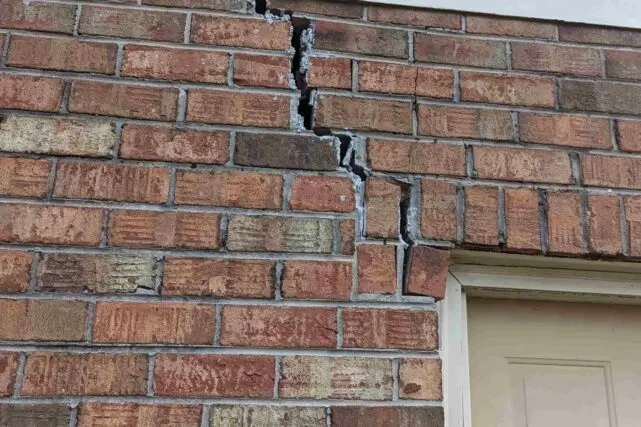
If you find nothing below, the fascia is probably a fascia problem. If you find several signs, the foundation under that corner is worth measuring.
A simple roofline walk-around
- Stand back from each corner of the house, far enough to see the whole roof edge.
- Sight down each long wall from one end. Look for dips or waves in the fascia line.
- Check each corner joint for gaps, and note which end of the gap is wider.
- Press any suspect boards for soft wood.
- Photograph what you find, with the date, and look again after the next dry summer.
A gap that grows from one season to the next is more telling than one that has been the same for years.
What Fixes It
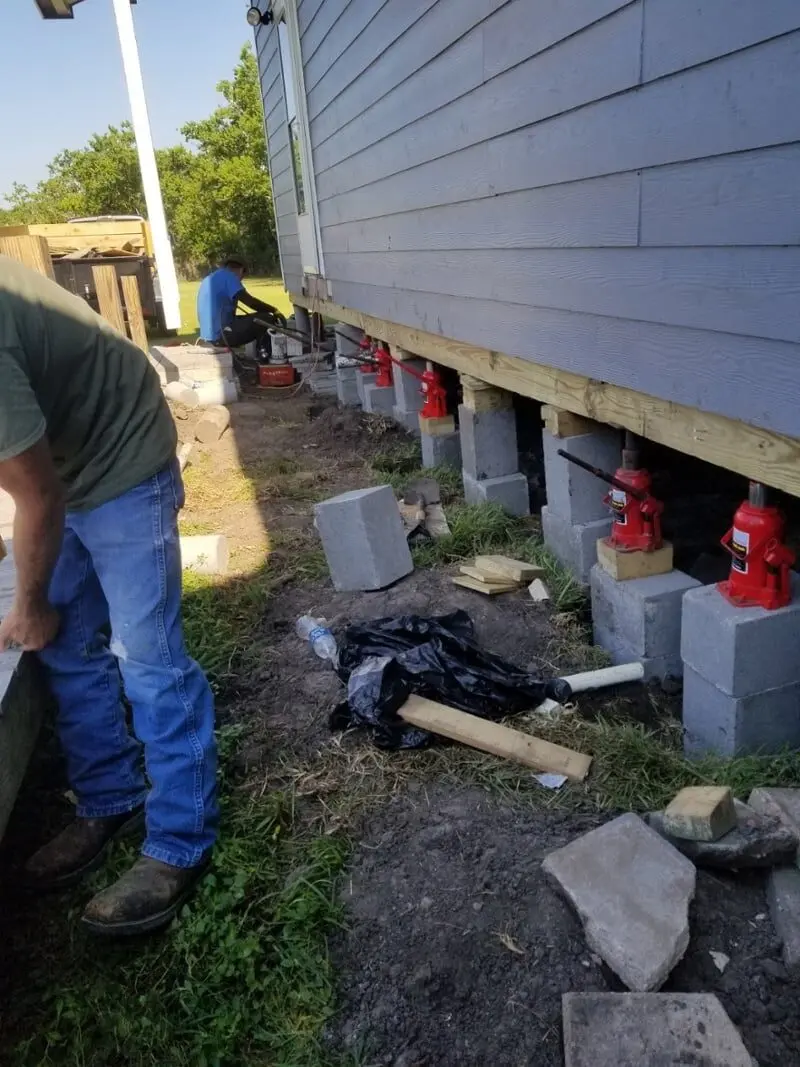
If the foundation under that corner has dropped, the fix starts at the bottom. Steel or concrete piers are pressed to bedrock under the corner that settled, and the house is lifted back toward level. As the corner comes up, the walls and roof framing above it move back with it. Gaps at the roofline often close partly, though boards that were bent, split, or loosened may still need a carpenter.
If the cause is rot or gutters, a carpenter or gutter company is the right call, and repairing the foundation won’t help.
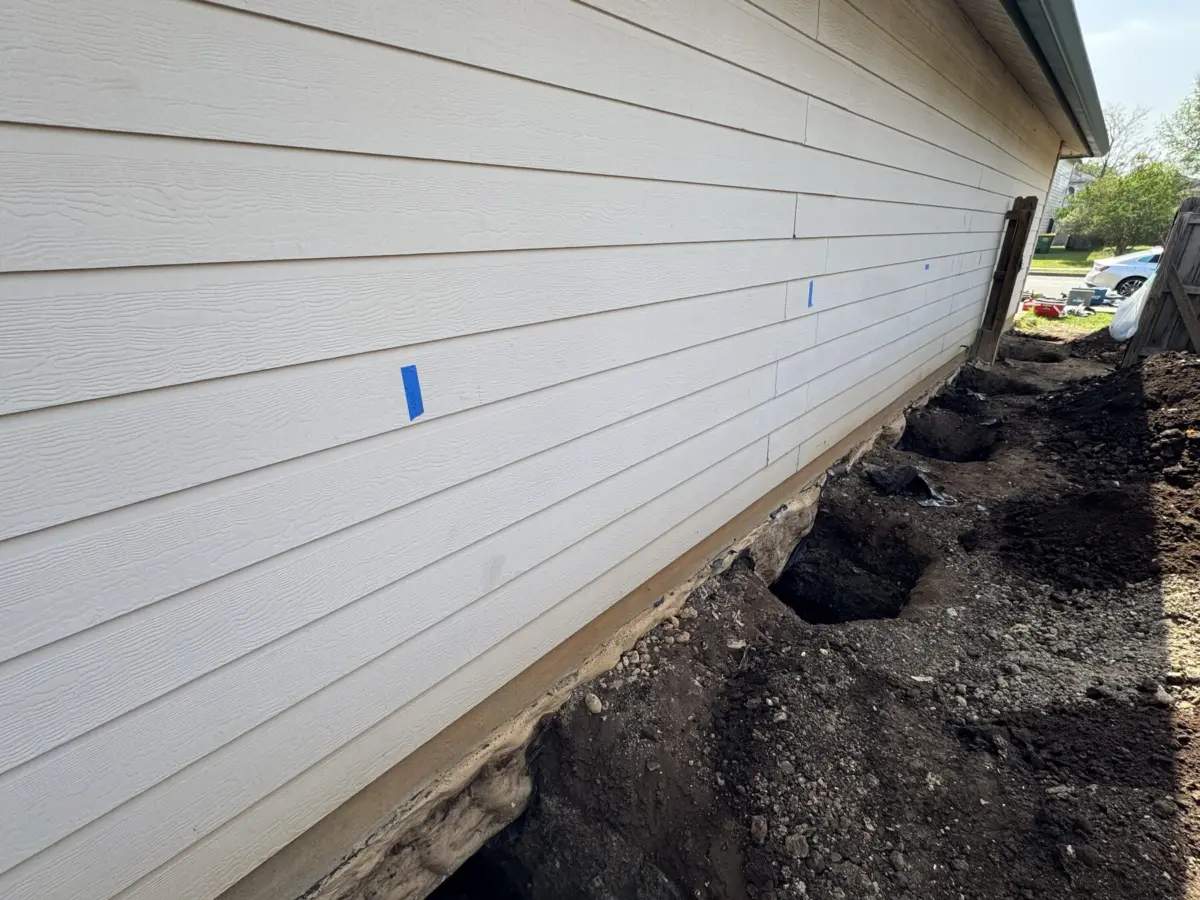
On a raised pier and beam home, the cause under a dropped corner is often a sunken or rotten wood post. Those posts come out, poured concrete piers go in, and the beams are shimmed back to level, which can bring the walls and roofline above them back up too.
Before You Call a Roofer
If a roofer or painter points out a fascia gap and the wood looks sound, it is worth having the foundation measured before you pay for new trim. New fascia nailed onto a corner that is still dropping can pull apart again. A free foundation inspection includes level readings across the house, so you will know whether that corner is actually low.
Matt will tell you if it isn’t the foundation. Our guide to settling vs. failure also helps put a single sign in context.
Related questions
Can foundation problems really show up at the roof?
Yes. The roof sits on the walls and the walls sit on the foundation. When a corner drops, the roofline above it often shifts too.
Should I replace the fascia before or after foundation repair?
After, if the foundation is the cause. Replacing trim on a corner that is still moving can mean doing it twice.
My fascia is rotten. Is that the foundation?
Usually not. Rot is a water and age problem. If the wood is soft, a carpenter is the first call.
Do you repair fascia or gutters?
No. We repair the foundation movement underneath. Fascia, gutters, and soffits are work for a carpenter or gutter company.
Written by Matthew Zeman, co-owner of We Level Homes, with almost 20 years in foundation repair. Last updated November 18, 2026.