Quick answer
Can a Pier and Beam House Be Leveled?
Raised homes are some of the most adjustable houses there are. The question is less whether it can be leveled and more what it will be resting on afterward.
Short answer
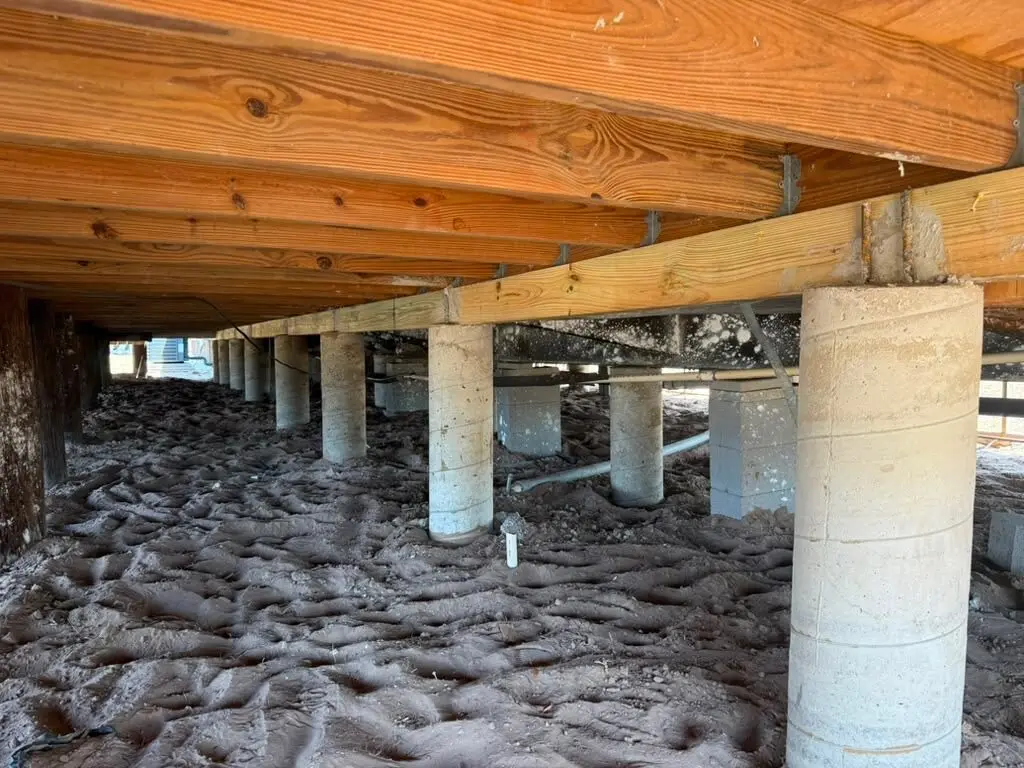
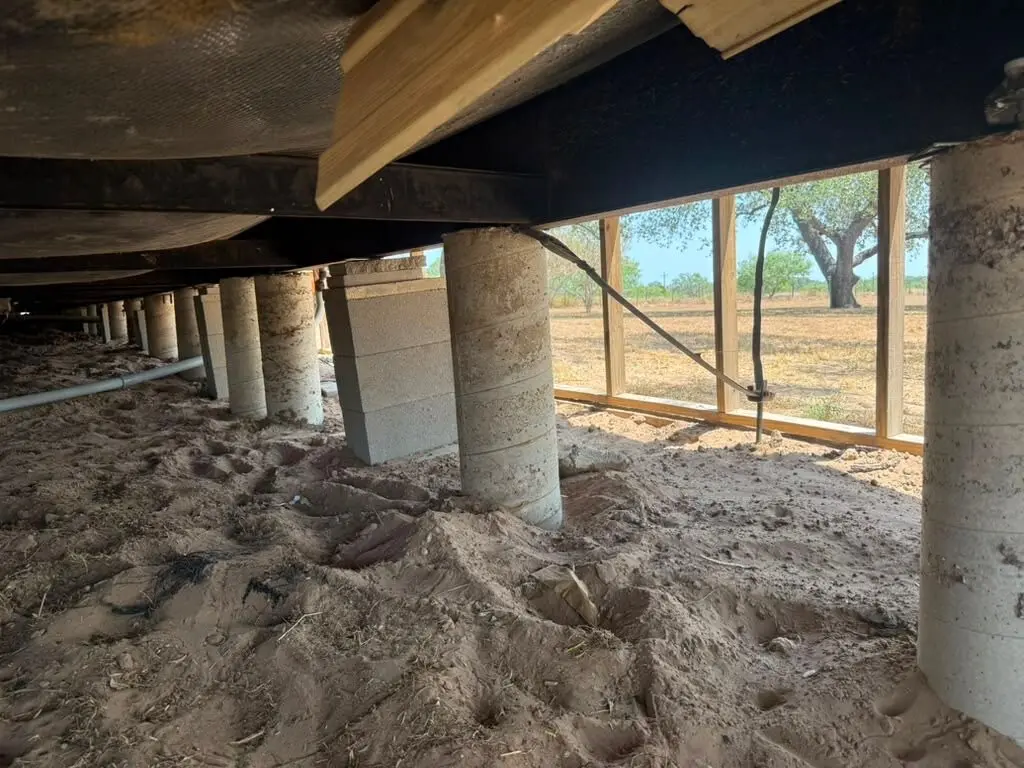
Yes. A pier and beam house can usually be brought back toward level by replacing the failed supports and shimming the beams on the new ones. On our jobs, rotted or sunken wood posts come out, poured concrete piers go in, and the beams are shimmed back toward level on them.
How a Raised House Gets Leveled
A pier and beam house sits on wood beams that rest on posts or piers. When some of those supports drop, the beams drop with them, and the floors slope or sag. Leveling means lifting the beams back up and setting them on supports at the right height.
On a typical pier and beam repair:
- Matt measures floor levels across the house to find the low spots and how far off they are.
- He goes under the house to see which posts have rotted, sunk, or shifted.
- You get a written plan and an exact written price, and a licensed structural engineer certifies the repair.
- The beams are supported while the old posts come out.
- Poured concrete piers go in their place.
- The beams are lifted and shimmed back toward level on the new piers.
Our guide to shimming and re-leveling covers each step in more detail.
Why the Supports Matter More Than the Shims
Plenty of older homes have been leveled before by adding wood wedges or blocks on top of the old posts. That brings the floor up, but the posts that failed are still there. A rotting post keeps rotting, and a post in the clay keeps moving with it, so the floor often drops again.
Replacing the failed posts with concrete piers first means the shims are sitting on something that won’t rot and isn’t going to be eaten by termites. That is the difference between a floor that is level for a season and a repair.
How Level Is Level?
Older houses were rarely perfectly level, even when they were new. And a house that has been sagging for years has settled into that shape. Plaster, sheetrock, tile, and door frames have all adjusted to it.
So the goal is floors that feel solid and doors that work, brought back toward level carefully, not a perfectly flat floor at any cost. Pushing an old house too far can crack finishes that have been fine for decades. Matt will tell you before the job what he expects your floors to look like when it is done. Our answer on how level a house should be goes deeper on this.
What Can Limit Leveling
- Bent beams. A beam that has sagged for a long time may keep some of that bend even on new supports.
- Damaged framing. Rotted or cut joists and crushed beams are framing work. Matt will point them out.
- Very tight crawl spaces. The crew may need to make room to work, and on some houses part of the floor is opened to reach the framing.
- Additions on a slab. A slab addition sits on a different foundation and may need its own look.
None of these usually rule leveling out. They shape the plan and what the finished floor will look like.
It also helps to know what caused the drop. If water is running under the house or a pipe is leaking, a plumber or added drainage may be part of the plan, because new piers on soil that stays wet are only half a fix. If termites were part of the damage, a licensed pest control company should treat before or alongside the repair.
What Happens Inside While It’s Lifted
As the beams come up, doors often start working better. Some cracks close partway, and a few new hairline cracks can show up as finishes shift. You may hear creaks and pops while the work is going on. Cracks are patched after the house is level and stable. For more, see what happens inside the house when it is lifted.
Related questions
Can a pier and beam house be leveled more than once?
Yes. One advantage of a raised home is that the beams can be reached and adjusted again if the house moves later.
Do you level slab and manufactured homes too?
Yes. We level slab, pier and beam, and manufactured homes.
Will leveling fix my sticking doors?
Often, when the doors stick because the wall around them dropped. Some doors may still need a small adjustment afterward.
Do I need to move out while it’s leveled?
Most people stay in the house. Matt will tell you what to expect for your job and what, if anything, to move.
Written by Matthew Zeman, co-owner of We Level Homes, with almost 20 years in foundation repair. Last updated November 18, 2026.