Foundation guide
Leveling an Older San Antonio Home Without Wrecking It
An older house has spent decades settling into its shape. Leveling one well means respecting that: lifting with care, watching the plaster and plumbing, and knowing when to stop.
San Antonio has a lot of older homes, from pier and beam houses in the neighborhoods inside Loop 410 to slab homes from the middle of the last century. Many of them have sloping floors, sticking doors, and cracks that have come and gone for years. Owners love these houses and are often nervous about anyone jacking them up.
That nervousness is fair. An older house can be leveled, and leveled well, but it takes a different approach than a newer one. This guide explains what makes older homes different and how to protect yours during the work.
Want to know what is going on under your house?
Matt will measure it for free and show you what he finds. No pressure, no phone guesses.
What Makes an Older House Different
- It has settled into its shape. Walls, doors, and finishes have adjusted to where the house sits. Moving it changes all of them at once.
- Older finishes are less forgiving. Plaster, old tile, and original wood trim don’t flex the way modern sheetrock does.
- Older plumbing. Many pre-1980s San Antonio homes have cast iron drain lines, which can be brittle with age.
- Pier and beam foundations. Many older homes sit on wood posts and beams, not a slab, and those posts may have rotted or sunk.
- Additions and changes. Rooms, porches, and garages added over the years may sit on different foundations than the original house.
Why the Goal Is “Toward Level,” Not Flat
Older houses were rarely perfectly level when they were new, and decades of small movement add to that. If you try to force an older house back to a perfectly flat reading, you are asking every wall, door frame, and pipe to move at once to a place it hasn’t been in a long time. That is how plaster cracks and old pipes complain.
The better goal is to bring the low parts back up toward the rest of the house, carefully, until doors and floors work the way they should. Sometimes that means stopping short of where the numbers alone would go. Our article on level vs. stable explains the thinking behind that.
Pier and Beam Homes
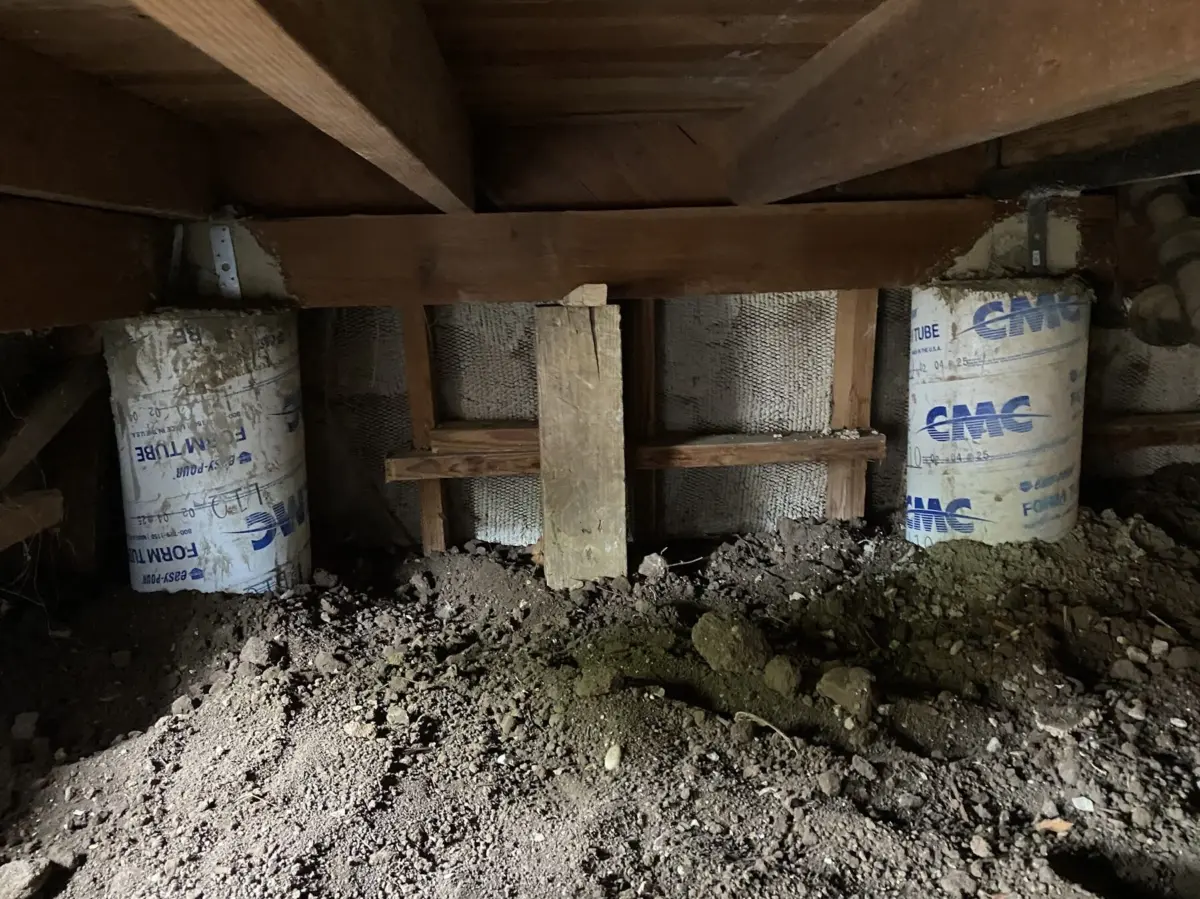
Many older San Antonio homes, especially inside Loop 410, are pier and beam. Under them, the original wood posts have often rotted, sunk into the soil, or shifted. The floors sag over the bad posts.
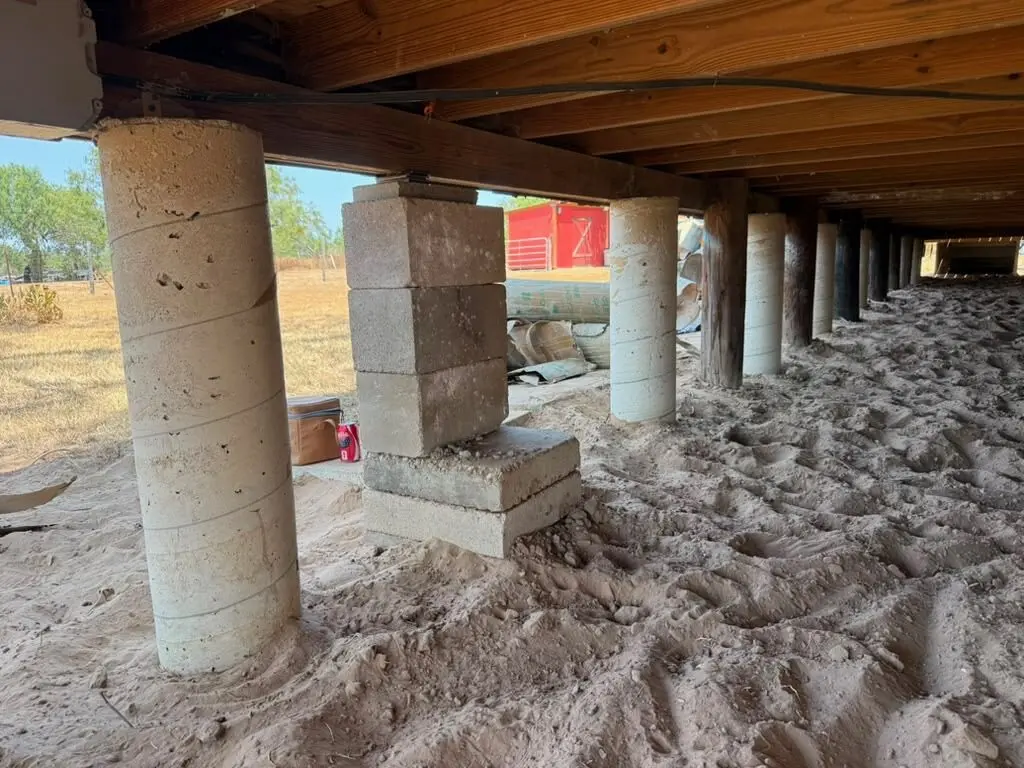
The usual fix is to take out the rotten or sunken wood posts, put poured concrete piers in their place, and shim the beams back to level. Because it happens from the crawl space, the floors above stay in place. Where joists or beams themselves have rotted or sagged, they may need repair too. Our pier and beam foundation repair page explains the work, and pier and beam homes in San Antonio covers the neighborhoods and eras.
Older Slab Homes
Older slab homes are leveled with steel or concrete piers pressed down hydraulically to 10,000 psi until they stop on bedrock, then lifted back toward level. The method is the same as on a newer slab. What changes is how carefully the lift is watched, because older finishes and plumbing have less give.
If the slab needs piers in the middle of the house, small openings are cut through the floor and patched after. In an older home with original tile or wood floors, it is worth talking about exactly where those openings would go before the work starts.
Old Finishes and Old Plumbing
Plaster, tile, and doors
Plaster walls and old tile are the finishes most likely to show a new crack during a lift, because they are rigid. Some existing cracks close or narrow as the house comes up. Others may open in a new spot. That is normal when an old house moves, and it is one reason the lift is done carefully rather than all at once.
Older doors are similar. A door that was planed or rehung decades ago to fit a racked frame may not fit perfectly once the frame moves back toward square. Most of the time that is a small adjustment, but it is worth knowing about before the lift rather than being surprised after.
Cracks are filled after the house is level and stable, not before. If you are planning to repaint, replaster, or redo floors, it usually makes sense to wait until after the leveling is done. See will foundation repair crack my sheetrock or tile? for more.
Cast iron drain lines
Cast iron drain lines are common in many pre-1980s homes. They can crack with age whether or not anyone lifts the house, and a leak under the floor can be part of why it settled in the first place. Moving the house can also stress lines that are already weak.
Before a lift on an older slab home, it is worth asking whether a plumbing test makes sense. Knowing the condition of the drain lines before the work starts helps everyone, and if there is a leak, it should be fixed so the soil isn’t being softened under your new piers. Our article on under-slab plumbing leaks explains why we ask.
Additions, Porches, and Garages
Older homes often have rooms added over the years, sometimes on a different foundation than the original house. A back room on a slab attached to a pier and beam house, or a porch that was enclosed, can move separately. The repair plan should say clearly which parts of the house are included and how the joints between them will be handled.
How to Prepare an Older Home for Leveling
- Take photos of existing cracks in plaster, sheetrock, tile, and brick, with the date.
- Note which doors and windows stick, and which ones work fine.
- Take down fragile items from walls and high shelves in the rooms being lifted.
- Ask about the plumbing, and whether a test makes sense before the work.
- Point out any additions or past repairs you know about.
- Hold off on painting, plaster work, and new flooring until after the job.
Questions to Ask Before Leveling an Older Home
- How close to level do you expect this house to get, and why stop there?
- Which rooms are most likely to see new cracks, and which old cracks may close?
- Will any piers go through the floor, and where?
- Should the plumbing be tested before the work?
- Are any additions or porches on a different foundation, and are they in the plan?
- On a raised house, are any beams or joists damaged beyond the posts?
- What does the written warranty cover, and what doesn’t it?
Good answers to these questions tell you the person planning the job has thought about your house, not just about piers. If you are comparing more than one plan, our guide on comparing foundation repair estimates covers what else to line up.
How Matt Approaches an Older House
At a free inspection, Matt measures floor levels across the house, looks underneath if it is pier and beam, and goes over the cracks and doors you have noticed. He will tell you honestly how close to level he expects the house to get, what is likely to improve, and what might need touch-up after. Matt and Rosie are on every job, and every repair is certified by a licensed structural engineer.
Related questions
Is my house too old to level?
Age alone rarely rules it out. What matters is the condition of the foundation, the framing, and the supports. Matt will tell you what he sees.
Will leveling crack my plaster walls?
It can. Plaster is rigid, and some cracks may appear or change during a lift. Lifting carefully and toward level, not to a perfect number, helps limit that.
Do you work on historic homes?
We work on residential homes of all ages, including older pier and beam houses. If your home has a historic designation, ask the city what approvals the work needs before it starts.
Will the old wood posts be removed?
On pier and beam repairs, we usually remove the rotten or sunken wood posts and replace them with poured concrete piers.
Written by Matthew Zeman, co-owner of We Level Homes, with almost 20 years in foundation repair. Last updated November 18, 2026.